
Related videos:
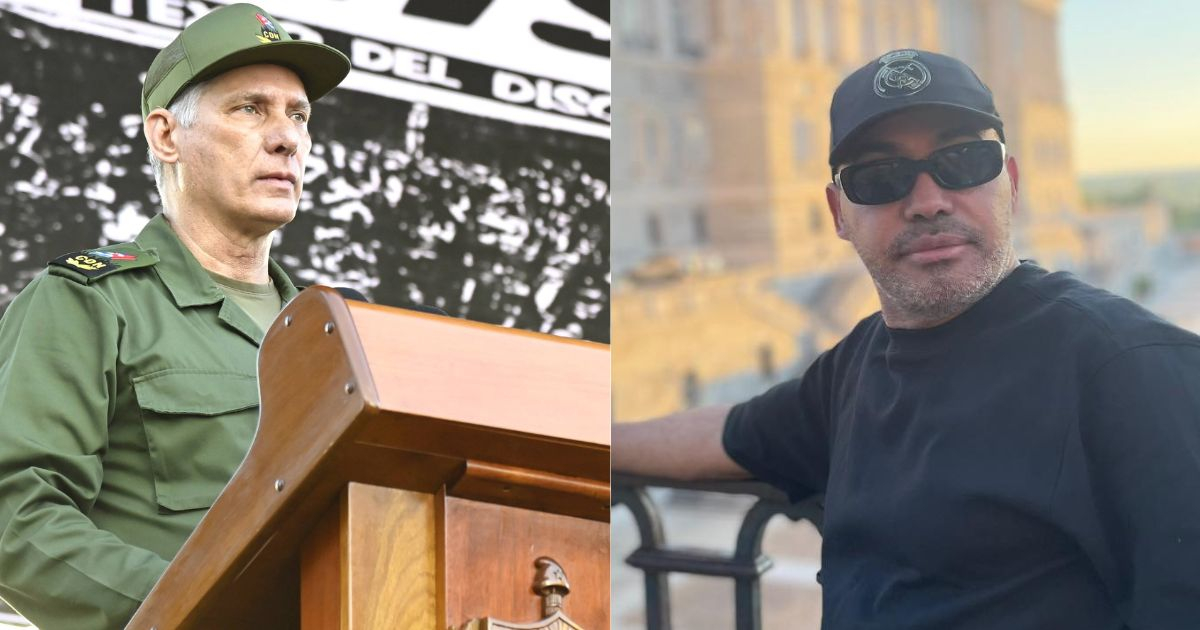
The exiled Cuban singer Manolín el Médico de la Salsa reacted strongly this Thursday to the belligerent speech of President Miguel Díaz-Canel—who called on the people of the Island to prepare for a possible military aggression from the United States—and described those leading the regime in Havana as: "a disgrace" and "buffoons".
The artist posted a strong message on Facebook in response to the official event on April 16, where Díaz-Canel invoked the 65th anniversary of the proclamation of the socialist nature of the Revolution to call for armed resistance.
"It has always been this way; they don't call the people for anything good. For Angola war, for Ethiopia war, for Venezuela war, for Grenada war, for Ukraine war, and now in Cuba war as well," wrote Manolín, outlining a historical pattern of military mobilization that the regime has imposed on the people for decades.
The salsa musician denounced that the government has never summoned Cubans to discuss other issues that are among the suppressed aspirations for citizenship. "They never talk about democracy, or freedom, or forgiveness, or reconciliation, or freeing political prisoners, or freedom of expression, or coexistence, or stepping down and allowing others to take over," he stated.
His critique points directly to the dictatorial core of the system: "They've been in power for life, and if not, it's war and we all die. Clinging to power, hunger, repression, beatings, imprisonment, exile, war, and death. It's all they offer to the people of Cuba," he declared.
The speech in question by Díaz-Canel included phrases with a distinctly belligerent tone. "The moment is extremely challenging and summons us once again, as on that April 16, 1961, to be ready to face serious threats, including military aggression. We do not want it, but it is our duty to prepare to prevent it, and if it is inevitable, to win it," declared the leader.
This new call is part of a rhetorical escalation that the regime has maintained since January 2026, when it declared the "Year of Preparation for Defense" and implemented the doctrine of total people's war, along with military exercises involving civilians, students, and children. The National Defense Council, chaired by Raúl Castro, even approved plans for the "transition to a State of War."
The contrast between that speech and the daily reality of the Cuban people is stark: the Island suffers from blackouts lasting 20 hours a day or more since December 2025, worsened by the interruption of Venezuelan oil supply following Nicolás Maduro's fall. There are hundreds of political prisoners; and protests occur daily in many parts of the country.
Noise protests in La Güinera, Luyanó, and Morón in recent weeks reflect the frustration of a population that is asking for food, water, and electricity, not war.
The history supports Manolín's claim: just to cite one example, tens of thousands of Cuban soldiers were sent to conflicts in Angola and other African countries between 1975 and 1991, with over 2,000 officially reported deaths.
In his interview with NBC News, Díaz-Canel stated: "if necessary, we will die, because as our national anthem says: to die for the homeland is to live." A phrase that, for millions of Cubans who survive without light or food, sounds like a condemnation, not a conviction.
Filed under: