
Related videos:
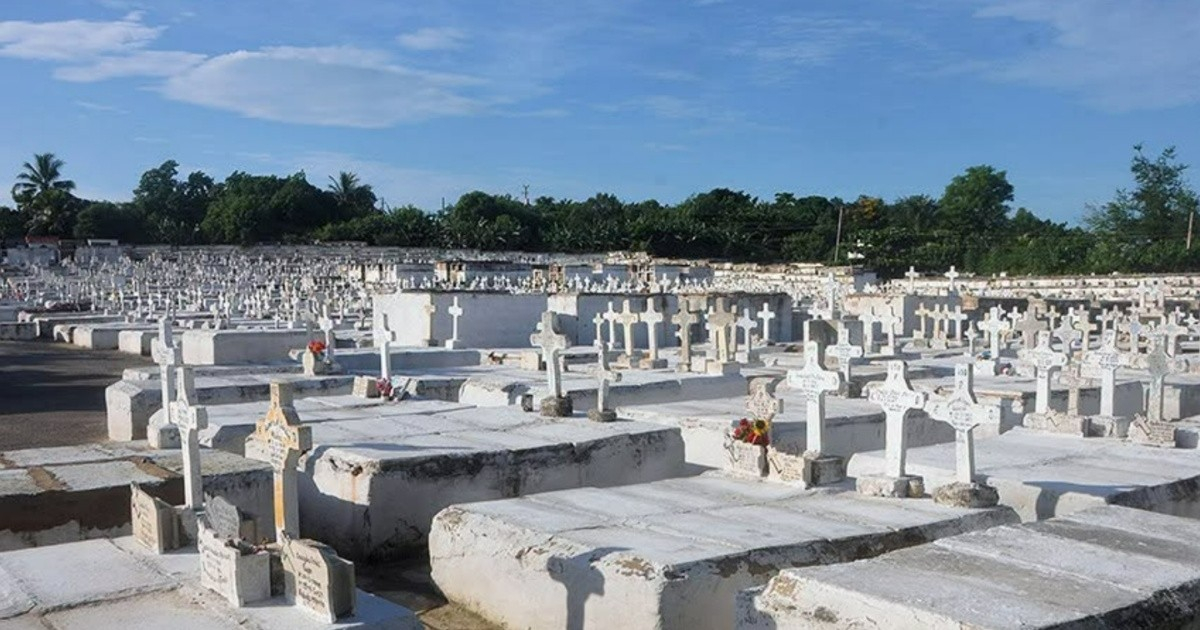
The cemetery Vicente García, the main burial ground of Las Tunas, has suspended burials in its state spaces since the beginning of this week until further notice, due to a collapse that has remained unresolved for eight years and that local authorities admit they have been unable to address with the necessary resources.
Dulce María Zayas Rodríguez, deputy director of Necrological Services for the municipality of Las Tunas, confirmed the measure to Periódico 26 and explained that the situation significantly worsened in November and December 2025, when the city recorded a peak in deaths exceeding the usual average of eight or nine deaths per day.
"The situation with Vicente García is very complex; there are no spaces where we can create new vaults. We are currently repairing the wall to transfer the ossuaries of people who have been in temporary niches for some time, and even with that, it is not enough," he elaborated.
Zayas Rodríguez explained that “the exhumations of those who passed away in 2024 are being carried out, a process that is appropriate; and it is important for the public to know that the remains of those bodies will be kept in the cemetery, but most of them will be in still provisional spaces."
The official states that they will move the graves to the Becerra cemetery "so that the community can receive the best support we can offer in the midst of the tremendous pain of a loss; we are putting in all the investment that is possible."
"At this moment, we are working to locate many relatives to finalize exhumations that are still pending, because there are those who leave a deceased person there and forget everything. We have the legal authority to carry out exhumations on our own, but it doesn't seem fair to us," he added.
Additionally, Las Tunas is the only province in Cuba without its own crematorium for corpses, which further exacerbates the pressure on its funeral facilities and leaves families with no options in light of the collapse of the state cemetery.
“This is a complex issue. The incinerator will be located near the site where the city is expected to have its new cemetery one day; the project was already 47 percent complete, but it has been neglected. The equipment was installed, and the oversight and control generally failed,” said Danicely Velázquez Martínez, provincial deputy director of Necrological Services, to Periódico 26.
As a result of "various thefts," the execution of the project is now barely at 15 percent; many items from the civil works have been taken, and even the boiler was removed. "Several people are in custody due to this situation," the official adds.
The Vicente García is not the only cemetery among the 65 in Las Tunas facing this situation. Several others are also in a state of collapse in Puerto Padre, particularly the one in the city center, and the one located at the entrance of the town of Chaparra, which belongs to the municipality of Jesús Menéndez.
According to Periódico 26, the one in Chaparra has land available for expansion, but there is no funding at the moment to carry out the work; meanwhile, the main one in Puerto Padre has new lands approved for expansion but does not have funding.
The crisis is not exclusive to Las Tunas. In recent months, other cemeteries across the country have shown signs of systemic collapse: the cemetery of Camagüey collapsed with over 20 coffins piled up, while the Mayabe cemetery in Holguín showed broken niches with bone remains exposed to the elements.
In Havana, the situation is not any better: recently, abandoned human remains were reported as debris in the Colon Cemetery, in an image that encapsulates the widespread neglect of funeral services in Cuba.
The deterioration also affects transportation: a coffin fell from a hearse on public roads, and a family in Holguín had to improvise a cardboard coffin due to the lack of available caskets, episodes that reflect the depth of the crisis.
All of this occurs within a critical demographic context: Cuba has a mortality rate of 12.9 per thousand inhabitants, the highest in Latin America, which increases the demand on a funeral infrastructure that has gone for years without the necessary investment to sustain itself.
Filed under: