
Related videos:
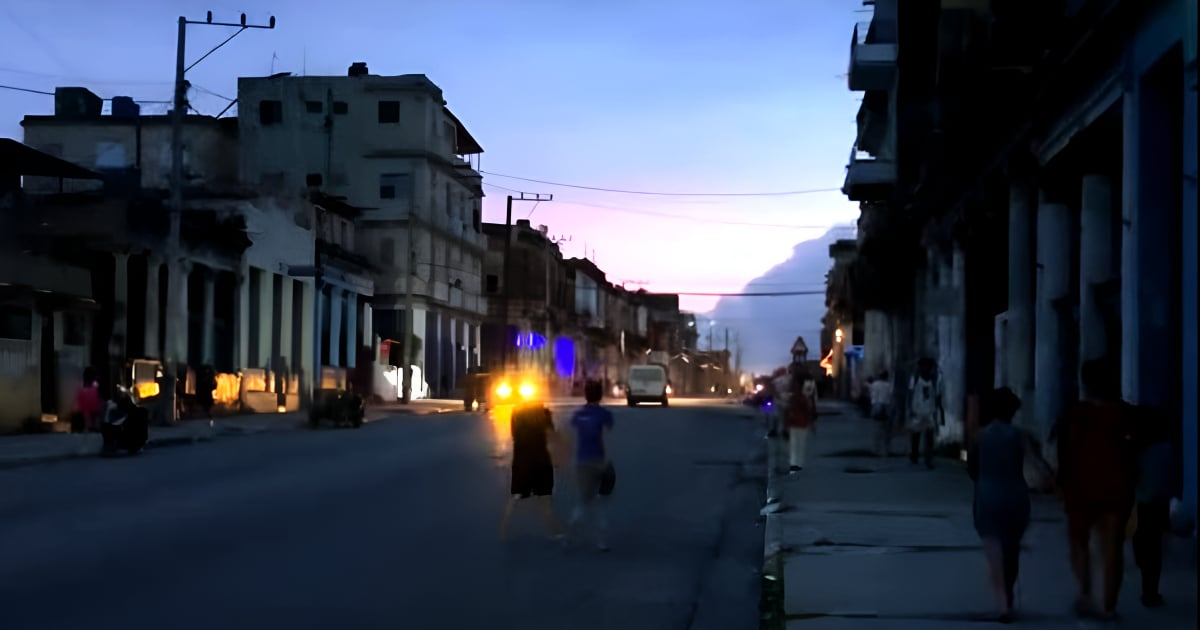
The Cuban regime is celebrating that Havana has gone three consecutive days without blackouts, while hundreds of Cubans in the rest of the country are reporting that the supposed improvement hasn't reached their areas. The electricity crisis remains as devastating as ever.
In a Facebook message, the Deputy Minister of Foreign Affairs Carlos R. Fernández de Cossío celebrated "the increase in electricity generation and the relative relief from power outages as a result of the greater availability of fuel in recent days" and assured that "these are a demonstration of the decisive impact of the energy blockade."
The citizens' reaction was immediate and outraged: "Why has the capital been free of blackouts for days while the provinces are still the same or worse? Don't we have the right to live better?" wrote a Cuban in the official's post.
From Holguín, reports indicate that the new distribution scheme provides only three hours of electricity per circuit. In Moa, the outages exceed 18 hours a day. In Bartolomé Masó, Granma, a resident described an extreme situation: "24 hours without power."
Indignation is echoed province by province: Camagüey, Guantánamo, Santiago de Cuba, Santa Clara, Mayabeque, and Isla de la Juventud report that nothing has changed.
"Surely they are taking Havana as a reference, but the rest of the country remains in darkness," summarized another comment.
Many Cubans point out that the prioritization of the capital is not coincidental. Havana has been the epicenter of the most visible protests and demonstrations in recent months, with documented mobilizations in neighborhoods such as La Güinera, Santos Suárez, Playa, and El Cerro.
The prevailing perception is that the regime is soothing the capital to contain discontent in the country's most politically sensitive territory.
The coincidence with the political calendar reinforces this interpretation. "Once the political dates pass, everything will return to the same old reality," warned a user, referring directly to May 1st. "After May 1st, we will see," wrote another.
The supposed relief has a specific but limited technical explanation. The Russian tanker Anatoly Kolodkin arrived at the port of Matanzas on March 31 with 100,000 tons of crude oil —about 730,000 barrels—, which were refined at the Camilo Cienfuegos plant, which had been halted for approximately four months, to produce diesel, gasoline, liquefied gas, and fuel oil.
The structural problem, however, does not have a solution in sight. Cuba needs between 90,000 and 110,000 barrels of oil daily to sustain its economy, but it only produces around 40,000. The Russian shipment would barely cover a third of the national demand for a month.
Filed under: