
Related videos:
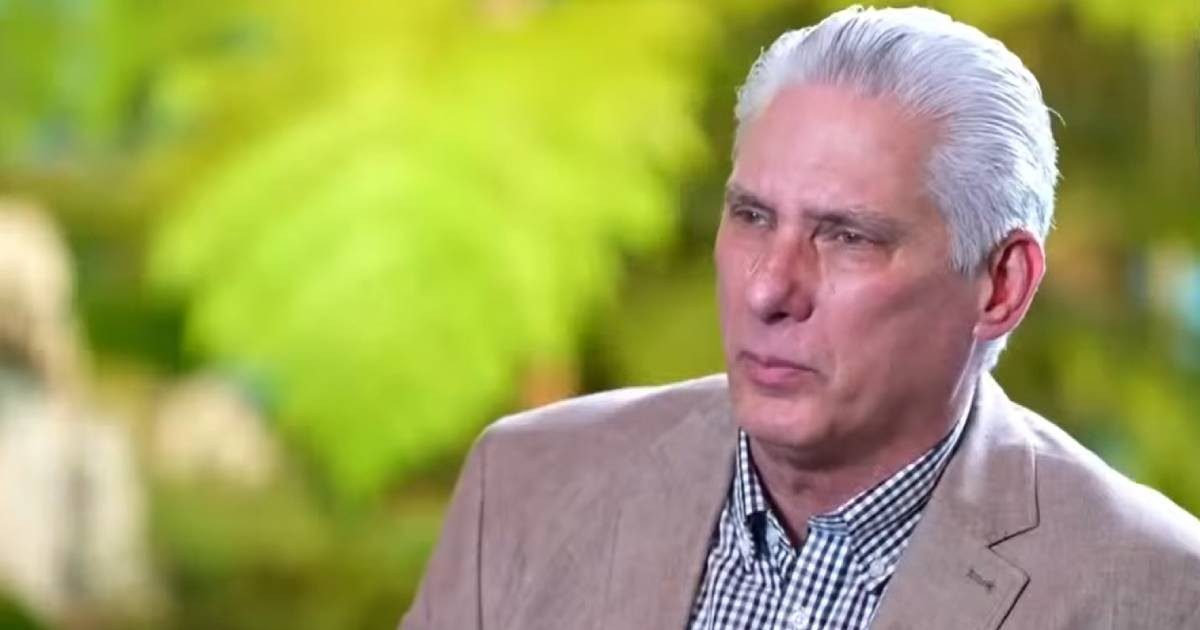
The Cuban ruler Miguel Díaz-Canel categorically ruled out any negotiations with Washington that involve changes to the Cuban political system, in an interview granted to Brazilian journalist Breno Altman for the "20 Minutes" program of Opera Mundi, recorded in Havana.
In response to the direct question of whether Cuba would accept the terms of "regime change" that the United States openly uses, the leader stated that there will be no political negotiation with the United States. "Absolutely not. No, that is not a topic. Our internal issues are not on the table for conversation with the United States or for negotiation. We have always started from that point, a condition of equality, respect for our political system, our sovereignty, and our independence under the principle of reciprocity," he said.
When Altman asked him if, since the United States does not accept to negotiate on Cuban terms, there is no negotiation, Díaz-Canel was even more straightforward: "There is no negotiation. There is no negotiation."
The ruler added that any dialogue process requires both parties to demonstrate a constructive willingness. "If one of the parties does not support that dialogue, does not support that conversation, wants to impose, it breaks the conversation, it breaks the negotiation," he declared.
Díaz-Canel's position aligns with earlier statements from other regime officials. Deputy Foreign Minister Anayansi Rodríguez Camejo had stated weeks ago that the Cuban political system is non-negotiable. "It is not part of the negotiation table. Neither the president nor the position of any official is negotiable," she said in a conversation with the Anadolu Agency from Turkey.
This red line clashes directly with Washington's stance. Secretary of State Marco Rubio has stated that "Cuba's economy needs to change, and that economy cannot change unless its system of government changes as well."
The interview takes place at a time of heightened bilateral tension. On January 29, Trump signed Executive Order 14380, which declared Cuba a "unusual and extraordinary threat" and imposed tariffs on those supplying oil to the island, cutting between 80% and 90% of Cuba's crude oil imports.
Díaz-Canel acknowledged in the same interview that Cuba went four months without receiving a drop of imported fuel, relying solely on its reserves and domestic production. "We went four months without receiving a drop of fuel. Four months, four months without receiving anything," he stated.
Despite the red line stance on the political system, Díaz-Canel acknowledged that conversations with the United States are taking place, although they are in "a very preliminary, very initial phase."
On April 10, a delegation from the State Department landed in Havana —the first official flight of a U.S. government airplane to Cuba since 2016— to push for political reforms and the release of high-profile political prisoners such as Luis Manuel Otero Alcántara and Maykel Osorbo, with a two-week ultimatum that expires around April 24, despite the Cuban regime's denial of these conditions.
Filed under: