
Related videos:
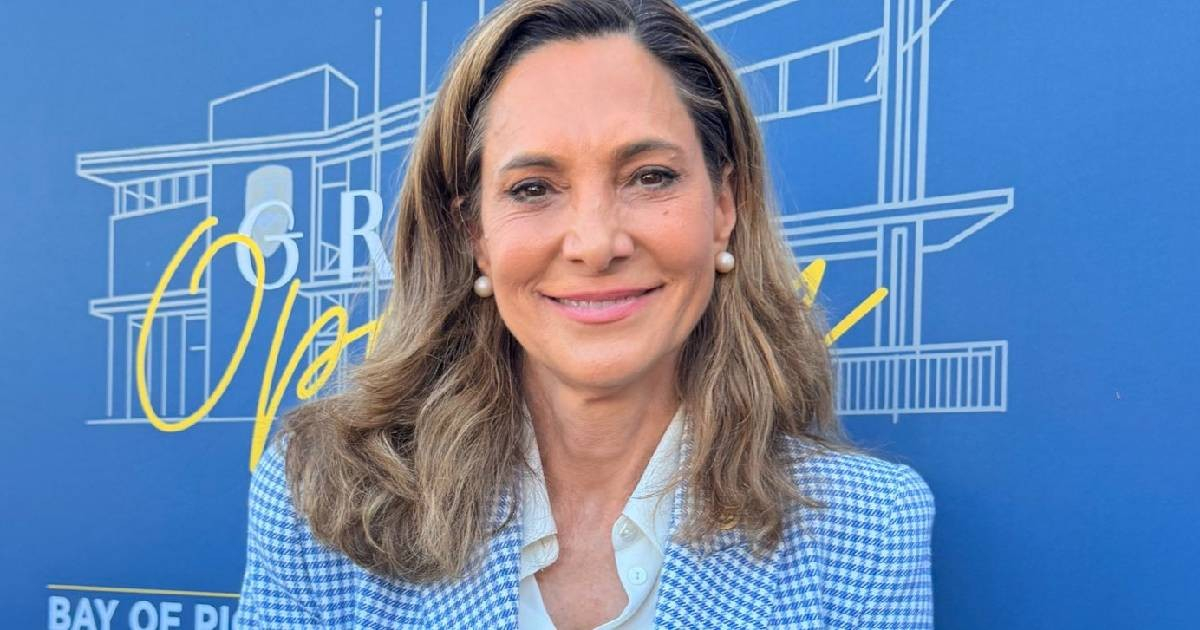
The Cuban-American Congresswoman María Elvira Salazar has intensified her verbal offensive against the Castro regime in recent weeks, with statements suggesting an imminent change in Cuba that summarize her stance in one phrase: "the regime can repress, but it cannot stop what is coming."
Last Thursday, April 17, during a hearing of the House of Representatives' Subcommittee on Western Hemisphere Affairs titled "Latin America After the Fall of Maduro," Salazar was categorical: "The communist regime in Cuba is on life support. Trump just needs to pull the plug."
In that same session, the legislator for the 27th District of Florida pointed out that the Cuban Conflict Observatory recorded 953 protests in January 2026 and more than 200 marches in the last month, as evidence that the Cubans have lost their fear after 65 years of dictatorship.
"When people lose their fear, the dictatorship is about to lose everything," said Salazar before the subcommittee.
On April 9, it was already warned that the regime has never been weaker and can no longer contain the will of its people, and on April 20, it issued what it called a final warning: "The games are over."
Salazar also flatly rejected any negotiations that would preserve the ruling elite: "We are not going to make any deal with the Castros," he declared, adding that "the Cuban people deserve freedom, not another agreement to keep the same regime in power."
This positioning occurs at a time of maximum pressure on Havana. Following the forcible removal of Nicolás Maduro on January 3, 2026, the United States cut off the Venezuelan oil supply to Cuba, which accounted for between 25,000 and 30,000 barrels per day—two thirds of the island's energy imports—exacerbating a crisis that had already seen a 23% drop in the economy since 2019.
The result has been devastating: blackouts lasting up to 20 and 24 hours, paralysis of transportation, shortages of food and medicine, and patients dying from preventable causes, as documented by TIME magazine in a comprehensive report published this Thursday.
The president Donald Trump proclaimed the so-called Donroe Doctrine and stated on March 27: "Cuba is next," referring to the next target of U.S. pressure in the hemisphere.
In that context, on April 10, a delegation from the State Department arrived in Havana—the first official U.S. flight since 2016—and presented an ultimatum that expires tomorrow, Friday, April 24, demanding the release of political prisoners, the opening of the internet, and governance reforms.
Díaz-Canel responded yesterday by threatening to break off negotiations if Washington insists on regime change, describing the talks as "very preliminary phase."
Salazar also rejected the pardon of 2,010 people announced by the regime on April 3 as "a propaganda maneuver," stating that it excludes the political prisoners from the 11J.
On its part, the magazine TIME dedicated its online cover published this Thursday with the headline "Before the Fall" to documenting the Cuban crisis, while novelist Leonardo Padura warns that the regime could endure indefinitely, a stance that some analysts link to the schedule of the midterm elections in the United States.
Filed under: