
Related videos:
The Cuban Foreign Minister Bruno Rodríguez Parrilla used the arrival of a Russian oil tanker on Thursday as an argument to blame the United States for the island's energy crisis, in a post in which he asks: "Is the blockade real or not?"
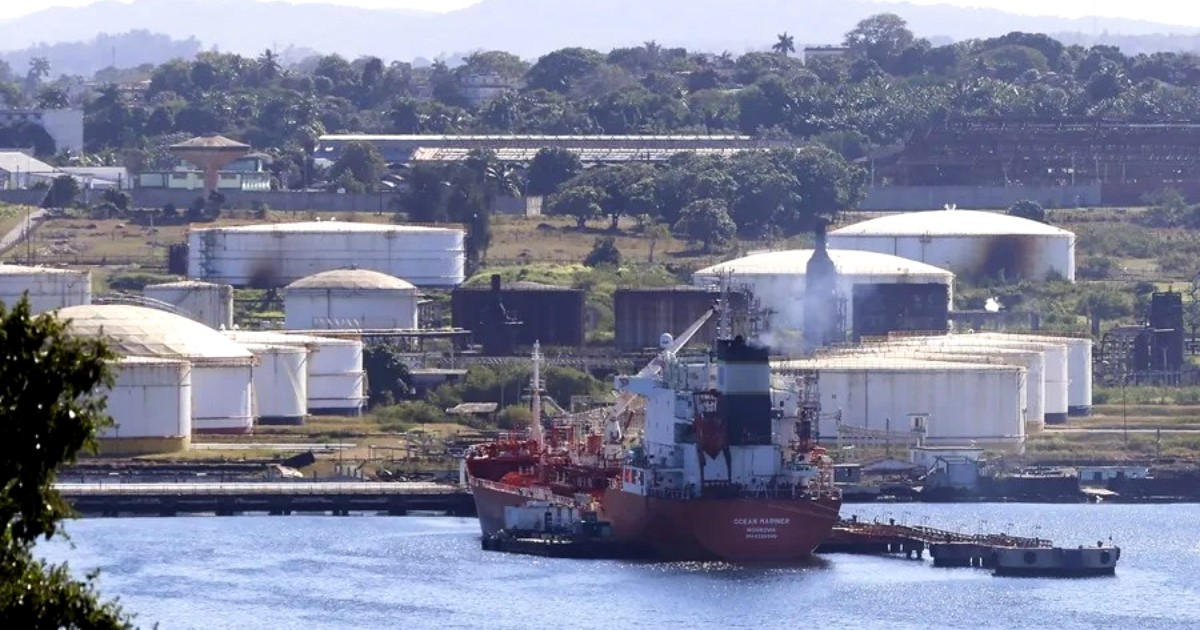
"The difficult situation in the country is a direct consequence of the worsening blockade and the energy siege imposed by the U.S. government," Rodríguez wrote on his Twitter account, accompanying the message with the hashtag #TumbaElBloqueo and a photograph of the tanker Ocean Mariner, a Liberian-flagged vessel that actually arrived in Cuba from Mexico in January 2026, not a Russian ship.
What the chancellor omits is that the electrical improvement he boasts about is only real for Havana, while the rest of the country remains the same or worse.
Recently, the capital experienced three consecutive days without power outages, but provinces such as Holguín, Granma, and Santiago de Cuba report cuts of up to 24 hours. In Moa, the outages exceed 18 hours daily. Camagüey, Guantánamo, Santa Clara, Mayabeque, and the Isle of Youth report that nothing has changed.
Partial relief comes from the Russian tanker Anatoly Kolodkin, which arrived at the port of Matanzas on March 31 with 730,000 barrels of Ural crude donated free of charge by Russia. The crude was refined at the Camilo Cienfuegos plant —which had been shut down for approximately four months— and distribution began on April 17.
Díaz-Canel himself acknowledged in an interview with Brazilian journalist Breno Altman that the shipment does not solve all our problems and that it only covers "a third of what we need in a month," enough for approximately 10 days.
"With that, we can cover the needs for approximately 10 days," admitted the ruler, who described the gesture from Moscow as "primarily symbolic."
The Minister of Energy and Mines, Vicente de la O Levy, was even more direct this Wednesday: "with just this ship, we have fuel until the end of this month. In other words, we have only a few days left."
The crisis has structural roots that the regime avoids acknowledging. Cuba needs between 90,000 and 110,000 barrels of oil daily but only produces about 40,000. The generation deficit reached 1,885 MW during peak hours at the end of March, with ten of the 16 thermoelectric units out of service.
The regime prioritizes Havana for obvious political reasons: the capital has been the epicenter of over 1,200 popular demonstrations since January 2026, with pan-banging protests in neighborhoods like La Güinera, Santos Suárez, Playa, El Cerro, and Nuevo Vedado. May 1st is approaching, and discontent in Havana carries greater political and media impact.
Cubans are not easily deceived. "Why has the capital been free of blackouts for days while the provinces are still the same or worse? Don't we have the right to live better?" asked a citizen on social media. Another was more skeptical: "Once the political dates pass, everything will return to the same old reality."
Cuba needs eight fuel ships per month. From December 2025 to April 2026, it has only received one.
Filed under: