
Related videos:
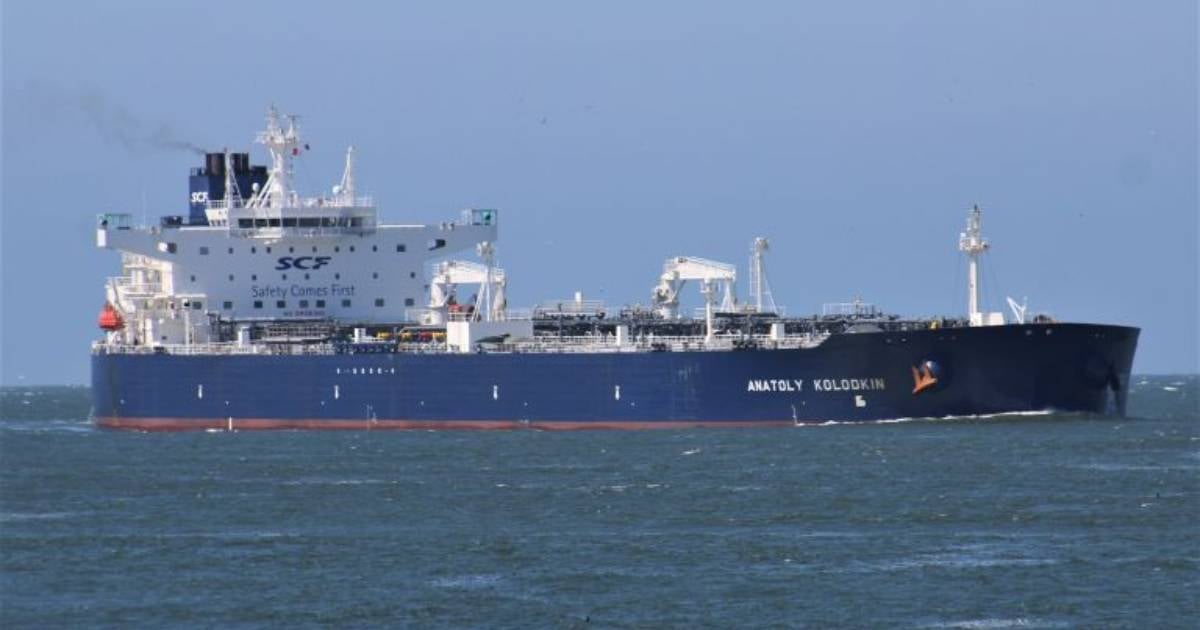
The Russian tanker Anatoly Kolodkinn, which is transporting 730,000 barrels of crude oil and is sanctioned by the United States, the European Union, and the United Kingdom, was located this Sunday north of Haiti heading towards the port of Matanzas and is expected to arrive at the port of Matanzas in western Cuba this Monday.
The news agency AFP reported that the vessel, owned by the Russian state shipping company Sovcomflot, set sail from the Baltic port of Primorsk on March 8 falsely declaring its destination as Atlantis, USA, according to the maritime analysis firm Kpler.
He was escorted by a Russian Navy ship through the English Channel, although the two vessels separated once the oil tanker entered the Atlantic Ocean, according to the British Royal Navy.
The shipment represents the first major fuel shipment to Cuba in more than three months, amid an unprecedented energy crisis that the regime of Miguel Díaz-Canel has been unable to resolve.
Since January 9, 2026, the island has not been receiving stable supplies of oil: Venezuela stopped sending crude oil following the capture of President Nicolás Maduro by U.S. forces, and Mexico suspended Pemex shipments in light of threats of sanctions from Washington.
The electrical deficit in Cuba reached between 1,700 and 2,040 megawatts daily in March, with blackouts exceeding 30 hours. On March 16, there were only 1,140 megawatts available against a demand of 2,347 megawatts.
This is why the leader Díaz-Canel has imposed emergency measures that include strict gasoline rationing. Fuel prices have skyrocketed, public transportation has been drastically reduced, and some airlines have suspended their flights to the island.
Washington has responded with a strategy of direct pressure. On March 12, the Office of Foreign Assets Control of the Department of the Treasury issued a license that explicitly prohibits Cuba from receiving Russian oil.
Additionally, two Coast Guard cutters have been positioned off the northeast coast of Cuba for a possible interception, and Southern Command acknowledged that it is tracking the Anatoly Kolodkin, although it estimated that its cargo would provide at most two weeks of supplies.
That pressure has already managed to divert other ships: the Ocean Mariner changed its course in February, the Bella-1 was seized in January, and the Sea Horse was redirected towards Venezuela at the end of March with about 190,000 barrels of Russian diesel.
President Trump had threatened to impose tariffs on any country that sent oil to Cuba and even suggested the possibility of "taking" the island. Russia, for its part, described the shipment of the Anatoly Kolodkin as "humanitarian aid."
"We provide and will continue to provide Cuba with the necessary support, including material support."
Filed under: