
Related videos:
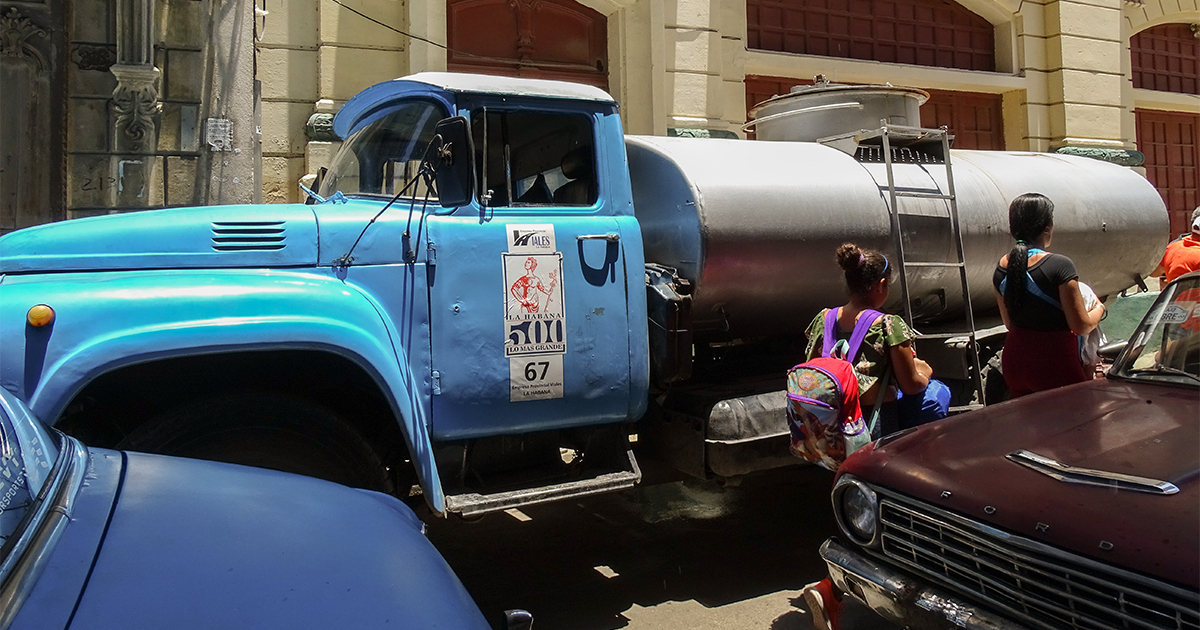
An electrical interruption that occurred on Saturday night at the Palatino pump station left the Víbora neighborhood, in the October 10 municipality, without water, and also affected critical points in the Plaza de la Revolución municipality, according to an official information note from Aguas de La Habana published this Sunday.
The company explained that the power outage "caused an internal malfunction in the electrical system of the pump driver, affecting one of the pumping units," which interrupted the supply in those areas of the capital.
The Palatino pump station is one of the most important pumping installations in the capital's supply system: it serves neighborhoods in Plaza de la Revolución —El Príncipe, Puentes Grandes, and part of Nuevo Vedado— as well as areas in 10 de Octubre, including Víbora, Sevillano, and part of Lawton.
Aguas de La Habana announced that the Víbora neighborhood "will receive supply services tomorrow, April 27, during its regular hours," but did not specify recovery timelines for the critical areas in the Plaza de la Revolución municipality.
The outage is not an isolated incident. On the same Saturday, at least six Automatic Frequency Shots were recorded in Havana, indicating a day of high instability in the national electrical grid.
This episode adds to a chain of water crises caused by power outages. On April 16, more than ten hours of power cuts left over 200,000 residents without water in Diez de Octubre, Cerro, Plaza, Centro Habana, and Habana Vieja.
The structural reason is well known: 87% of the water supply system depends on the National Electro-Energy System, so that each power interruption automatically results in a water outage.
Cuba is experiencing the most severe energy crisis in its recent history in 2026, with generation deficits exceeding 1,800 MW during peak hours and blackouts lasting up to 29 hours and 29 minutes, recorded on March 16th.
The Palatino pump had failed previously due to similar causes. In June 2025, Granma acknowledged that “electrical instability complicates the water supply in Havana” after several motors from both Palatino Nuevo and Palatino Viejo went out of service. In November 2025, an unexpected electrical failure at a substation halted pumping from Cuenca Sur and affected more than 233,000 residents across six municipalities in the capital.
The water crisis in Havana is chronic and worsens with each power outage. The director of the Havana Water Supply acknowledged on Saturday that over 200,000 residents of Havana lack regular access to drinking water, a figure that reflects the accumulated deterioration from decades of underinvestment in infrastructure under the dictatorship.
Filed under: