
Related videos:
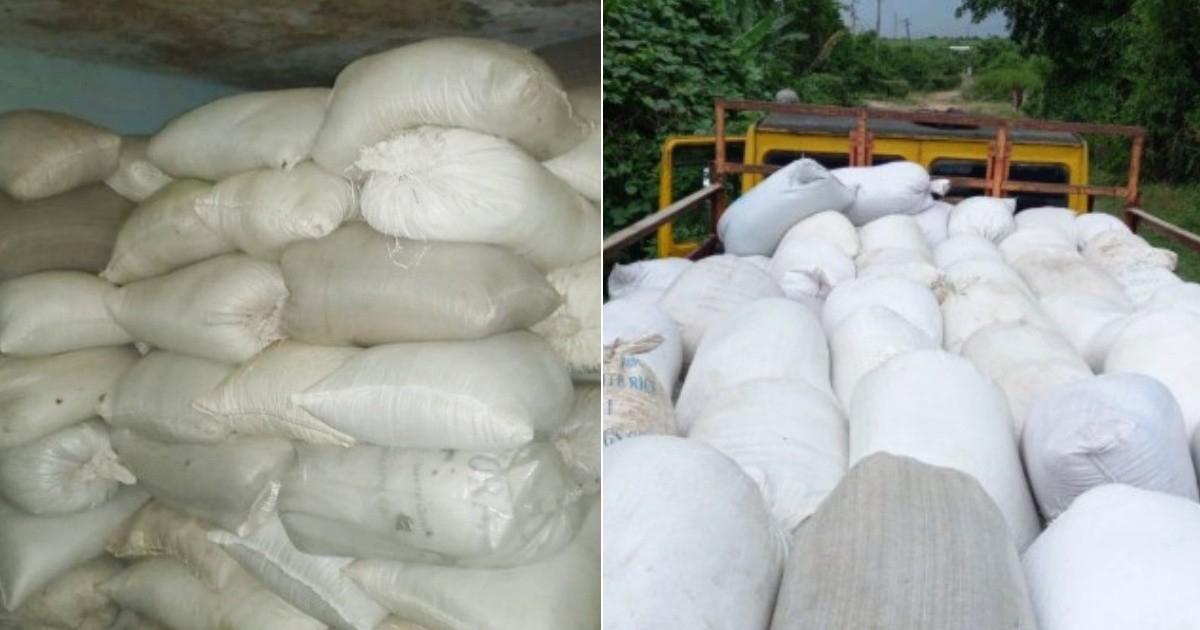
The police seized more than 270 bags of coffee from a residence in the locality of Chile, in the municipality of San Luis, Santiago de Cuba, following a complaint from neighbors who reported the presence of a "storage house" in the area.
A post from the official Facebook profile "Heroes of Moncada" detailed that police officers searched the home and confiscated bags of coffee, the owners of which could not provide documents that certified the legal origin of the product.
The authorities determined that those involved were engaging in hoarding and speculation, with plans to distribute coffee to various parts of the province to sell it at inflated prices in the informal market.
The official source did not provide further details about the operation, nor did it specify how many individuals were detained or will be prosecuted in the case.
The seizure of coffee has sparked intense debate on social media.
Many Cubans question the logic of these actions amid a structural crisis that the government itself has been unable to resolve.
"The state does not guarantee coffee in the warehouse, but it does intervene when someone tries to sell it," noted a user.
Another pointed out, "At least this way people could have coffee, because it practically doesn't appear through the state route."
Critics also point to the root of the problem.
"That coffee was probably bought from farmers. If it wasn't stolen, it's hard to understand why it's being seized," wrote a user.
Another added: “Many farmers do not receive payment on time, which is why they sell on their own to survive.”
The distrust regarding the fate of the confiscated coffee is another recurring point.
"After that, the coffee doesn't reach the town; it ends up in other markets or at higher prices," warned a commentator.
And many agreed that “confiscating does not solve the underlying problem: the lack of production and distribution.”
“The real problem is structural: scarcity, low wages, and poor distribution”, summarized an internet user, in a phrase that encapsulates what thousands of Cubans think every time they witness a police operation against the coffee that never makes it to their cup.
The operation takes place just four days after more than 100 sacks of coffee were seized in Las Tunas, where the product was concealed among sacks of charcoal in a truck coming from Santiago de Cuba.
Both cases reflect a repeating dynamic: coffee, virtually absent from the state market, is sourced at origin—possibly purchased directly from farmers—and redirected to the informal market at exorbitant prices.
In that market, the product can reach between 1,500 and 1,800 Cuban pesos for 500 grams.
The productive context exacerbates public perception.
Santiago de Cuba only achieved 65% of its coffee production plan for the 2024-2025 harvest, and at the national level Cuba produced only 23.7% of the plan in the first half of 2025, as confirmed by the Minister of Food Industry.
The causes are structural: a massive exodus of young people from the mountainous areas, overdue payments to producers, and logistical deficiencies.
Nonetheless, in the first quarter of 2026, Santiago de Cuba exported 370 tons of coffee for 72 million pesos, while the product remains absent from local warehouses.
Filed under: