
Related videos:
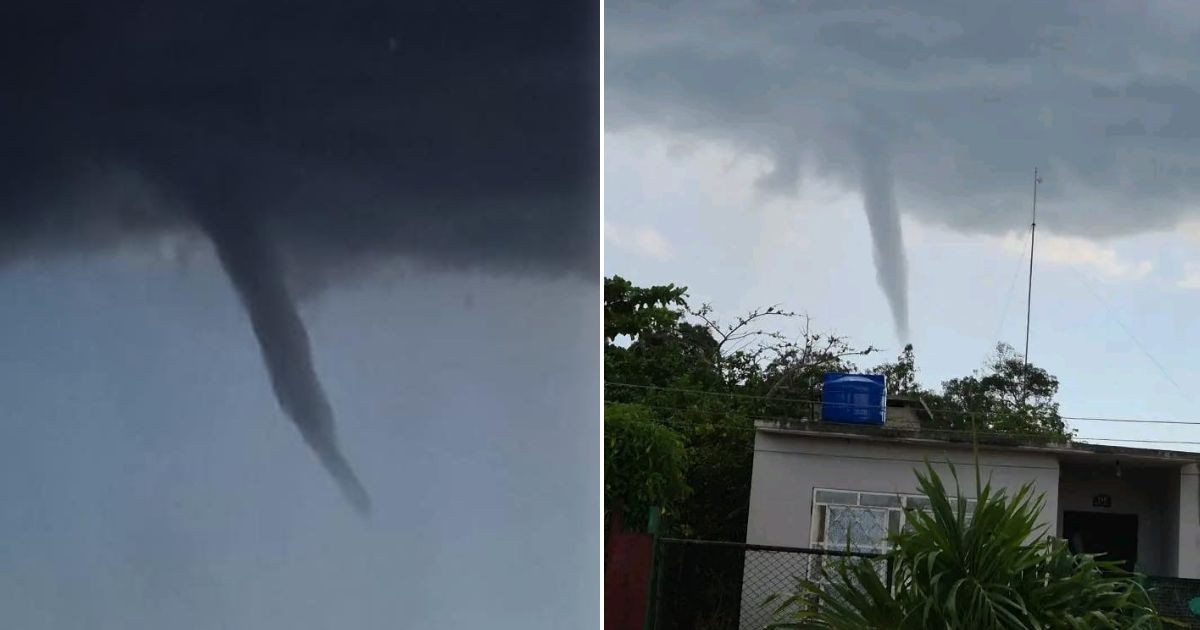
Funnel clouds, also known as waterspouts or "cloud tails," were observed this Sunday in the provinces of Ciego de Ávila and Las Tunas, as reported on social media by the meteorologist Raydel Ruisánchez.
The images were captured by meteorologists Frank Fernández Castañeda and Alexey Moreno Borges, specialists from both provinces, and shared on Facebook as a weather alert for the public.
According to the report from the specialists, the formations did not impact the land, so they did not pose a direct danger to the residents of the affected areas.
In Ciego de Ávila, the waterspout was reported south of the city minutes before 5:30 in the afternoon, captured from in front of the Pedro Martínez Brito park by citizen Orelvis Peraza, who shared the images with Roberto Delgado Mejías.
Ángel Miguel Lago Torres explained that “this phenomenon, also known as 'tornado tail', occurs when the funnel cloud that generates a tornado does not reach the ground, which means it does not pose a danger on land.”
The nurturing cloud of the phenomenon was a cumulonimbus formed by convection, responsible for rain and sometimes severe thunderstorms.
Ruisánchez attributed the atmospheric instability "to the presence of a trough, as well as to daytime warming and local scale factors."
The phenomenon is not new in Cuba. In 2025, tornadoes occurred in several provinces: south of Guanajay, in Artemisa, south of Havana, in Mantua, Pinar del Río, and north of Güira de Melena, among other events.
A waterspout was also spotted on the beach of Isla de la Juventud and a thunderstorm in Camagüey caused the formation of a cloud tail in March 2025.
The event takes place in the lead-up to Cuba's official rainy season, which starts on May 1st and accounts for approximately 80% of the country's annual rainfall.
The contrast is striking: April 2025 was exceptionally dry in Ciego de Ávila, with less than 30% of the average rainfall, while the province is now experiencing episodes of significant instability.
Ruisánchez warned that "this type of event will become more frequent in the upcoming months of the rainy season in Cuba, which officially begins on May 1st."
Filed under: