
Related videos:
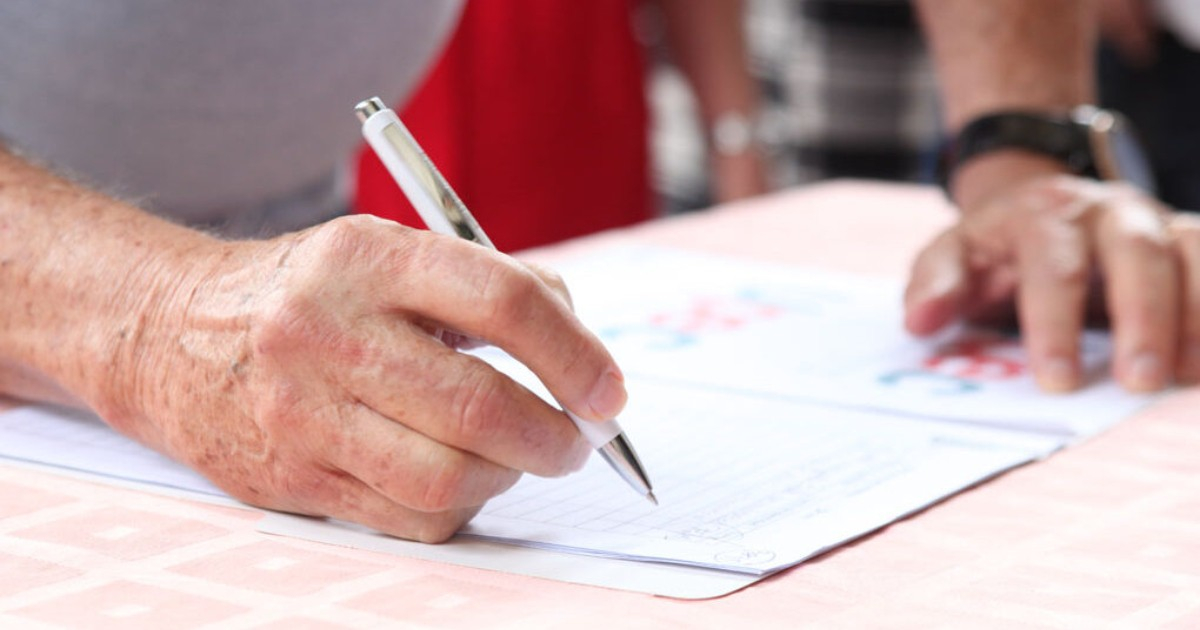
A woman went to buy bread at the store, and at that moment, they tried to deceive her into signing the adhesion document for the campaign "My Signature for the Homeland," according to young Christian David Espinosa reported on social media.
"The disgraceful tactics they're using with this 'for the homeland' signature initiative are unbelievable. Today, a sister told me that when she went to get bread, they tried to confuse her into signing. Something that should be a voluntary and conscious act is being coerced through pressure and deception. Disgusting!" she wrote.
The report is particularly significant because it shows that the campaign has transcended institutional spaces to infiltrate the most basic moments of survival: the bodega, a crucial point where rationed food is distributed.
The campaign "My Signature for the Homeland" was launched by the Communist Party of Cuba on April 19, 2026, coinciding with the 65th anniversary of the Battle of Playa Girón, with the aim of collecting millions of signatures before May 1 in support of the declaration "Girón is today and always."
Although the regime presents it as a spontaneous movement of civil society, it is centrally organized through workplaces, universities, and mass organizations like the Committees for the Defense of the Revolution.
The comments on Espinosa's post reveal a pattern of coercion that extends throughout the country.
"The signature is mandatory in workplaces; if you don't sign, you know you’ll be shown the door, and they'll make you an outcast in the neighborhoods," warned an anonymous commentator, echoing the documented threats of dismissal in Matanzas since April 21.
Another user confirmed that the signature collection is also taking place in Santiago de Cuba: "Great. Here in Santiago too."
A parishioner recounted that signatures were collected in his church, and he left the place, deciding not to return after 12 years in that congregation.
A commentator also reported that "they are offering 20 pesos in national currency to anyone who signs," highlighting the regime's difficulty in garnering voluntary support.
The response from citizens on social media has been decisive. Cubans from across the country responded that their signatures are not meant to support dictatorships, while others openly asked when there will be signatures for free elections.
In Cárdenas, residents of block 4 collectively resisted signing despite pressures and veiled threats from regime envoys.
Independent analysts evaluate the smoke screen campaign intended to divert attention from Cuba's worst economic crisis in decades: prolonged blackouts, critical shortages of food and medicine, and a contraction of GDP by 23% since 2019.
A commenter on Espinosa's post bitterly summarized what many Cubans feel: "Brother David, I am 51 years old, and my grandparents told me that since the beginning (1959) until now, they have always used the same mechanism. God bless Cuba and free us from this dictatorship."
Filed under: