
Related videos:
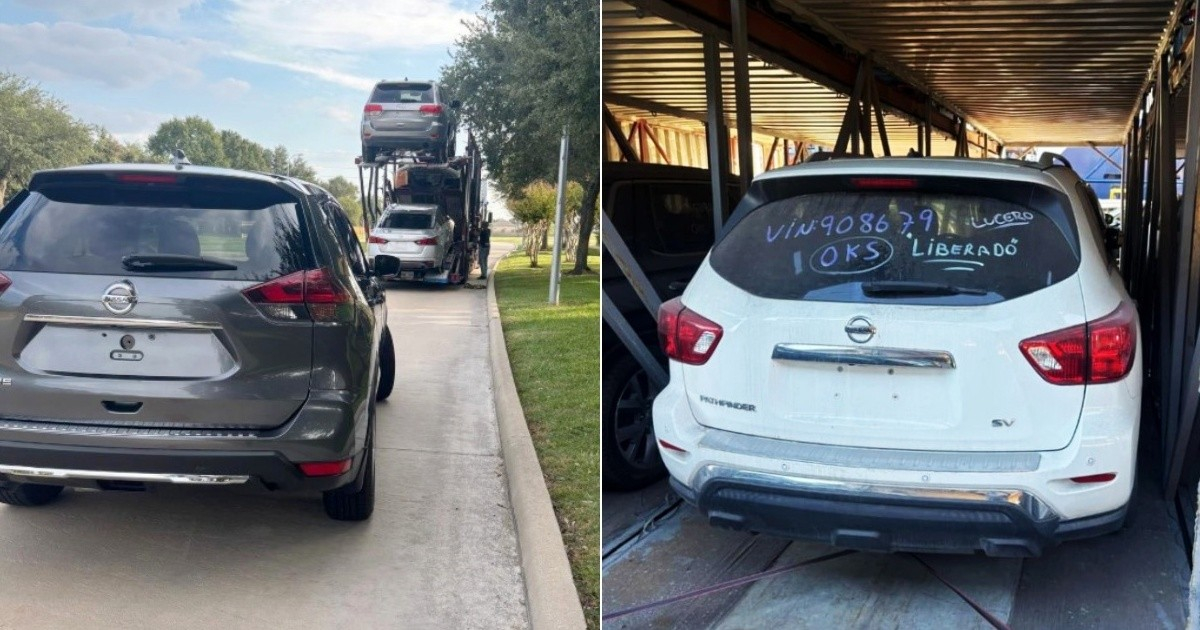
Desperation and anger have taken over dozens of Cubans living in the U.S. who paid thousands of dollars to send vehicles to Cuba and now watch as those cars remain held at the port of Miami River, racking up daily fees, while they risk losing them in a public auction.
For weeks, a group of Cubans has been reporting delays and issues with the cars they buy in the United States and ship to the island by sea.
“How are you going to auction my car? My car is in my name, my car is legal”, claimed one of the affected individuals in an interview with Univision journalist Javier Díaz.
"For example, mine cost me $15,000, and I already lost that car, plus $6,000 that I paid for shipping, and $1,500 for the tow truck that I had to pay because I live in Nebraska," added the same witness.
“We are victims of what is happening. We cannot pay for the cars again,” emphasized another Cuban who is going through a similar situation.
"We sent it through an agency called Lucero. So that agency was second-hand; they handed it over to another agency. That agency then delivered it to the port," detailed one of the involved parties.
This is an issue involving three companies. Meanwhile, the port of Miami is charging $120 daily for about 130 vehicles that are in limbo, with no final destination.
The issue involves three companies -Lucero Services Corp, OK's Charter Services Inc., and OK Import and Export Corp- and affects at least 131 families, according to the testimony of one of those impacted.
The port charges 120 dollars per day for the storage of each impounded vehicle, and the accumulated fees exceed 11,000 dollars in some cases.
Cubans contracted the service with Lucero Services, which acted as an intermediary and delivered the vehicles to OK Charter for their maritime transport to Havana.
The root of the problem is a debt that OK Charter owes to the port authority, which is holding the cars as a guarantee for payment.
Affected individuals who want to retrieve their vehicles must pay the storage fees—up to an additional $5,500 in some cases—or resign themselves to losing them. Lucero Services has refunded the shipping costs to some customers via checks, but not the value of the vehicles or the accumulated extra expenses.
The case also has a migratory dimension that Javier Díaz revealed: some of the buyers are Cubans with deportation orders or with the I-220A document who, fearing being expelled from the United States, sent their cars to Cuba so they would not return to the island "empty-handed."
These Cubans are now doubly victimized: by migratory uncertainty and by fraud from agencies.
These cases came to the attention of tax collector Daniel Fernández, who claims to be investigating several agencies and will take action.
The Miami-Dade County Tax Collector, Dariel Fernández, is investigating three companies for potential fraudulent practices, breach of contracts, and violations of export regulations. His office had already revoked licenses from businesses linked to illegal trade with Cuba since late 2025.
"We are working at the local level and also at the state level to see how we can help these people, who are being asked for amounts... We are talking about individuals who have to pay—I believe it's up to $5,000; in other words, people who have already paid $7,500 to be able to send these vehicles to Havana," Fernández explained.
"It is not something fair; it is something that cannot be allowed, and of course, we will be here in Miami-Dade County to put each resident first and ensure that no resident is scammed," he added.
Dozens of Cubans already protested in front of the port demanding the return of their vehicles on April 25th.
At that moment, Yaumara Morales Blanco, a representative of Lucero Services, acknowledged to the protesters that the matter was currently in litigation with OK Charter.
The situation worsened even further when Cuba suspended the importation of internal combustion vehicles in February, leaving many cars that could have set sail without a final destination.
Filed under: