
Related videos:
The Economic Commission for Latin America and the Caribbean (ECLAC) projects that the region will grow by 2.2% in 2026, a downward revision from the 2.3% estimated in December 2025, with Cuba and Haiti being the main contributors to this decline, according to the projection report published this Monday.
The United Nations agency warns that 24 of the 33 countries in the region would experience a slowdown in their growth this year, marking four consecutive years with rates close to 2.3%, which ECLAC describes as a trap of low growth capacity.
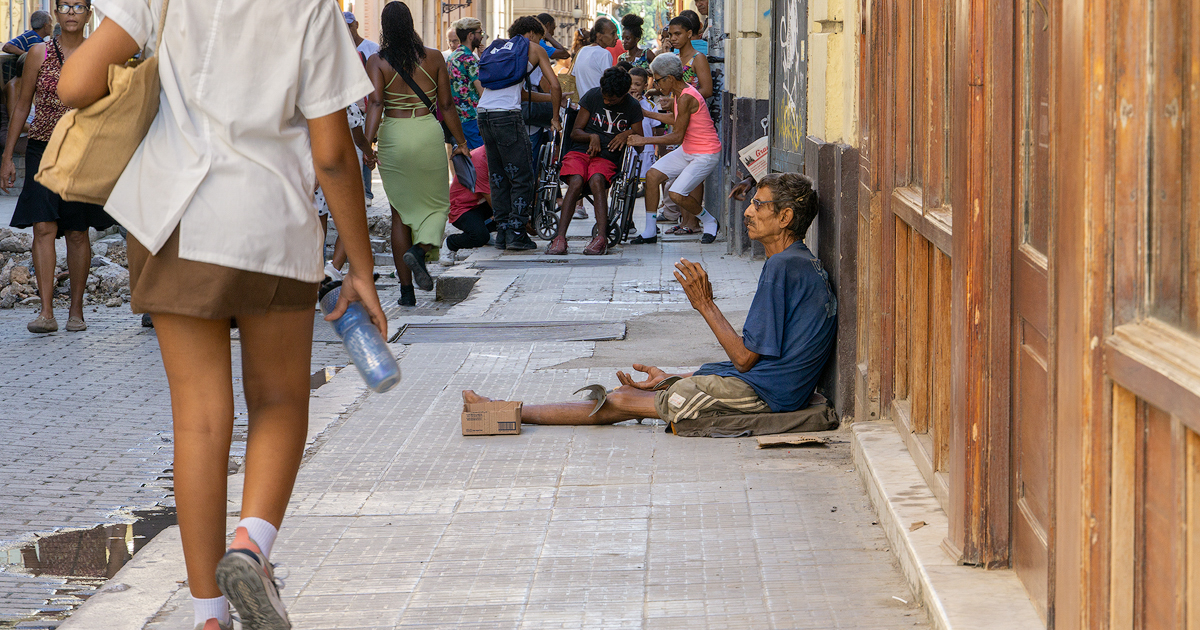
Cuba leads the contractions with a projected -6.5% for 2026, worsening the decline of -3.8% recorded in 2025.
Haiti, on its part, would contract by -1.4% in 2026, although with a slight improvement compared to the -2.7% of the previous year.
The impact of both economies on the Central American average is significant: while the region is expected to average a growth of 2.2% in 2026, excluding Cuba and Haiti raises that average to 3.9%, highlighting the distorting effect of these two economies in crisis.
CEPAL indicates that "if these two economies are excluded, the average would be 3.9% in 2026, representing a slight increase from the 3.8% observed in 2025."
The Cuban crisis has structural roots that have dramatically intensified in the early months of 2026.
After the capture of Nicolás Maduro on January 3, Cuba lost between 80% and 90% of its Venezuelan crude oil imports, equivalent to between 25,000 and 35,000 barrels per day.
Mexico suspended its supplies on January 9 due to pressure from Washington, and President Trump signed Executive Order 14380 on January 29, imposing secondary tariffs on any country that exported oil to Cuba.
The result is an energy crisis with power outages of up to 25 hours a day and a generation deficit of approximately 1,800 megawatts.
The Economist Intelligence Unit projected in February an even more severe contraction of 7.2% for Cuba in 2026, surpassing the estimate of ECLAC.
The Cuban economy has experienced a decline of more than 23% since 2019, and its per capita GDP of $1,082.8 is the lowest in all of Latin America and the Caribbean, well below the regional average of $10,212.
The economist Elías Amor summarized it without mincing words: "The Cuban economy is already in a state of extreme poverty in 2025."
In Haiti, the contraction is due to the violence of armed groups that control a large part of Port-au-Prince and three departments of the country, with 5.7 million people experiencing acute food insecurity.
The contrast within the region is significant: Guyana leads growth with a projected 16.3% for 2026, driven by its oil sector, followed by Venezuela at 6.5%, Nicaragua at 4.5%, and Paraguay at 4.5%.
The external context is not helpful either: the price of WTI oil in the first three weeks of April was 74% above the average for December 2025, creating global inflationary pressures that particularly affect already weakened economies like Cuba's.
While the regime of Miguel Díaz-Canel continues to blame the U.S. embargo for the economic collapse, data from CEPAL confirms that Cuba is, by far, the worst-performing economy in all of Latin America and the Caribbean, in a context where most of its neighbors, despite global difficulties, are maintaining positive growth rates.
The Cuban government officially projected a growth of 1% for 2026, a figure that independent economists consider completely disconnected from the reality on the island.
Filed under: