
Related videos:
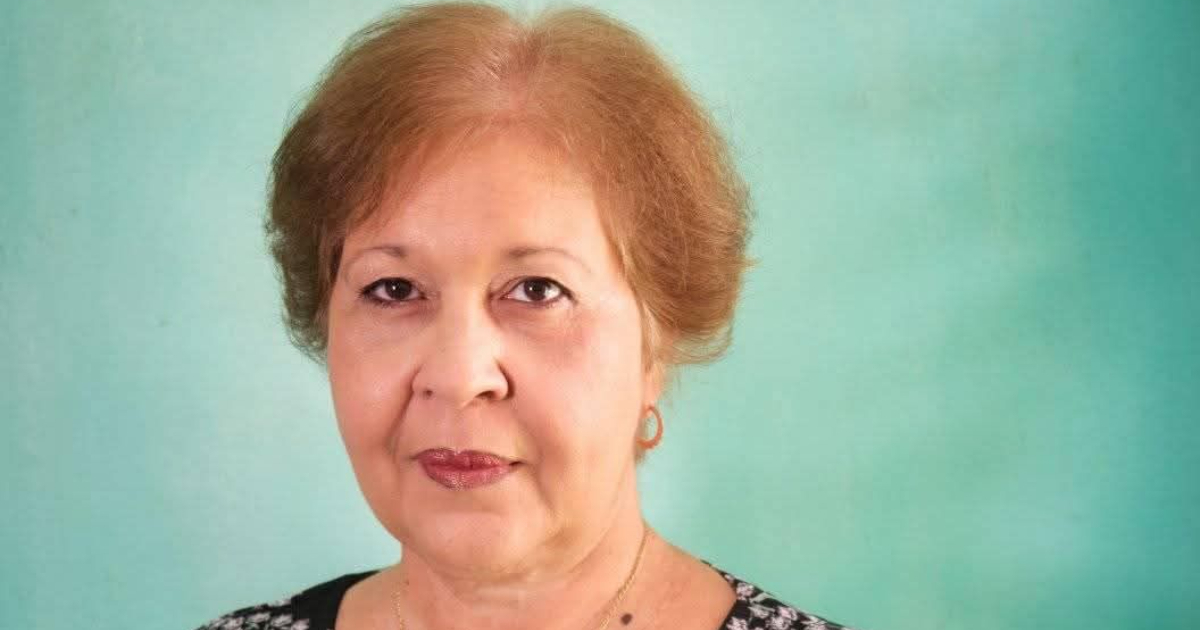
The historian and academic Alina Bárbara López Hernández published a post on Facebook in which, with evident irony, she responds to the criticisms from the Cuban regime against the independent survey "Cuba: Political and Social Perspectives" and demands that the Communist Party of Cuba (PCC) publish its own sociopolitical climate study, conducted months before the outbreak of the events on July 11.
The text from López Hernández arrives a day after the regime blocked the independent survey launched on April 23 by a coalition of more than 20 independent digital media outlets, and after pro-government media labeled it "scientifically invalid" even before its results were known.
"I believe it has been unfair to attempt to apply an independent survey to analyze the current state of Cuban society without considering the vast experience of the PCC in such studies," the academic wrote, in a tone that leaves little room for ambiguity.
The central argument of his irony points directly to November 2020, when the Political Bureau of the PCC, chaired by Raúl Castro, analyzed a "Study of the Sociopolitical Climate of Cuban Society" in preparation for the VIII Congress of the party.
"Let us remember that on the eve of the VIII Congress, the Political Bureau analyzed a 'Study of the Sociopolitical Climate of Cuban Society,' which surely reflected the reality at the time, as less than three months later, the social eruption of July 11 occurred," López Hernández noted.
That study was never published. The VIII Congress took place from April 16 to April 19, 2021, and just three months later, on July 11, 2021, Cuba experienced the largest public protests since 1959: massive demonstrations in over 50 cities with slogans of "Freedom!" and "Down with the dictatorship!".
The implicit conclusion is devastating: the PCC's "scientific" instrument did not foresee—or prevent—that explosion, which undermines the regime's criticism of independent methods.
The academic went further and issued a direct challenge: "I propose that this study be published, so that it will show the independent press, so audacious, how true instruments are applied to scientifically measure opinions."
The post is part of a broader debate. The independent survey had gathered over 22,400 responses as of April 26, with 58% coming from within Cuba through VPN. Its results were striking: 94% of participants expressed being very dissatisfied with the current system, and Miguel Díaz-Canel received an average rating of 1.11 out of five.
The comedian Ulises Toirac also acknowledged the civic value of the survey although he questioned its statistical reliability due to the lack of a representative demographic sample.
López Hernández had already defended the survey the day before as a fact of historical significance that breaks the state monopoly on public opinion, although he acknowledged that it is "improvable."
The academic, expelled from UNEAC in 2024 for her dissent and detained for 12 hours on February 18, 2026, in Matanzas during a peaceful protest, also faces charges of contempt, which she rejects as fabrications of the regime.
The survey remains available until May 1, 2026, and the regime has not responded to López Hernández's call to publish the sociopolitical climate study that the Political Bureau analyzed over five years ago.
Filed under: