
Related videos:
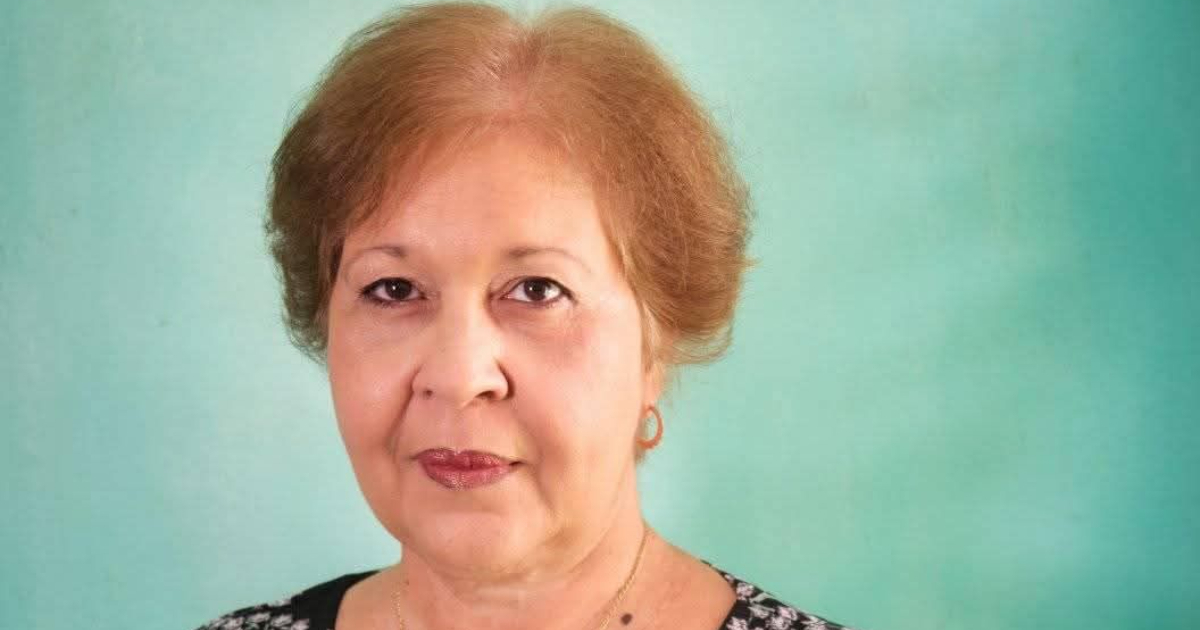
The Cuban historian and activist Alina Bárbara López Hernández published an analysis this Friday on the portal Cuba x Cuba, in which she dismantles the true nature of the Communist Party of Cuba (PCC) and concludes that the organization is nothing more than a camouflage for a power elite that has never been held accountable to anyone.
The article arises in the immediate context of the suspension of the 9th Congress of the PCC, which, according to the timeline of the last three conclaves, was supposed to be taking place precisely between April 16 and 19.
The postponement was decided on December 13, 2025 during the XI Plenary of the Central Committee, at the proposal of Raúl Castro, presented through a letter read by Miguel Díaz-Canel, who argued that it was necessary to concentrate all the country's resources on addressing current problems.
López Hernández points out that this suspended congress would have been the first led by Díaz-Canel as general secretary, and he describes it unambiguously: "A figure with an appearance of power, but with significant political wear and tear that, despite his insistence that he is accepted by the people, is being considered as a scapegoat in negotiations with the United States or in a hypothetical process of opening up."
The author compares the PCC with the Communist Party of the Soviet Union and the Communist Party of China to demonstrate that the Cuban party is the least institutionalized and wields the least decision-making power of the three. While the Chinese party operates as a real governance mechanism with congresses every five years that announce verifiable strategic changes, the PCC exhibits low institutionalization, a complete fusion between the party, state, and leadership, and an inability for self-reform. Its congresses, she asserts, "are rarely held during times of crisis and never generate tactical transformations, they only confirm what is inevitable."
To support this thesis, López reviews the history of the eight congresses held since 1975. The first was postponed from 1970 to 1975 despite the costly failure of the Ten Million Ton Sugar Harvest. Between 1997 and 2011, fourteen years passed without any congress while significant strategic decisions were made: the alignment with Venezuela as a new supporting country, the dismantling of the sugar industry in 2002, and the purge of figures close to Fidel Castro by his brother Raúl in 2009, among others.
The 8th Congress of 2021, held during the height of the pandemic, did not serve to discuss solutions but rather to formally transfer power to Díaz-Canel, foreshadowing the social upheaval of July 11. The historian also reveals that the delegates previously reviewed a "Study of the Sociopolitical Climate of Cuban Society" that was never made public.
López is equally forceful in evaluating the so-called economic reforms of the regime. Neither Fidel Castro's "Rectification of Errors" nor Raúl's "Updating of the Economic Model" had the congress as a core space for real debates. "The PCC cannot reform the system because it lacks internal mechanisms to process conflicts," he writes, "and its congresses are not spaces for genuine decision-making, nor do they structure power or correct deviations. Unlike classic communist parties, the PCC uses congresses to formalize decisions already made by the power elite."
The Cuban Constitution of 2019 defines the PCC as the "leading force of society and the State," but López turns that definition on its head with a devastating image: the party and its congresses "serve the same function as a hot air balloon: allowing the wind to move it."
The prominent activist and historian, a member of the Island's Academy of History, was expelled from the official Union of Writers and Artists of Cuba (UNEAC) in 2024 and has been systematically harassed, assaulted, and subjected to spurious legal proceedings for charges such as contempt and disobedience.
His substantial article concludes with a statement that summarizes the argument: "The true constitutional order in Cuba has never resided in the decisions of the single party, but in those made by a mafioso power group camouflaged behind that institution," and he adds that these same actors "lack not only political authority but also the slightest moral strength to accuse anyone of violating an order that they themselves have distorted."
Under constant blackouts lasting 20 hours or more, with chronic shortages and uncontrolled inflation leading to a massive exodus of citizens, the Cuban population is facing the most severe multidimensional crisis in decades. The regime—supposedly led by that PCC self-proclaimed "superior force"—focuses on propaganda, political control, and repression, while the daily lives of citizens become a torment.
Filed under: