
Related videos:
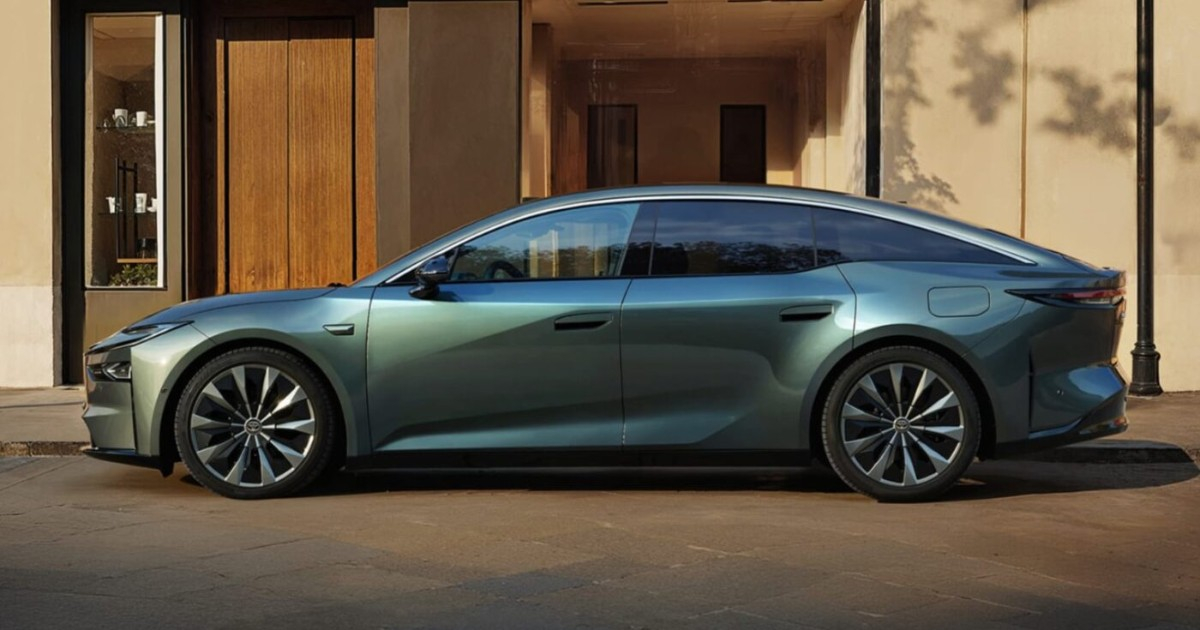
Toyota has made its boldest strategic shift in decades: instead of trying to outdo the Chinese tech ecosystem with its own solutions, it has decided to integrate it. The electric sedan bZ7, launched in the Chinese market at the end of March by the joint venture GAC-Toyota, incorporates the powertrain from Huawei, the assisted driving system from Momenta, and the smart home ecosystem from Xiaomi.
The vehicle received 3,100 orders in the first hour after its launch, a sign that the commitment to local technology has resonated with Chinese consumers.
The mechanical heart of the bZ7 does not bear the seal of Toyota or its partner GAC, but rather the Huawei DriveONE system: an integrated platform that combines an electric motor, inverter, and transmission in a single unit, with 207 kW of power and a maximum speed of 180 km/h. The smart cockpit operates with HarmonyOS Space 5.0, also from Huawei, featuring continuous voice architecture and long-term memory.
For assisted driving, Toyota selected Momenta and its R6 system, which employs 27 sensors and covers both urban environments and highways. The premium version adds a LiDAR sensor that enables autonomous navigation on the road. The Xiaomi ecosystem allows for the control of smart home devices directly from the vehicle's infotainment system.
LFP batteries are supplied by CALB in two configurations: 71.35 kWh with a range of 600 km and 88.13 kWh with up to 710 km according to the CLTC cycle. The 128 kW fast charging allows for recovering 300 km in ten minutes.
The bZ7 measures 5.13 meters in length with a wheelbase of 3.02 meters, and its launch price ranges from 147,800 yuan (approximately 18,400 euros) to 199,800 yuan (around 24,900 euros) across five versions.
This model is the second one fully developed in China by Toyota, following the bZ3X launched in March 2025. The turning point was the "Partnership 2.0" alliance between GAC and Toyota, announced in June 2025, which paved the way for deep integration with Chinese technology suppliers.
The context explains the urgency of the decision. Toyota holds a market share of less than 2% in pure electric vehicles globally, compared to 23% for BYD. In China, vehicle prices have fallen by 20% over two years according to AlixPartners, and passenger car sales plummeted by 23% in the first quarter of 2026. Huawei showcased 38 models from various brands with its systems at Auto China 2026 held in Beijing, solidifying its position as a key technology provider for the sector.
Volkswagen has followed a parallel strategy: at the same exhibition, it announced the integration of "agentic" artificial intelligence in its vehicles for China and unveiled the UNYX 09, an electric sedan co-developed with XPeng. Dongfeng and Huawei also presented the Yijing X9, another luxury SUV featuring HarmonyOS and the next-generation Qiankun intelligent driving system.
The message from analysts is clear. "Recovering a significant market share in China is not realistic," stated Andreas Radics, CEO of Berylls by AlixPartners. For foreign brands, the only viable path seems to be the one Toyota has just mapped out with the bZ7: if you can't beat the Chinese technological ecosystem, integrate it.
Filed under: