
Related videos:
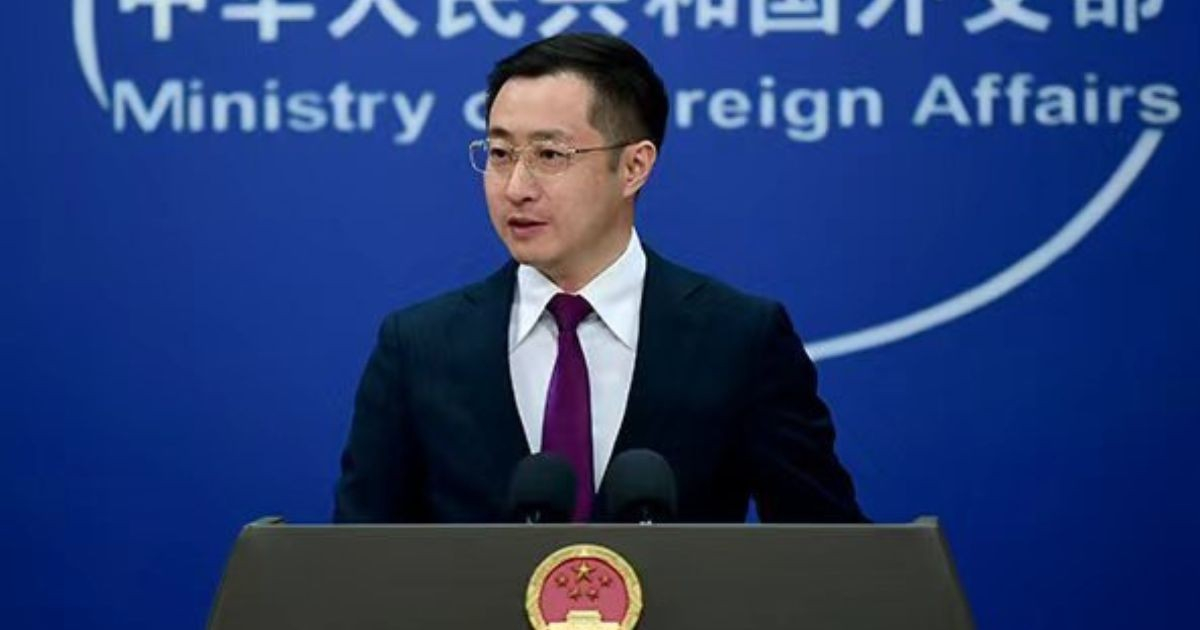
The Chinese Ministry of Foreign Affairs rejected the accusations made this Wednesday by U.S. Secretary of State Marco Rubio regarding alleged Chinese spying operations in Cuba, describing the cooperation between Beijing and Havana as "completely legitimate, transparent, and in accordance with international law."
The Chinese ambassador in Colombia, Zhu Jingyang, amplified the message on his X account with an official statement from the Ministry of Foreign Affairs.
"Inventing pretexts and spreading rumors does not justify the barbaric blockade or the illegal sanctions imposed by the U.S. on Cuba, nor does it conceal that the U.S. has seriously violated Cuba's right to survival and development and has contravened the basic norms of international relations," the statement noted.
The statements directly respond to an interview with Rubio on Fox News on Tuesday, in which he accused the Cuban regime of harboring Chinese and Russian intelligence on its territory, just 90 miles from the US coast.
"Cuba has welcomed U.S. adversaries to operate within Cuban territory against our national interests, with total impunity," asserted Rubio, who warned that the Trump administration "will not allow any foreign military, intelligence, or security apparatus to operate with impunity just 90 miles from the shores of the United States."
Rubio's accusations were supported by a report from the Center for Strategic and International Studies from December 2024 that identified at least 12 Chinese signal intelligence facilities in Cuba, spread across four locations: Bejucal, El Wajay, Calabazar, and El Salao.
This last one, located in Santiago de Cuba, 70 miles from the Guantánamo Naval Base, has systems capable of tracking signals at distances between 3,000 and 8,000 nautical miles. Satellite images confirm a gradual expansion of these facilities since 2021.
China, for its part, has maintained active support for the Cuban regime amid American pressure. In January 2026, Xi Jinping approved assistance of 80 million dollars and 60,000 tons of rice for the island, and in March, both foreign ministers agreed to elevate bilateral ties to "higher levels."
That support comes as Trump tightens sanctions on Cuba regarding oil, after signing Executive Order 14380 in January, which declared the island an "unusual and extraordinary threat" and imposed secondary tariffs on those who export crude oil to it.
The U.S. Embassy in Cuba warned this week that Trump will not allow the presence of foreign armies or intelligence services on the island, in line with Rubio's statements.
Cuban Foreign Minister Bruno Rodríguez also rejected on Wednesday the accusations that Cuba poses a threat to the United States, in a position coordinated with Beijing that reflects the strategic alignment between the regime of Díaz-Canel and the Chinese government.
"China will firmly support Cuba in safeguarding its sovereignty and national security, and urges the U.S. to immediately end the blockade, sanctions, and any form of coercion or pressure against Cuba," concluded Zhu Jingyang in his post.
Filed under: