
Related videos:
The words spoken this Friday by Donald Trump suggest a swift outcome: maximum pressure, show of force and almost immediate surrender of the Cuban regime.
But the story, the official rhetoric of Havana, and the nature of power on the island compel us to nuance that hypothesis. The question is not just whether they can resist, but whether they are willing to do so.
From the official discourse, the response seems clear. For decades, the regime has built its narrative around resistance and confrontation with the United States.
In this context, the concept of a "war of the entire people" or even guerrilla warfare has been echoed as a defensive doctrine. It's not an improvised plan: it is part of the political and military imagination of the system.
However, rhetoric and reality are two different things.
Cuba's military power is far from posing a real threat to the United States. Its equipment is outdated, its logistical capabilities are limited, and its strategic maneuverability is virtually nonexistent against a power with total superiority in air, sea, technology, and resources.
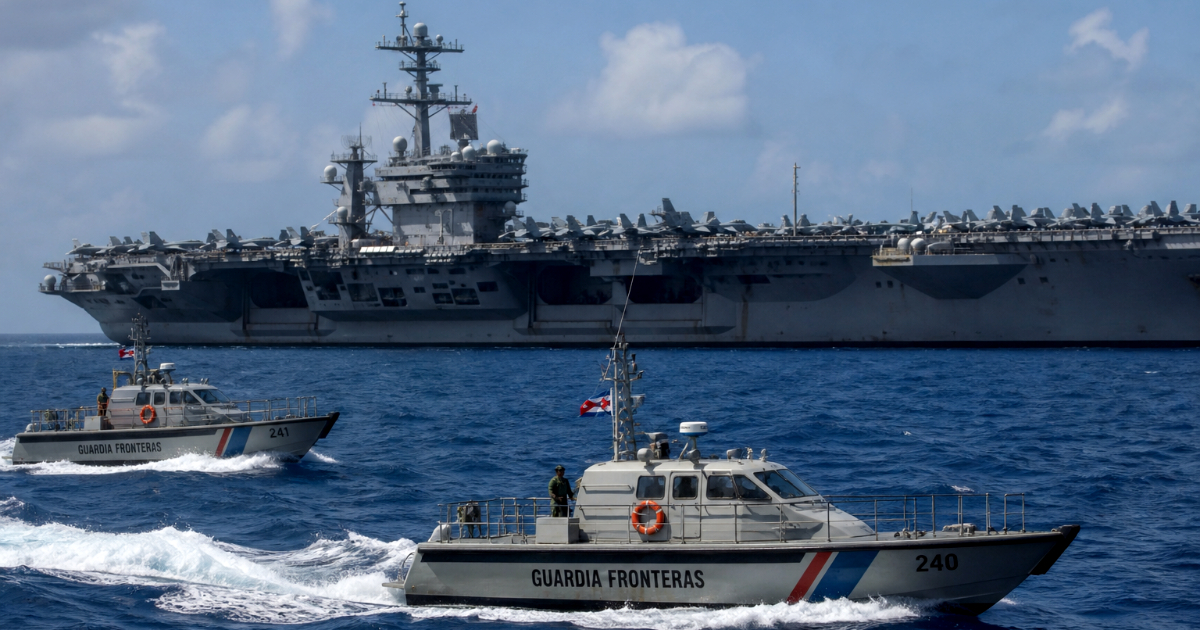
An aircraft carrier like the USS Abraham Lincoln would not just be a symbol, but a tangible demonstration of that asymmetry. In strictly military terms, the possibility of conventional resistance is nonexistent.
Then, is the option of irregular war still available?
Even that scenario presents serious doubts. Guerrilla warfare requires more than just light weapons and political will: it needs popular support, social cohesion, and ideological motivation. And that is where the Cuban regime faces its greatest weakness.
The country is going through a deep crisis. Shortages, prolonged blackouts, the deterioration of basic services, and mass emigration have eroded the relationship between the government and its citizens.
Discontent is no longer marginal; it is structural. And, unlike in other historical moments, there is an evident disconnect today between the official discourse and the real life of Cubans.
In that context, it is hard to imagine large sectors of the population willing to sustain a war to defend a system they perceive as responsible for their situation.
The events of July 11, 2021, are crucial. Those protests demonstrated that there is a latent capacity for social mobilization, even under conditions of strong repression. Since then, although the demonstrations have been more fragmented, reports of protests due to power outages, food shortages, or living conditions have continued.
This does not mean that the population is ready for a widespread uprising, but rather that active support for the regime is much weaker than what the official propaganda suggests.
This is compounded by an external factor: the Venezuelan precedent. The fall of Nicolás Maduro and the decisive role of the United States in that process have sent a clear message to allied governments: The indiscriminate use of force against the population can have direct international consequences.
That limits the options of the Cuban regime.
If a show of force were to occur, such as the deployment of an aircraft carrier off the coast of Havana, the most likely scenario would not be an immediate surrender, but neither would it be a prolonged resistance in the classic sense. Rather, it would usher in a period of heightened internal tension.
The apparatus of power could attempt to maintain control through symbolic mobilizations, resistance speeches, and an increase in internal security. However, its ability to sustain a real conflict would depend on factors that today seem weakened: internal loyalty, cohesion among the elites, and effective control over the population.
The key question is not whether they can fight, but whether they can bear the political and social cost of doing so.
Because, unlike in previous times, the regime is no longer facing just external pressure. It is primarily facing an internal weariness that has accumulated over the years.
The idea of a swift surrender may be optimistic. However, the notion of prolonged resistance also seems unrealistic.
Between both extremes, the most likely scenario is an intermediate one: tensions, internal movements, possible fractures within the power structure, and a population observing, eagerly waiting to see how far each actor will go.
Ultimately, the answer will not depend solely on the military strength of the United States or the rhetoric of the Cuban regime. It will depend on something harder to measure: how much real control the government retains in a country where the crisis has surpassed its ability to maintain fear as the only mechanism of governance.
The answer to that question could surface if the United States uses the Abraham Lincoln as a catalyst for the forces currently at play in the dramatic Cuban scene.
Filed under: