
Related videos:
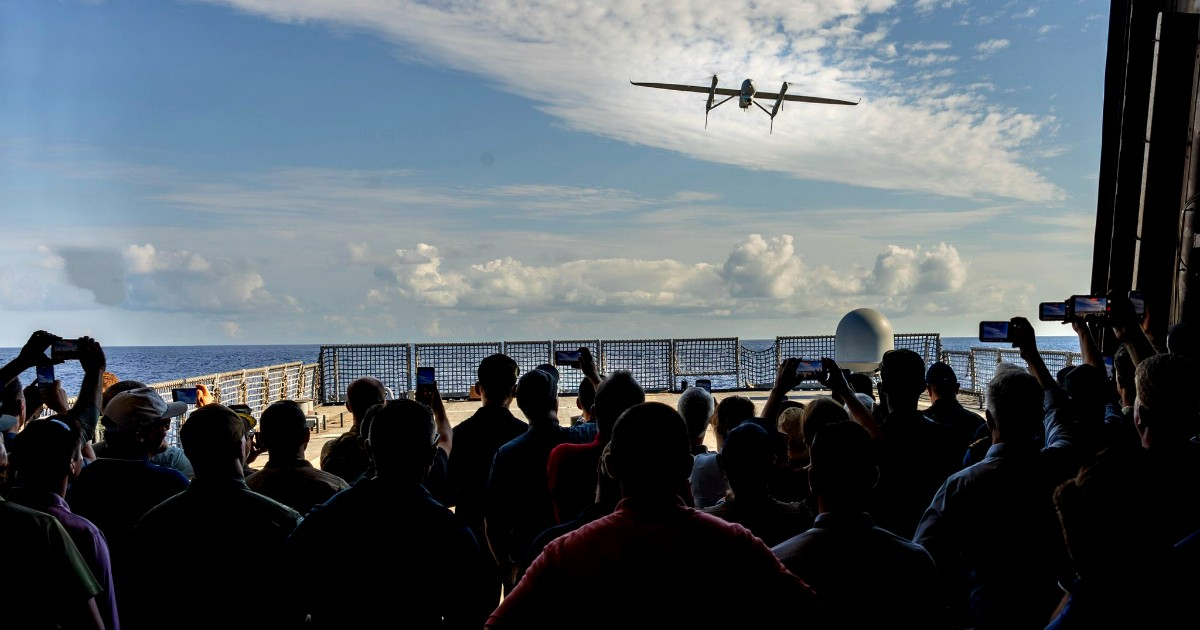
The Fourth Fleet of the U.S. Navy (USNAVSOUTH) declared yesterday the success of the FLEX2026 exercise, stating on its official account that "the hybrid fleet is ready" after seven days of operations with unmanned systems and artificial intelligence integrated into conventional naval forces.
The exercise took place from April 24 to 30 in Cayo Hueso (Key West, Florida), organized by USNAVSOUTH and the Fourth Fleet, with participation from the Joint Interagency Task Force South (JIATF-South), responsible for drug trafficking interdiction in the Caribbean and Central America.
According to the thread posted on X by the Fourth Fleet, "for seven days, unmanned systems equipped with artificial intelligence integrated with naval forces to detect, track, and eliminate illicit threats at sea."
The result, according to the same source: «greater reach, faster decisions, and decisive action».
FLEX2026 was the first edition of the program to demonstrate a complete chain of action: from detection to kinetic engagement. Previous editions of the FLEX program—active since at least 2022—were limited to individual tasks such as tracking and identification.
The deployed platforms included the long-endurance drone Vanilla UAS, capable of flying for up to ten days covering 15,000 nautical miles; the unmanned surface vehicle Tsunami USV, which military personnel loaded with ammunition during the exercise; the Orca UAS and Aerosonde UAS drones; the littoral combat ship USS Wichita (LCS 13); MH-60 helicopters; a Beechcraft Super King aircraft; and the research vessel NAWC 38.
Unmanned systems located, targeted, tracked, and engaged captured drug trafficking vessels, culminating in law enforcement interdictions and kinetic strikes that destroyed several boats.
Rear Admiral Carlos Sardiello, commander of USNAVSOUTH/4th Fleet, emphasized that the exercise demonstrated how "new technological advancements enhance maritime domain awareness, counter illicit trafficking, and defend our homeland."
FLEX2026 is part of a rapid technological militarization of the Caribbean. The Autonomous Warfare Command (SAWC) was established by SOUTHCOM on April 21, just three days before the exercise began, headquartered in Miami and under the command of General Francis L. Donovan.
That new command aligns with the priorities of the Pentagon, whose Autonomous Defense Warfare Group (DAWG) requested $54.6 billion for drones in fiscal year 2027, compared to $225.9 million in 2026.
Meanwhile, the Southern Spear Operation has been active since September 2025 and by mid-April, it recorded approximately 52 lethal kinetic attacks against drug trafficking vessels in the Caribbean, with an estimated cost of 3 billion dollars.
Cuba is within the operational radius of all these activities. There have been documented flights of MQ-4C Triton drones and RC-135 Rivet Joint aircraft near the northern coast of the island, while Cuba's air defense showcases outdated equipment in the face of this new generation of autonomous systems.
"This is how we ensure maritime dominance," concluded the Fourth Fleet in its official communication, representing the most ambitious military deployment of the U.S. in the Caribbean in recent years.
Filed under: