
Related videos:
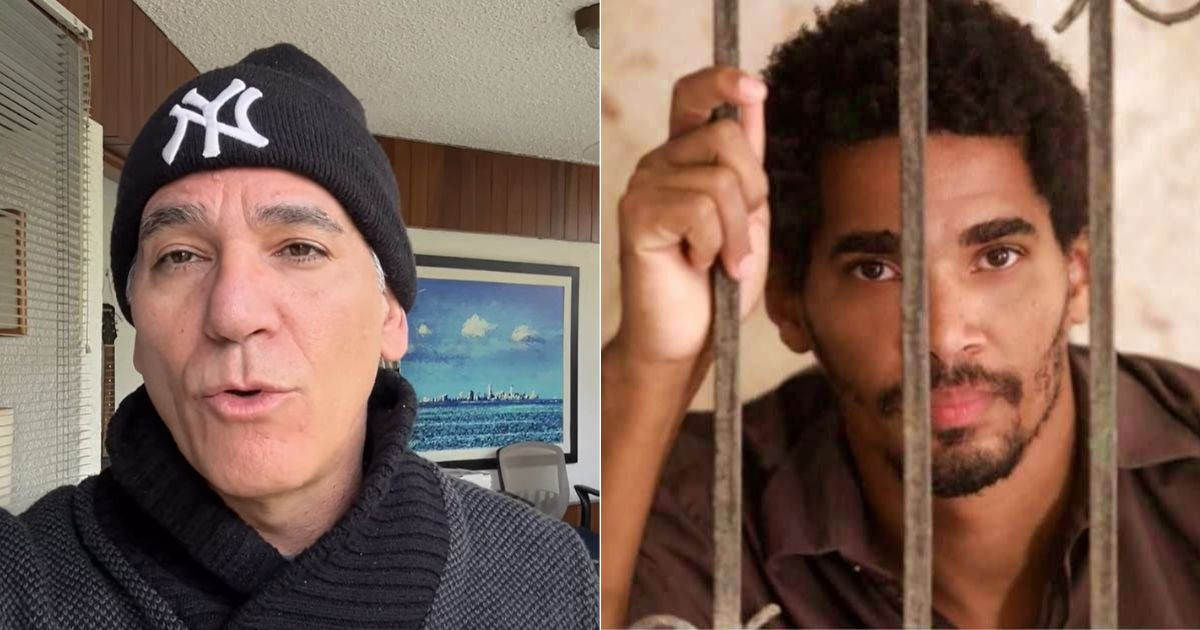
Luis Manuel Otero Alcántara "is the emblem of an era" and within him lies "many pillars of what Cuba needs for its immediate future," stated the Cuban filmmaker Ernesto Fundora in an interview with Diario de Cuba about his documentary We Are Connected, in which he portrayed the artist and activist over five years.
Fundora filmed Otero Alcántara between 2016 and 2021, initially unaware that this material would evolve into a feature-length documentary. The result is, in his own words, "an intimate portrait and at the same time the historical document" of an era marked by the thaw in relations between Cuba and the United States, the rise of artistic activism, and the subsequent radicalization of the political conflict on the Island.
The director, born in 1967 and residing in Mexico, describes the transformation he observed in the protagonist throughout the filming: "The documentary showcases exactly that evolution of a more naive, more sociological Luis Manuel, trying to understand the crucible of a nation through its systems of religious worship," until he becomes an anti-establishment figure who "perceives a connection" within the Cuban state.
Regarding the danger involved in filming on the Island, Fundora states: "It was the norm for anyone dealing with censored topics in a hegemonically tyrannical Cuba. It's a society fortified against dissent." His entire crew gradually left him out of fear, until he was left alone. "I was left alone with the camera and a small portable light. With that, I conducted the foundational interview that supports the entire narrative," he recounts.
That forced solitude produced, paradoxically, an exceptional closeness with the protagonist. Fundora describes how they shared a table and food, how a "silent complicity" was built through "winks, pauses, silences, a generational recognition." The filmmaker maintains that this human experience "imbues the material with an energy that makes it more profoundly human."
The documentary was premiered on February 7, 2026 at the American Museum of the Cuban Diaspora in Miami, with additional screenings in Little Havana and broadcast on N+ Univision Miami. The film includes music by Omar Sosa and Armando Gola, incorporates Cuban rap as the soundtrack of resistance, and adds testimonies about the imprisonment of Otero and the protests of July 11, 2021.
Fundora is categorical in assessing the historical significance of its protagonist: "There is no more prominent figure during the thaw than Luis Manuel and the San Isidro Movement." He adds that the video was for that movement "the electronic pen of its time, or even the symbolic rifle of its resistance," emphasizing the power of audiovisual media as a political tool against the official discourse of the regime.
The interview about the documentary comes at a time of high tension for Otero Alcántara. The artist, sentenced to five years in prison in June 2022 for contempt of national symbols, disobedience, and public disorder, is serving his sentence in the maximum-security prison in Guanajay. Between March 30 and April 6, he undertook a hunger strike lasting eight days in protest against death threats from agents of Department 21 of State Security.
On April 22, the Supreme Court upheld his imprisonment until July, rejecting the appeals submitted by Cubalex. Meanwhile, on April 12, the international campaign "A Photo with Luisma" was launched, coordinated by members of the San Isidro Movement from Miami and Madrid, to demand his release. Amnesty International recognizes him as a prisoner of conscience.
Regarding the future of Cuba, Fundora summarizes it in one word: "healing." And about the individual he hopes to see released from prison in July, he concludes: "I believe the man who will come out of that prison is not the same one who entered. He will be a grown man with different purposes."
Filed under: