
Related videos:
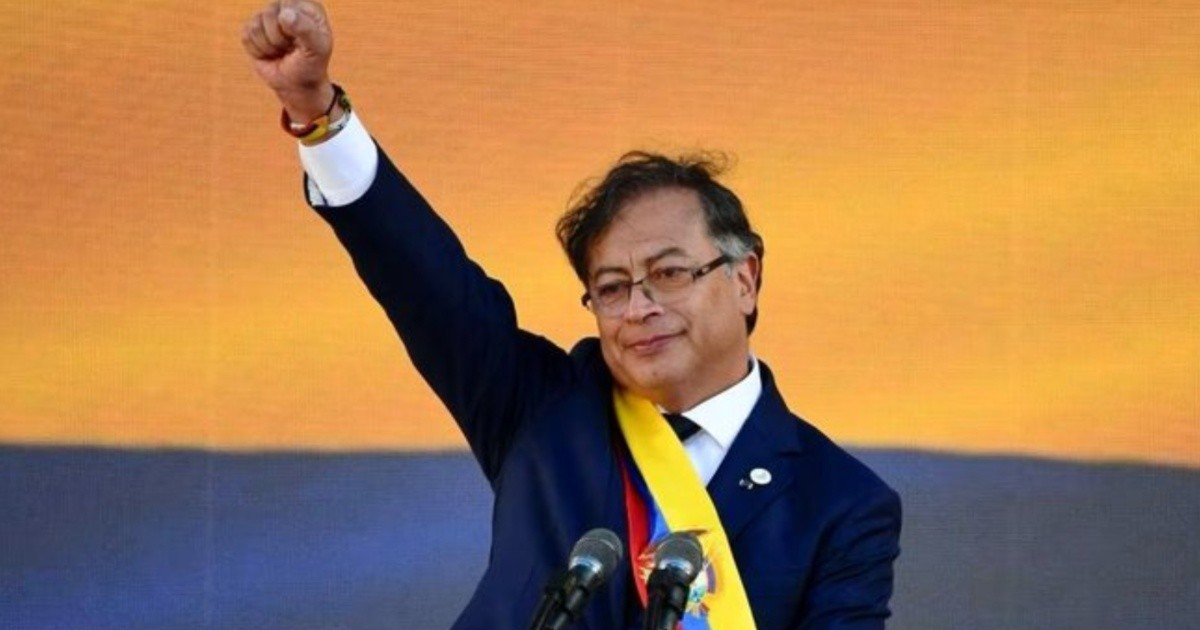
The Colombian president Gustavo Petro published a message on his X account this Saturday in which he openly rejected any military action by the United States against Cuba, labeling it as "military aggression towards Latin America" and aligning himself with the rhetoric of the Havana regime in response to Washington's pressure.
The statement came one day after President Donald Trump asserted during a Forum Club dinner in West Palm Beach, Florida, that the United States would "take Cuba almost immediately" after concluding operations in Iran, and described the hypothetical sending of the USS Abraham Lincoln aircraft carrier to within 100 yards of Cuban shores to compel the regime's surrender.
Petro wrote: "I do not agree with a military aggression against Cuba because that is a military aggression against Latin America."
The Colombian leader also reaffirmed that "the Caribbean is a region of peace and that must be respected," and stated that "Cubans are the sole owners of their country."
He closed his message with a declarative statement: "This continent is the continent of Freedom and not of invasions," followed by a salute to José Martí and to "the free and sovereign republics of Latin America and the Caribbean."
Petro's stance deliberately ignores that it has been 67 years of communist dictatorship that have deprived the Cuban people of the sovereignty he invokes, and that the main obstacle to the freedom of Cubans is not Washington, but the regime in Havana itself.
The Cuban regime, for its part, responded defiantly to Trump's words. Foreign Minister Bruno Rodríguez Parrilla declared that Cuba "will not be intimidated," while President Miguel Díaz-Canel stated that "no aggressor" will bend the island and appealed to the international community regarding what he described as "dangerous and unprecedented" threats.
The regime also moved the May 1st parade to the Anti-Imperialist Tribune in front of the U.S. embassy, with the presence of Raúl Castro and Díaz-Canel.
Trump also signed a new executive order that expands sanctions against Cuba, blocking assets linked to the regime and imposing secondary sanctions on foreign banks that operate with Cuban entities.
The alignment of Petro with Havana follows a sustained pattern. In October 2025, Petro boycotted an international summit after Cuba's exclusion and has promoted, alongside Cuba and Venezuela, the strengthening of CELAC as an alternative bloc to Washington.
The "zone of peace" invoked by the Colombian president refers to the Proclamation adopted at the II Summit of CELAC held in Havana in January 2014, which establishes the principle of non-interference and a rejection of military interventions.
However, according to Bloomberg, the actual plan of Washington is not aimed at a direct military invasion but rather at transforming Cuba into an economic protectorate through financial pressure and energy isolation.
Since January 2026, the Trump administration has imposed more than 240 new sanctions against Cuba, intercepted at least seven oil tankers, and reduced Cuban energy imports by between 80% and 90%, in an escalation that Trump himself has announced will continue.
Filed under: