
Related videos:
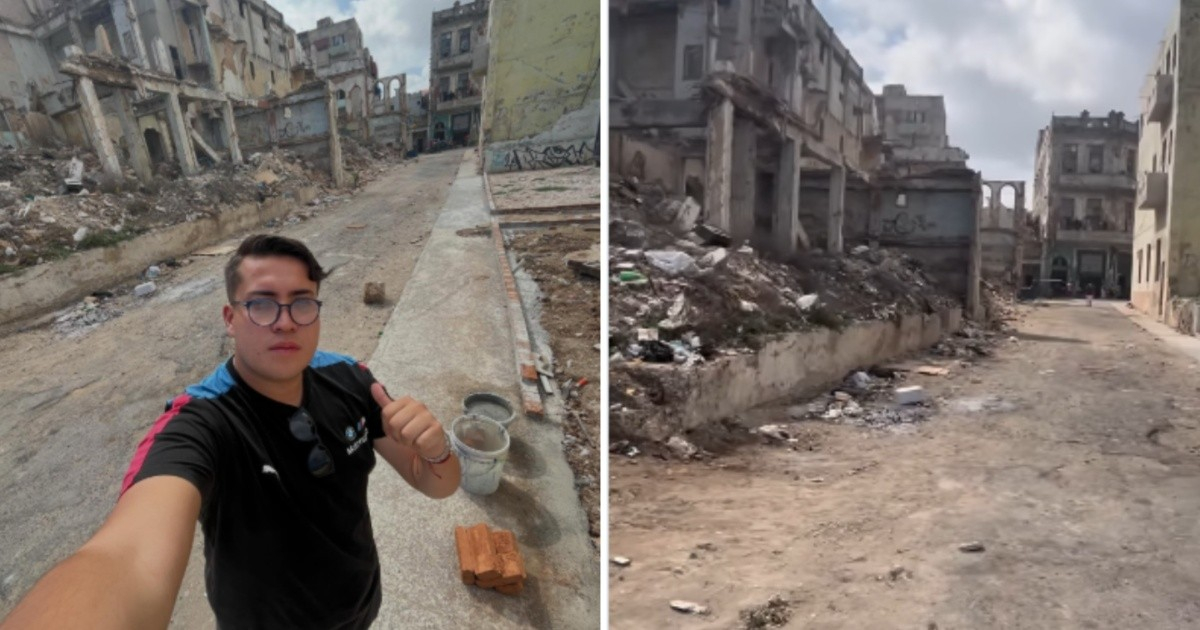
The Colombian journalist and political activist Daniel Maldonado arrived in Cuba last Thursday with the explicit goal of documenting the reality of countries living under socialism, and his first images from the island directly contradict the statements of Colombian President Gustavo Petro.
Maldonado, a contributor to El Artículo en el Congreso de Colombia and a law student, posted on Instagram: "Today I started the journey to document those countries that thrive thanks to socialism. I began with Cuba, the country that President Gustavo Petro claims lives better than in Miami, USA. And here are the first impressions I gathered."
The publication directly responds to a speech that Petro delivered in January 2026, in which he stated: "It is much better to live in Cuba amidst culture than in Miami stuck in traffic without its own culture, imitating Havana."
In that same speech, the Colombian president referred to Miami as "phantasmagoria" and "the sequin of capitalism," stating that Havana is one of the most beautiful cities in the world and predicted that Miami and Dubai will "disappear" for being illusions of capitalism.
He also urged Colombian migrants in the United States, Chile, and Argentina to return to the country, claiming that "they are treated like slaves and dogs chased through the streets."
The Cuba that Maldonado went to document is experiencing one of the worst crises in its recent history.
In April 2026, the island experiences electrical deficits of up to 1,945 MW, with power outages lasting between 18 and 24 hours daily in eastern provinces such as Holguín, Granma, and Santiago, affecting 55% of the national territory.
Electricity outages have directly impacted access to water: over 200,000 residents of Havana were left without drinking water due to failures in the pumping system.
Cuba has experienced seven total collapses of the electrical system in the last 18 months, a crisis worsened by the interruption of Venezuelan oil supplies since December 2025, following the capture of Nicolás Maduro in January of this year.
The food situation is equally dire. Rice production barely meets 36% of national demand, and the monthly rationing only satisfies between 30% and 40% of the population's caloric needs.
A carton of eggs in informal markets costs 5,000 Cuban pesos, while the average salary on the island hovers around 4,000 pesos per month, which is equivalent to about 16 dollars. The food inflation in those markets exceeds 250% year-on-year.
The human impact of the crisis extends to the most vulnerable: 12% of Cuban children under five years old suffer from stunting due to malnutrition, and infant mortality increased by 15% in 2025, according to data from UNICEF.
Cuba's GDP has fallen by 23% since 2019, with a projection of -7.2% for this year.
Maldonado's journey is part of a trend among Latin American journalists and activists who document the Cuban reality with their own images to contrast it with the narrative of regional leftist leaders.
Petro, who has made at least five visits to the island since taking office in August 2022, insisted in January that "when one goes to Havana 'for real', one finds a beautiful city, like the best in the world, and not the images that the press shows". The images that Maldonado began to publish from the island point precisely in the opposite direction.
Filed under: