
Related videos:
Officials from the Electric Company of Granma publicly urged the population on Saturday to protect the province's electrical infrastructure, following an increase in thefts in April that worsened the already critical energy situation in the area.
The technical director of the entity, Osvani Núñez Peña, reported that the first quarter of 2026 ended without any criminal incidents, but that April marked a turning point with thefts of lamps in photovoltaic solar parks and the theft of dielectric oil from transmission transformers.
"The call we make, taking advantage of the media to all the residents of Granma, is to take care of the electrical infrastructure, as it is designed to provide electric service to the population, to the economy of the territory, and to protect against wrongdoers and criminals," declared Núñez, as quoted in a report by the station CMKX Radio Bayamo.
The most serious case occurred in the community of Julia, in Bayamo, where the theft of dielectric oil from a transmission transformer left 5,014 customers (approximately 20,000 people) without electricity for four days.
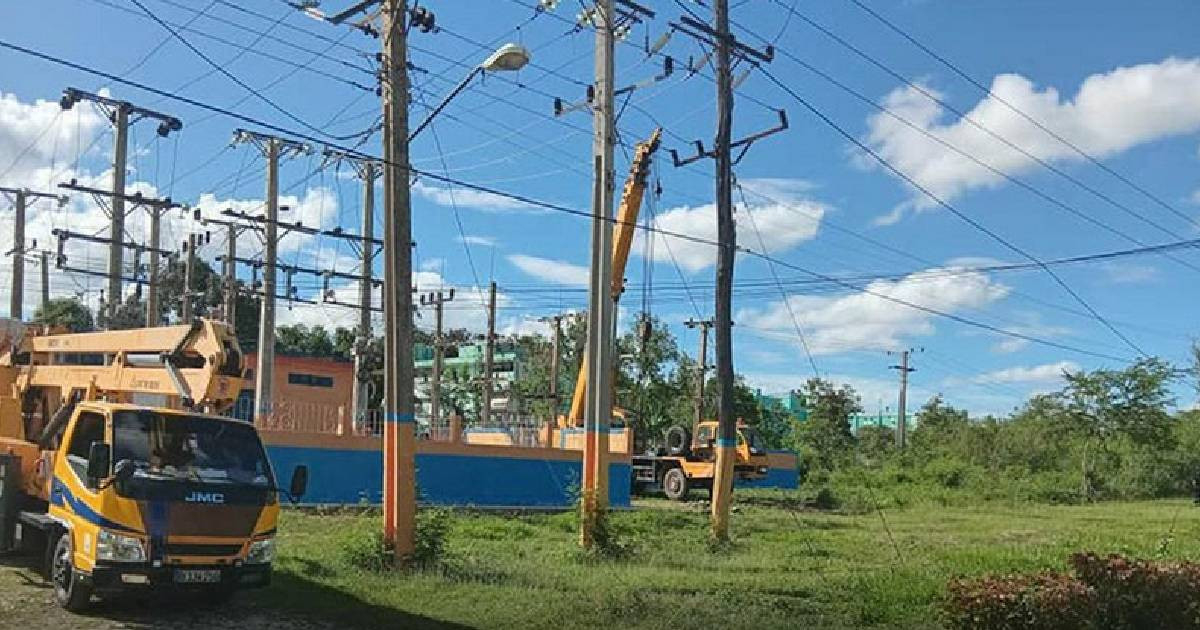
"To solve this, we had to use bulldozers for earth moving, scoops, dump trucks, two 20-ton cranes; all this work was necessary to restore electricity to the population after the vandalism," the executive detailed.
As a response, the company deployed workers and assistants at the 61 isolated substations in the province to monitor the infrastructure around the clock.
The phenomenon is not limited to Granma. In Mayarí, Holguín, more than 400 families were without electricity for 29 days, following a similar theft at a substation, and the solution required transporting a transformer from Havana.
In Jagüey Grande, Matanzas, a man was arrested after stealing dielectric oil from a substation, leaving 4,429 homes, a hospital, a polyclinic, and a health center without service.
In Jatibonico, Sancti Spíritus, three men were charged with electrical sabotage after being caught red-handed stealing dielectric oil from transformers at the Uruguay sugar mill.
Dielectric oil is being resold on the black market for up to 500 Cuban pesos per liter, used as a lubricant or fuel for tractors, which is driving a wave of thefts nationwide.
The Cuban legal framework classifies these acts as sabotage under Article 125 of the Penal Code, with penalties ranging from seven to 30 years in prison, life imprisonment, or the death penalty in severe cases.
The regime imposes more than 10 years in prison on 100% of the accused for electrical sabotage, according to data from the first quarter of 2026.
Despite the severity of the penalties, thefts continue to escalate. Prime Minister Manuel Marrero demanded "an iron fist" against fuel theft, labeling them as crimes of "high sensitivity."
All of this is happening while the electric generation deficit in Cuba exceeded 1,500 MW at the end of April, with Granma being one of the most affected provinces, experiencing power outages of up to 24 hours a day and without short-term improvement prospects.
Filed under: