
Related videos:
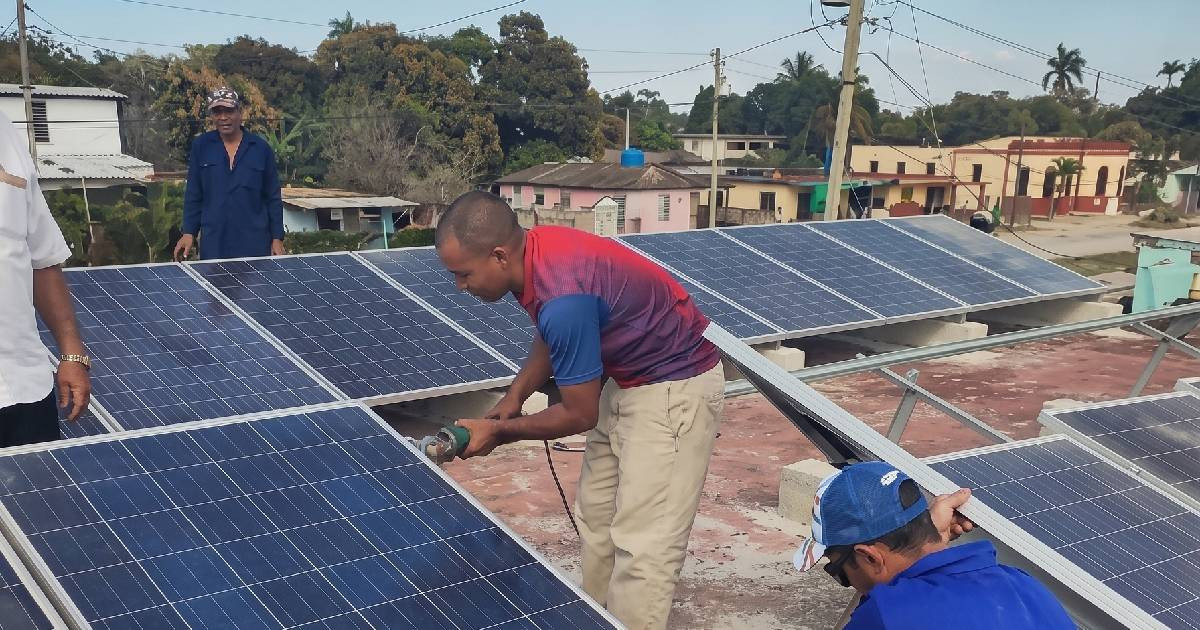
The First Secretary of the Communist Party in Matanzas, Mario Sabines Lorenzo, announced a plan for the installation of nine "solineras," so that the population can charge electrical devices and cook collectively, as part of a set of measures to alleviate the energy crisis affecting the province.
"Nine charging stations are also being moved and adjusted so that people can charge their devices, and we intend for it to even be a place where they can cook," declared the official after the May Day parade, in statements published this Sunday by the official newspaper Girón.
Solar stations are energy service stations that operate with solar panels, independent of the National Electric System (SEN). The term is a Cuban neologism that combines "solar" and "gas station," and it emerged as a decentralized response to the collapse of the state electricity system.
Sabines openly acknowledged the seriousness of the situation. "This community is facing numerous difficulties with prolonged power outages, water shortages, and disrupted communications due to the electricity deficit."
Matanzas is one of the provinces most affected by the crisis. The thermoelectric plant Antonio Guiteras, located there and one of the most important in the country, went offline on April 6 due to a boiler failure, which worsened the national deficit.
Nationwide, the electricity generation deficit exceeded 1,400 MW on several days in April, with power outages lasting up to 24 consecutive hours in various provinces.
In addition to the solar panel installations, the official listed other ongoing measures such as the installation of photovoltaic kits in polyclinics, funeral homes, and banks; electrical protection for the water pumping stations Bello, Canímar, and El Conde; and the placement of 1,500 lighting fixtures in the province, donated by state and private companies.
It was also announced that the state-owned and only Telecommunications Company of Cuba S.A. (Etecsa), along with a small and medium-sized enterprise, installed 18 connectivity points in municipal capitals, and that specialized vehicles for dialysis and oncology patients will be incorporated, along with new electric tricycles.
The model of gas stations has precedent in Cuba. The first gas station in Villa Clara was inaugurated on April 4 in the Virginia popular council of Santa Clara, operated by the private micro, small, and medium-sized enterprise Eléctrica Total.
The facility is equipped with 56 solar panels, has a power capacity of 30 kilowatts, and can simultaneously accommodate 52 cooking appliances, providing free food preparation services for the community.
In Villa Clara, private mipymes have installed solar charging stations that generate a total of 5.5 MW, while the state sector has installed five megawatts across 185 entities.
The energy crisis that compels these emergency solutions has worsened since January 2026, when Venezuela halted crude oil shipments and Mexico cut its oil exports under pressure from the Trump administration's sanctions. Cuba requires between 90,000 and 110,000 barrels daily but produces only 40,000.
The SEV has experienced eight total outages in just 18 months, with the seventh and eighth occurring on March 16 and March 22.
Filed under: