
Related videos:
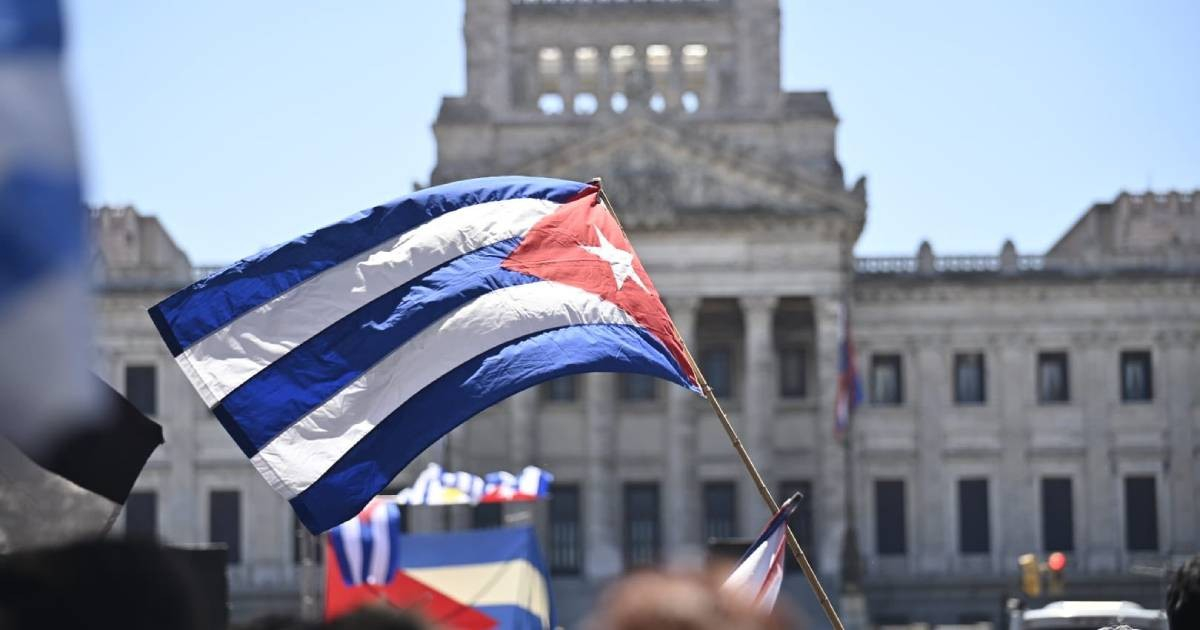
The Frente Amplio, a leftist coalition governing Uruguay with President Yamandú Orsi, issued a formal statement in defense of the sovereignty of Cuba in direct response to the remarks made by President Donald Trump, who stated last Saturday that the United States "will take Cuba almost immediately."
Trump made those statements during a dinner at the Forum Club in Palm Beach, Florida, where he also mentioned the possible deployment of the USS Abraham Lincoln aircraft carrier near the Cuban coast. The Cuban leader, Miguel Díaz-Canel, characterized the remarks of the American president as a "dangerous and unprecedented" threat, while Foreign Minister Bruno Rodríguez described them as a "clear and direct threat of military aggression."
The Frente Amplio characterized Trump's statements as "threats of military intervention" that "once again jeopardize the peace of the continent" and framed them within what the party calls a "systematic mechanism of suffocation" against Cuba, which includes an economic embargo lasting more than 65 years, the inclusion of the island on the list of state sponsors of terrorism, and new executive orders issued between January and May 2026 that classify Cuba as a "threat to the national security" of the United States.
The statement denounces that these policies create a "critical shortage of food, medicine, sanitary supplies for performing life-saving operations, and electricity to supply homes." The text concludes that "subjecting a population to such deprivations is a practice that violates fundamental human rights."
In its statement, the party expresses solidarity with the Cuban people, urges Washington to "abandon confrontational actions," and calls on the Uruguayan people to "mobilize in defense of Peace and remain vigilant in the face of this escalation of threats."
The position of the Frente Amplio is not new. In March, its 17 senators approved a motion rejecting the fuel blockade imposed by the U.S. on Cuba, without support from the opposition, which sparked a strong internal political debate in Uruguay. Days later, the president of the FA, Fernando Pereira, led a delegation that visited Havana from March 20 to 23 and met with Díaz-Canel.
The statement from the Frente Amplio comes in a context of sustained escalation. The Trump administration imposed over 240 new sanctions against Cuba since January 2026, which reduced the island's fuel imports by between 80% and 90%. Cuba is facing a humanitarian crisis with power outages of up to 30 hours a day and over 70% of households reducing their food consumption.
The Frente Amplio was not the only one to react. Colombian President Gustavo Petro also rejected any military aggression against Cuba, stating that it would equate to an aggression against all of Latin America. Last week, Russia accused the U.S. of attempting to "break Cuba's sovereignty" and promised humanitarian aid to the island.
The Orsi government represents a shift from that of his predecessor Luis Lacalle Pou, who referred to the Cuban regime as a "dictatorship" and blocked its invitation to Orsi's investiture ceremony in February 2025. The statement from the Frente Amplio concludes with a warning: "Sovereignty, self-determination, and territorial integrity are non-negotiable."
Filed under: