
Related videos:
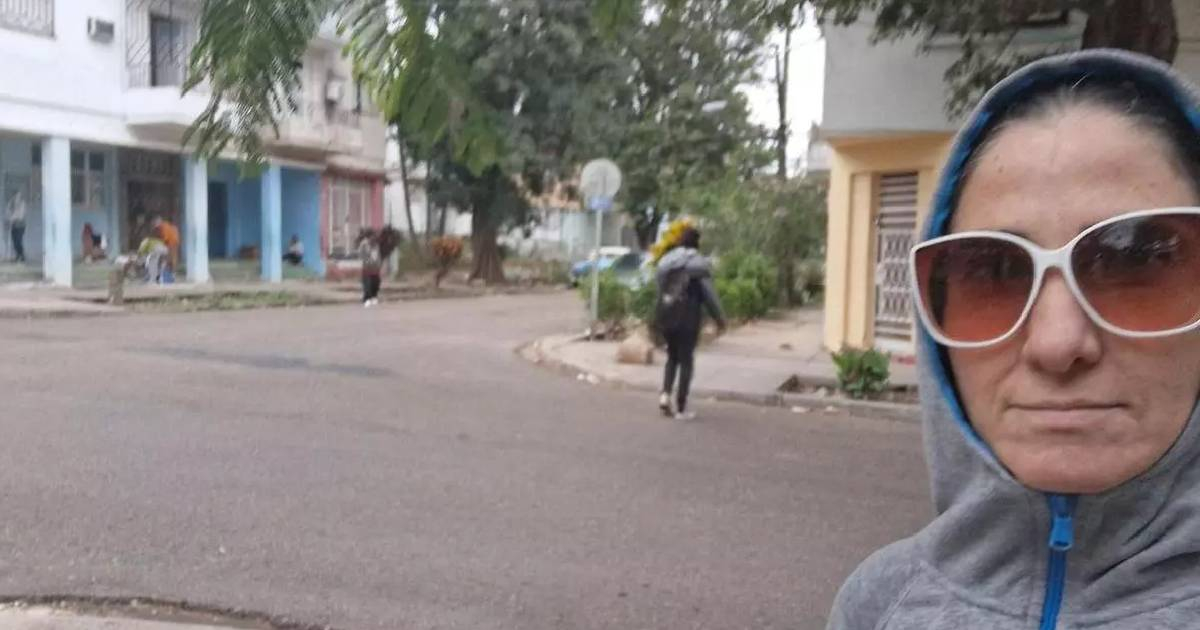
On the occasion of World Press Freedom Day, Cuban journalist Yoani Sánchez published a reflection on her social media this Saturday, stating that exercising independent journalism in Cuba "is not just a profession; it is a form of resistance," describing an environment where press freedom is not a right but "a daily battle."
Sánchez, founder and director of the independent digital media 14ymedio, reasoned that "each May 3 arrives with a different weight when practicing journalism from a country where press freedom is not a right, but a daily battle." In her message, she specified that the date on the Island is not for celebration "in the most comfortable sense of the word," but rather to "take inventory: of what has been gained through effort, of what has been lost along the way, and of what is still yet to be built."
One of the central themes of his reflection is connectivity as a tool of control. "I have learned to measure time not only by the days that pass, but by the times the internet connection drops, by the messages that never arrive, by the calls that get cut off just when someone begins to share their testimony," he wrote.
For the prominent reporter, "the poor quality of communications is not just a technical problem, it's a strategy," similar to the operations around journalists' homes and the agents who "monitor, take notes, and intimidate."
The journalist also denounced the most visible tools of repression: summons, interrogations, confiscations, and judicial processes designed to "turn the practice of journalism into a crime." She pointed out that the regime labels independent journalists as "mercenaries," "enemies," and "destabilizers," "as if reporting the truth were a form of violence."
This harassment has specific faces in 2026. Journalist Ángel Cuza Alfonso from CubaNet, was arrested last Wednesday in front of his daughter in Havana. Henry Constantín, director of La Hora de Cuba, was detained multiple times in January, including an arrest lasting over forty hours without a court order. Sánchez herself was detained in the street on January 28 by State Security agents to prevent her from attending a diplomatic reception, and on February 24, the regime prevented her from leaving her house as it was deemed a "counterrevolutionary date."
The figures support the picture described by Sánchez. Cuba ranks 160th out of 180 countries in the 2026 World Press Freedom Index by Reporters Without Borders, making it the second worst in the Americas after Nicaragua. The Cuban Institute for Freedom of Expression and the Press recorded 128 attacks against the press just in February 2026, an increase of 172.3% compared to the same month of the previous year.
Sánchez also warned that repression is not the only obstacle: "For decades, the country lived under an information monopoly that shaped not only what was said but also how it was heard." In his view, this legacy presents the central challenge for the future: to rebuild the relationship between independent media and the public, reminding us that "journalism, in its essence, is unsettling. It investigates. It reveals."
This monopoly has a legal basis. The Cuban Constitution of 2019 establishes that all media belongs to the State, and the Social Communication Law of 2022 criminalized independent journalism by equating it with subversive activities. In November 2025, the regime harassed 18 collaborators from elTOQUE under accusations of "financial terrorism," demonstrating how repressive practices have intensified in recent months.
Sánchez concluded his message with a warning to his colleagues: "To my peers, congratulations on this day, but I warn you that the path ahead is fraught with dangers, including dangers that arise from what today may seem like very close support."
Filed under: