
Related videos:
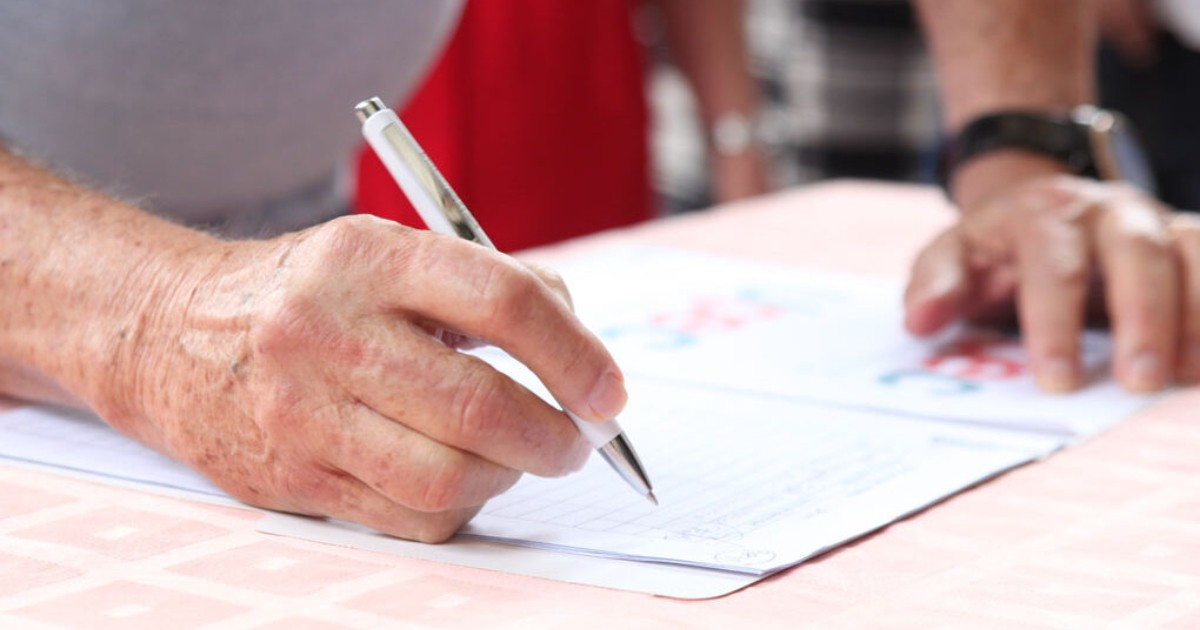
The propaganda apparatus of the Communist Party of Cuba (PCC) went so far in its campaign "My Signature for the Homeland" that it set up tables with forms at the entrances of the Sunday agricultural fair in the Plaza del Tenis, in Matanzas, where thousands of citizens gather every week to buy basic food items.
The incident was reported on social media by the profile DIAZ CANEL SIN GAO, a witness to the event, who also described the scene as "a completely sickening thing," noting that the PCC's propaganda department acts regardless of the material resources spent, just to fulfill the task "at any cost."
The campaign, launched on April 19 by Yuniasky Crespo Baquero, head of the Ideological Department of the Central Committee of the PCC, aimed to collect signatures in support of the declaration "Girón is today and always," officially presented as a spontaneous movement of civil society.
The intrusion was not limited to Matanzas. Damaris Armas reported on social media that signatures were also collected at the candonga in Santa Clara, stating that they went "from stall to stall," in her words.
Comments from Cuban citizens reflected a mix of indignation and irony regarding the situation.
Ami Lapinga wrote: "They say that if you signed, you would get a little bag. Empty, but a little bag."
Maria Fleites went further in her warning: "At any moment, they'll send donated rice to the warehouse and set up a sign-in book. If you don’t sign, you won’t get it; they’re capable of anything, as if that nonsense held any significance."
Fleites' comment was not unfounded. A leaked audio in May revealed the phrase "Sign or resign" as a means of pressure in workplaces, and managers of state-owned companies were pressured to secure at least 80% of signatures from their employees under the threat of dismissal.
Sergio Quintana provided a more analytical perspective on the operation: "Another way to gauge the number of followers they have is by conducting surveys to assess the level of acceptance."
Not everyone gave in. The Cuban Claudia González publicly refused to sign, stating, "My dignity has no price."
In Cárdenas, Matanzas, neighbors also reported resistance to the pressures to sign the official document.
Opponents such as José Daniel Ferrer from the Patriotic Union of Cuba (UNPACU) and Manuel Cuesta Morúa described the campaign as a "sham" and "mass coercion," questioning its legitimacy in a country suffering from chronic blackouts, severe shortages, and a GDP contracted by 23% since 2019.
On May 1, the regime announced it had collected 6,230,973 signatures —more than 56% of Cuba's total population, including children and the elderly— which were symbolically presented to Raúl Castro and Díaz-Canel during the central event of Labor Day in Havana.
Filed under: