
Related videos:
A severe localized storm unleashed over 62 millimeters of rain on the city of Las Tunas in just one hour and ten minutes, according to the Provincial Meteorological Center as reported by the Periódico 26 de Las Tunas.
The meteorological agency specified that the downpour was accompanied by strong lightning and intense winds, while the official weather station recorded a maximum gust of 80 km/h and an accumulation of 40 mm at its location. The difference between these figures reflects the concentration of the phenomenon over the urban center, where the accumulation reached 62 mm.
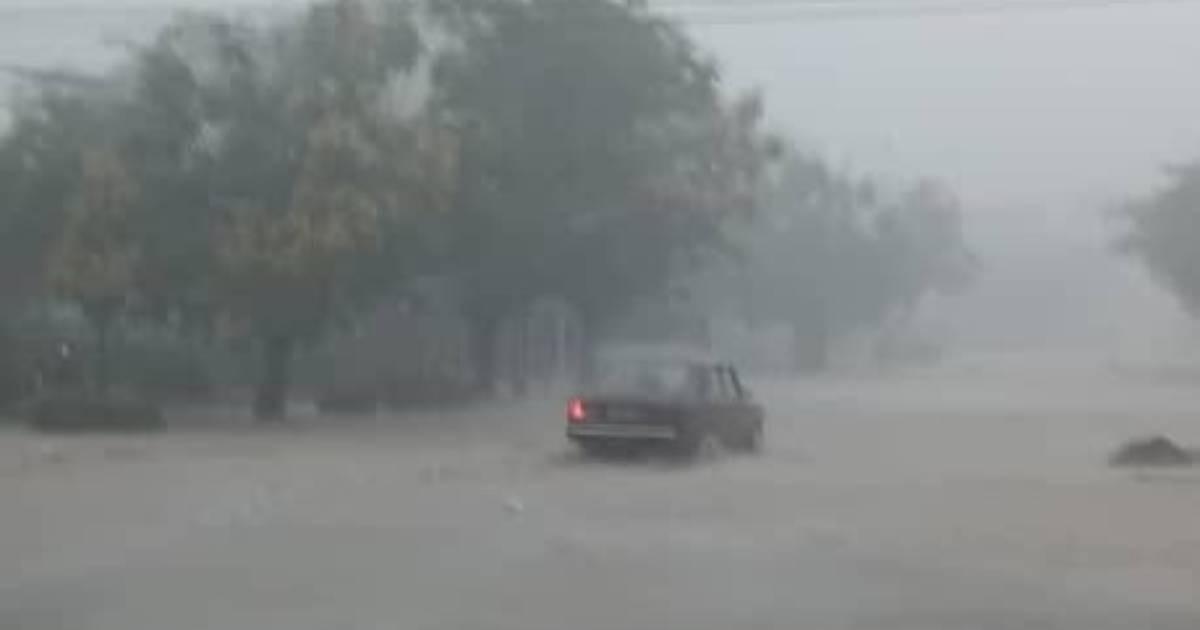
Images shared on social media showed streets completely flooded, with vehicles struggling to navigate through the water and trees violently shaken by the wind, all amid reduced visibility due to the intensity of the rain.
At least one resident reported being caught in the downpour. "I was caught in the rain on a porch on Martí Street," Ramón Suárez wrote on Facebook. Another neighbor, Nag Almaguer, estimated that the actual accumulation exceeded the official data: "It rained more than that, at least 80 mm."
The majority reaction on social media was one of relief. "Welcome the rain to my city, in one of the provinces with the least rainfall," wrote Diosdado Uliver. Arelis Viera Reyes summed up the collective sentiment: "Thank God because we were almost melting."
However, not all comments were celebratory. David P. Fernández warned of a structural health risk: “There is a greater accumulation of trash everywhere, which is washed away by the rain. Then major journalistic efforts express astonishment over supposed viruses and the spread of hepatitis, among other diseases.” Ricardo Pérez pointed in the same direction: “City cleanup only occurs when it rains heavily, as it drags away the solid waste that this incompetent government does not regularly remove.”
The episode today marks the second intense event in less than ten days. The start of the spring rainy season in Las Tunas occurred on April 26, with 108.9 mm accumulated in 48 hours in the provincial capital. Just on March 1, a severe local storm left hail and over 30 mm in just thirty minutes.
The popular relief has a direct explanation in the water crisis that the province is experiencing. In 2025, the reservoirs in Las Tunas reached 33% of their capacity, with over 90,000 people affected by water restrictions. That same year, Cuba recorded its fifth driest year since 1901, with only 83% of the historical average precipitation.
Severe local storms are common in Las Tunas between May and September. In August 2024, a similar event caused flooding in the city with 79 mm of rain and gusts of 73 km/h, while in May 2025 a storm caused severe damage to homes and the electrical system in Puerto Padre. For now, authorities have reported no material damage or casualties from today's event.
Filed under: