
Related videos:
The prolonged drought keeps the reservoirs in Las Tunas at critical levels and forces an extension of the water distribution cycles to 10 days per circuit, with the risk that the situation may worsen during the upcoming dry period.
David Legrá, head of the Base Business Unit of the Municipal Aqueduct Directorate in the eastern territory, explained that the situation could worsen further, as the dry season approaches without any significant recovery in the province's reservoirs.
In response to the complaints from the population, the official clarified that the published distribution table refers to circuits, which include several neighborhoods, and not to the names of specific areas.
He insisted that the entire city is included in the planning and urged residents to stay informed about their supply dates, reported the provincial newspaper 26.
To promote greater equity, the larger circuits have been divided, as seen in the cases of Buena Vista, Santo Domingo, and the city center, allowing for different dates for buildings and residential areas.
However, other large areas such as Aguilera, el Sosa, Casa Piedra, and Las 40 remain without subdivisions.
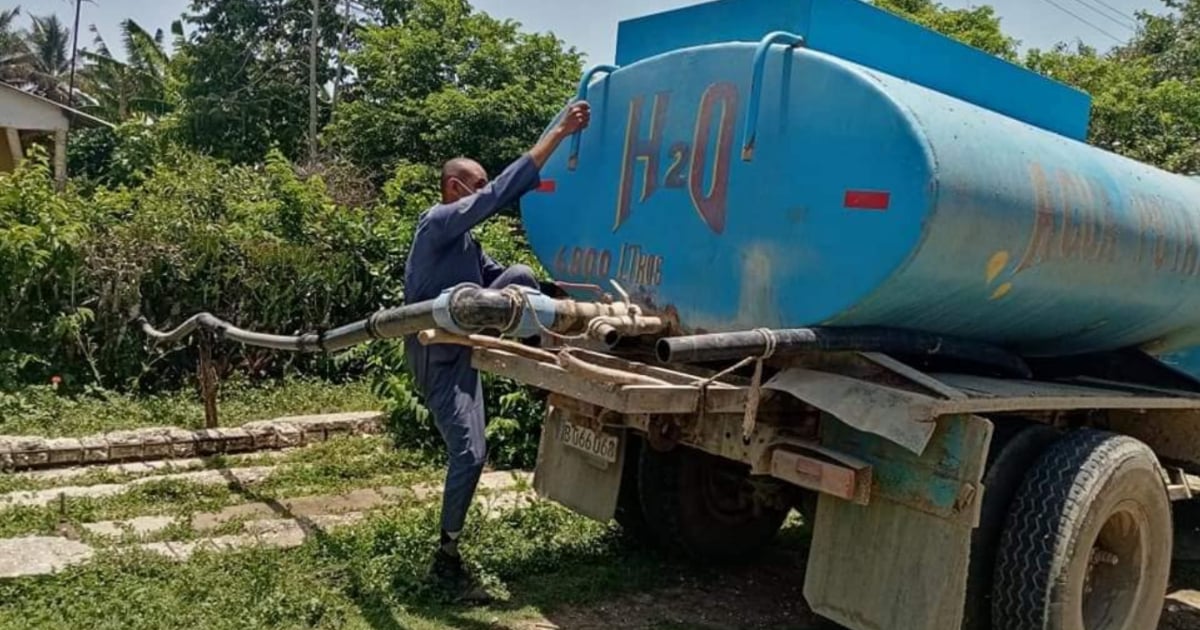
The executive also acknowledged the complexity of maintaining the supply by trucks in the higher and more remote areas of the city, due to fuel shortages and the extreme deterioration of transportation equipment, which exacerbates the supply crisis.
In the city of Las Tunas, more than 90,000 people are facing difficulties in obtaining a regular supply of water in their homes, especially in the higher areas of the urban landscape, where the pressure never reaches the households, it emerged weeks ago.
The water crisis in Cuba has reached very alarming levels, as more than three million people, equivalent to 30% of the resident population in the country, are currently experiencing total or partial lack of this resource nationwide, according to official data.
The Cuban government decided to release the district delegates from their usual jobs so that they can fully dedicate themselves to directly addressing the needs of the population, amidst a severe energy crisis and water supply issues that have sparked rising protests in various regions of the country.
The city of Guantánamo is facing a critical situation due to the lack of rainfall, which has led to a partial collapse of the water supply system, particularly in the southern area of the municipality.
The municipality of Santiago de Cuba is facing a critical situation, as the approximately 500,000 residents there are dealing with the most intense drought in 10 years, with reservoirs at minimal levels and water distribution cycles of up to 38 days, amid accumulated failures in the hydraulic system.
Furthermore, Holguín is facing the worst water deficit in the last decade, with more than 200,000 residents affected by service interruptions and reductions in supply.
The Zaza Dam, the largest reservoir in Cuba, located in Sancti Spíritus, holds only 106.4 million cubic meters of water, which represents just 12% of its design capacity of 1,020 million cubic meters and places it at the second lowest point in its history.
On the one hand, in the city of Pinar del Río, entire neighborhoods go over two months without service, the water trucks do not meet the demand, and those who manage to access one pay rates that consume half of their salary, while the government admits that a large number of the installed pumps are recycled and do not solve the problem.
Frequently Asked Questions about the Water Crisis in Las Tunas and Other Provinces of Cuba
Why have the water distribution cycles in Las Tunas been extended?
The water distribution cycles in Las Tunas have been extended to 10 days due to the prolonged drought and the low levels of reservoirs. The situation could worsen with the arrival of the upcoming dry season, as no significant recovery of water reserves has been recorded in the province.
How many people are affected by the lack of water in Las Tunas?
In Las Tunas, more than 90,000 people struggle to regularly supply themselves with water in their homes, especially in the higher areas, where the water pressure is insufficient to reach the households.
How is the drought affecting other provinces in Cuba?
The drought in Cuba is severely impacting several provinces. In Santiago de Cuba, for example, water distribution cycles can extend up to 38 days, and in Holguín, the water situation is the worst in the last decade, affecting over 200,000 people. Additionally, in Ciego de Ávila, 30% of the water is lost due to broken pipes, further complicating the supply.
What measures are being taken to address the water crisis in Las Tunas?
To try to mitigate the water crisis in Las Tunas, the larger distribution circuits have been divided to improve equity in the supply. Additionally, efforts are being made to repair pumping equipment and to install a floating intake at the El Rincón reservoir, although these measures are insufficient given the magnitude of the problem.
Filed under: