
Related videos:
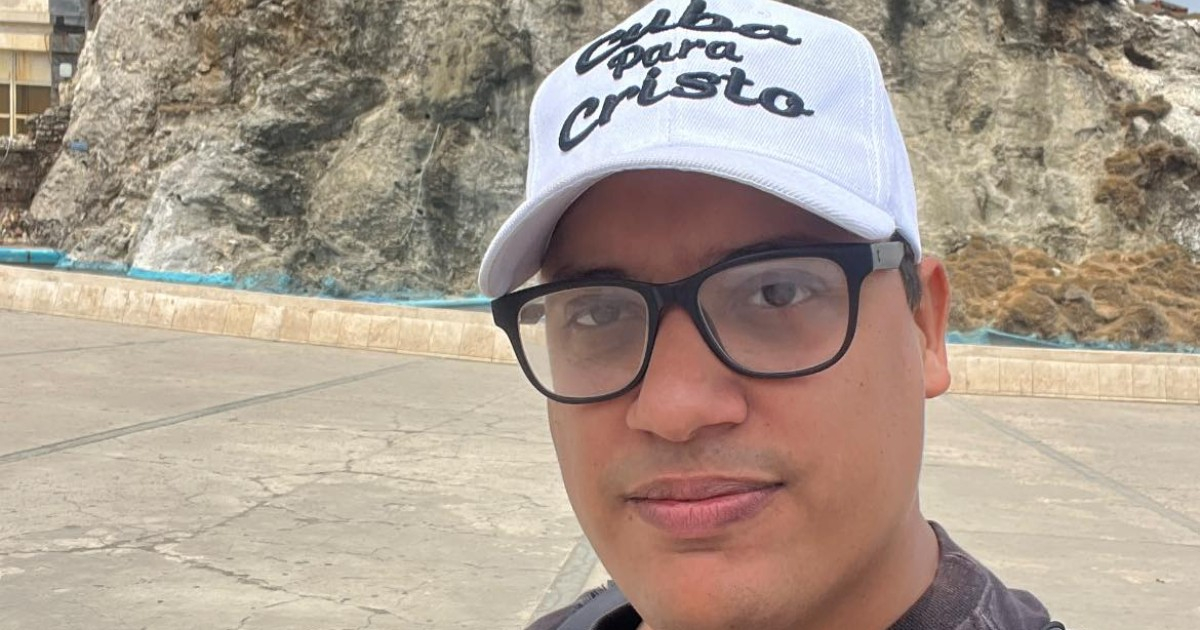
The Cuban activist and young Christian David Espinosa posted a message of hope on Facebook in which he expressed his desire for the day when in Cuba speaking freely is no longer a risk: "I hope that soon we won't have to measure every word we say, as if the truth were a crime rather than a right."
The post, accompanied by the hashtags #CubaParaCristo and #CristoSalvaCuba, comes weeks after the regime attempted to silence him through various means, including summons from the Ministry of the Interior and the coordinated cutting of his phone lines by ETECSA.
In the text, Espinosa writes: "I hope the day comes when speaking is not a risk, but a bridge. Where thinking differently is not a cause for suspicion, but for dialogue. I hope we can live without fear of expressing ourselves, without having to disguise what we feel, without having to silence what hurts."
The hopeful tone contrasts with the repression he has faced since the regime summoned him five times before MININT after becoming a public voice of Christian dissent in Cuba.
On April 13, State Security agents attempted to recruit him as an informant regarding a possible visit from the head of the U.S. Embassy mission, Mike Hammer. Espinosa refused to cooperate and publicly condemned the incident: "The only one who can govern my life is God, and even He respects my free will. That made them very uncomfortable."
Simultaneously, his wife Laidy García was summoned under false pretenses to the police station at Zapata and C, in the Plaza de la Revolución municipality. García reported that the real reason was to pressure her to influence her husband: "The real reason was to intimidate me so that I would influence David Espinosa, so that he wouldn't continue publishing anything related to social issues."
The most recent retaliation occurred during the night of April 22 to 23, when ETECSA coordinated cutting off the phone lines of Espinosa, García, activist Anna Bensi, and her mother, all within a span of just three minutes. Espinosa responded via social media using a mobile hotspot: “I’m connected through a hotspot. This also needs to be said.”
Espinosa also reported deceptive maneuvers in the signature collection for the campaign "My Signature for the Homeland" by the Communist Party: "Something that should be a voluntary and conscious act is being obtained through pressure and deceit."
The repression against freedom of expression in Cuba has intensified. The Cuban Institute for Freedom of Expression and the Press recorded 128 assaults on freedom of expression just in February, an annual increase of 172.3%. Cuba ranks among the worst countries in Latin America regarding press freedom according to the classification by Reporters Without Borders published on April 30.
His new publication concludes with a warning that encapsulates the weight of what has been experienced: "And hopefully, when that day comes, we won't forget everything it cost."
Filed under: