
Related videos:
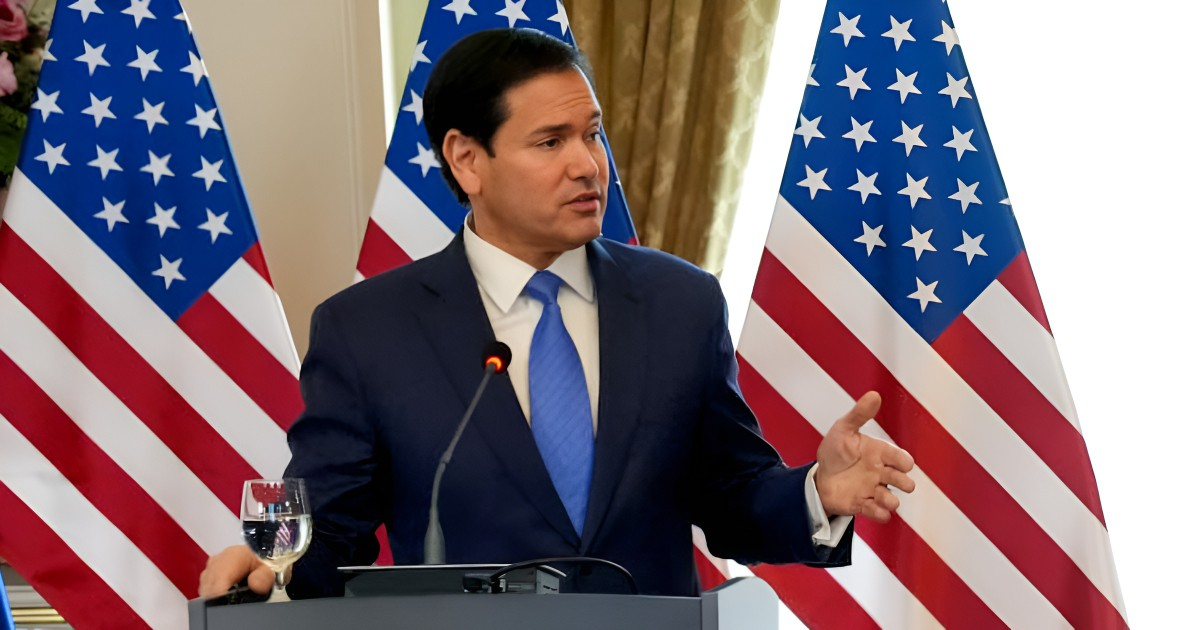
Secretary of State Marco Rubio warned this Thursday that the Trump administration "will not stand idly by" while the communist regime in Cuba threatens the national security of the United States, in a message posted on his official account that accompanied the announcement of new sanctions against key entities of the regime's economic apparatus.
"The sanctions today demonstrate that the Trump administration will not sit idly by while the communist regime in Cuba threatens our national security in our hemisphere. We will continue to take actions until the regime implements all necessary political and economic reforms," Rubio wrote.
The new sanctions target GAESA —the Business Administration Group S.A.—, its CEO Ania Guillermina Lastres Morera, and the state mining company Moa Nickel S.A.
Rubio described GAESA as "the heart of the kleptocratic communist system in Cuba," a military conglomerate that controls between 40% and 70% of the formal Cuban economy, with estimated assets of over $18 billion, and dominates sectors such as hotels, ports, remittances, and foreign trade.
The impact was immediate: the Canadian company Sherritt International Corp., a partner of Moa Nickel, suspended all its operations in Cuba that same day, repatriated its expatriate employees, and three of its directors submitted their resignations. The company's stock fell by as much as 30% on the market.
Sherritt's departure further exacerbates the Cuban energy crisis, as the company operated the Energas plant, which contributed between 10% and 15% of the country's electricity generation capacity.
The sanctions were enacted under the Executive Order 14404 signed by Trump on May 1, titled "Imposition of Sanctions on Those Responsible for Repression in Cuba and Threats to National Security and U.S. Foreign Policy."
This escalation is part of a sustained pressure that, since January 2026, has accumulated more than 240 sanctions against Cuba, the interception of at least seven tankers bound for the island, and a reduction of between 80% and 90% in Cuba's energy imports.
The results regarding the population are devastating: blackouts lasting up to 25 hours a day affect more than 55% of the territory, and The Economist Intelligence Unit projects an economic contraction of 7.2% for Cuba in 2026.
Rubio's warning comes days after the secretary himself described the situation in Cuba as "unacceptable" and referred to the regime as "incompetent communists who don’t know how to fix it," and after stating on Wednesday in the White House press room: "I'm not going to tell you what I discussed with Southern Command, but it had something to do with Cuba."
That same day, the U.S. deployed additional personnel to Southern Command amidst the rising pressure on the island.
The regime responded with its usual rhetoric: Miguel Díaz-Canel described the measures as a "brutal genocidal blockade" and accused Trump of "moral poverty," while Chancellor Bruno Rodríguez labeled them as "collective punishment of the Cuban people" and "illegal and abusive." China, for its part, expressed its "firm support" for Cuba and demanded that Washington lift the sanctions.
Rubio had been unequivocal on April 30: "The deep economic reforms that Cuba needs are impossible under the current regime."
Filed under: