
Related videos:
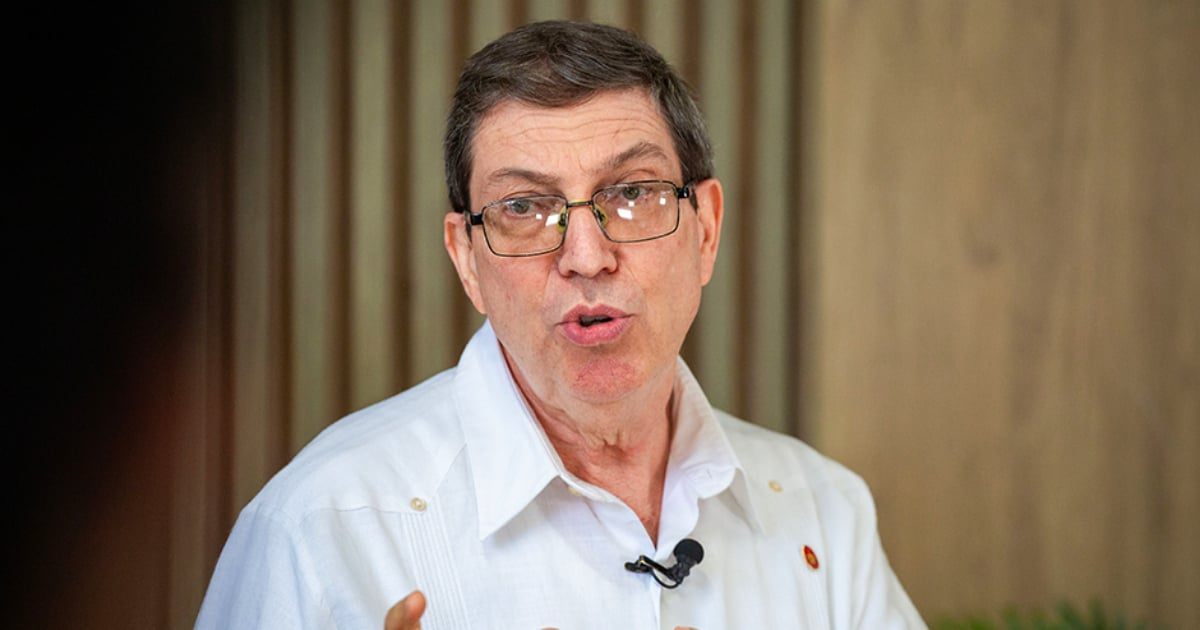
The Cuban chancellor Bruno Rodríguez Parrilla described this Thursday the new sanctions announced by Washington against GAESA as a "collective punishment" with a "genocidal intent against the Cuban nation," referring to the military conglomerate that controls between 40% and 70% of the island's formal economy.
The Secretary of State Marco Rubio announced today the specific designation of GAESA, its board member Ania Guillermina Lastres Morera, and the state mining company Moa Nickel S.A. (MNSA), which he described as "the heart of Cuba's kleptocratic communist system."
Rubio also warned that there will be "additional appointments in the coming days and weeks."
In his post on X, Rodríguez Parrilla stated that the measures "remove any doubt about the falsehood of their pretexts to attack our country" and accused Washington of acting "with the confidence that it can impose its will on the rest of the governments in the world, whose citizens and businesses are threatened by the illegitimate coercion of the U.S. government."
Sanctions are imposed under the executive order signed by Trump on May 1, 2026, which extends the national emergency declared on January 29 of that year and designates the Cuban government as an "unusual and extraordinary threat."
The impact was immediate in the mining sector. The Canadian company Sherritt International, a partner of Moa Nickel since 1994, announced the complete suspension of its operations in Cuba and the repatriation of all its expatriate staff, citing a lack of fuel.
In its statement, the company noted that "the mere issuance of the executive order creates conditions that materially affect the corporation's ability to operate in the ordinary course."
Sherritt's shares fell by as much as 30% following the announcement.
Rubio accused Moa Nickel of exploiting natural resources to benefit the regime "at the expense of the people" and of profiting from assets expropriated from American citizens and companies.
Sherritt's exit deprives Cuba of its main foreign mining partner and impacts between 10% and 15% of the island's electricity generation capacity.
GAESA was created in the 1990s by Raúl Castro to finance the Revolutionary Armed Forces after the Soviet collapse.
Today it controls tourism, retail trade, remittances, ports, and telecommunications, with estimated assets of over 18 billion dollars and shell companies registered in Panama, Cyprus, and Liberia to evade sanctions.
Since January 2026, the Trump administration has imposed more than 240 sanctions against the Cuban regime and intercepted at least seven oil tankers, reducing energy imports by 80% to 90% and causing blackouts of up to 25 hours a day in more than 55% of the Cuban territory.
China, for its part, reiterated today its “firm support for Cuba” and demanded that Washington “cease the sanctions and coercive pressure,” in line with the systematic backing that Beijing has provided to the regime since the start of the escalation.
Rodríguez Parrilla's rhetoric has escalated in severity over the months: from labeling the initial measures in January as a "brutal act of aggression" to denouncing today a " genocidal intention," while Rubio warns that the designations against the regime's economic apparatus have not yet concluded.
Filed under: