
Related videos:
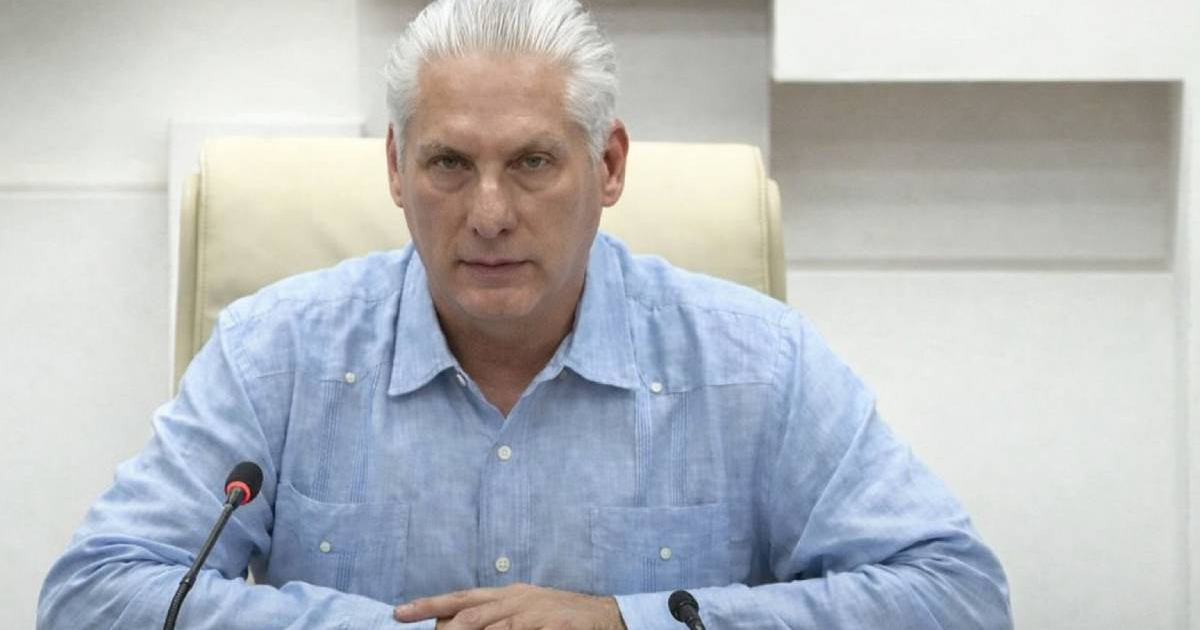
Miguel Díaz-Canel attempted to discredit Secretary of State Marco Rubio this Wednesday by referencing the energy sanctions enacted by President Donald Trump, amidst the escalating fuel crisis in Cuba.
The Cuban leader reacted on the social network X to statements made by Rubio on Tuesday at the White House, where he claimed that “there is no oil blockade against Cuba” and attributed the energy collapse on the island to the end of subsidized shipments of Venezuelan oil.
"It is surprising that a high-ranking official of the U.S. government publicly declares that his government does not impose an energy blockade against Cuba, and that he is unaware of what is stipulated in the Executive Order of his own president,” wrote Díaz-Canel.
The official referred to the Executive Order 14380, signed by Trump on January 29, 2026, which tightened sanctions against the Cuban regime and established secondary measures against countries, shipping companies, and businesses that supply oil to the island.
Díaz-Canel also insisted that Washington seeks to "destroy" the Cuban economy "by investing substantial resources and political capital to achieve this," after Rubio attributed the severe crisis the country is experiencing to the economic model and state inefficiency.
On February 20, 2026, Donald Trump signed an executive order that ends the additional tariffs imposed under the International Emergency Economic Powers Act (IEEPA), including those linked to Executive Order 14380 against the Cuban government.
The decision came after the Supreme Court ruling that declared most of the tariffs imposed under the mentioned regulation illegal, thus ending the "energy blockade" referred to by Miguel Díaz-Canel.
The specific exceptions for Russian oil intended for Cuba
While it is true that the Donald Trump administration tightened energy sanctions against Cuba, in January, Washington eliminated tariffs in February and allowed specific exceptions for the supply of Russian oil to the island amid the electricity crisis.
In April, the Department of the Treasury extended OFAC General License 134B, temporarily authorizing certain transactions related to Russian crude oil that had already been loaded before sanctions were imposed on that country. A prior clause specifically excluded Cuba from those operations.
The Russian tanker Anatoli Kolodkin, sanctioned by the United States, docked in Matanzas on March 30 with approximately 730,000 barrels of crude oil, marking the first major fuel shipment to the island in over three months. The operation was made possible because the White House decided not to block it for humanitarian reasons.
If a country wants to send some oil to Cuba, I have no problem with that, Trump stated at that time.
The sanctions against Cuba signed on May First
On May 1, 2026, Trump signed a new executive order that expands sanctions against the Government of Cuba, deeming its actions to continue representing “an unusual and extraordinary threat” to national security and U.S. foreign policy.
The text explicitly states that it has "the purpose of taking additional measures regarding the national emergency declared in the Executive Order 14380 of January 29, 2026 (Addressing threats to the United States from the Government of Cuba)."
However, in that official document, words like oil, fuels, gasoline, diesel, or gas do not appear even once.
There is no oil blockade against Cuba as such. Cuba used to receive free oil from Venezuela. They were given quite a lot of free oil. They took about 60% of that oil and sold it for money. It didn't even benefit the people," said the Secretary of State on Tuesday.
He stated that currently the only real "blockade" is Venezuela's decision to stop gifting crude oil to the island. "Nowadays, with oil prices, no one is giving away oil, much less to a failed regime."
Those words from Marco Rubio triggered a reaction from Díaz-Canel. The Cuban leader blames the United States for Cuba experiencing blackouts lasting more than 24 hours. The country's industries are practically at a standstill. The crisis affects all sectors of the economy and social life.
The island produces only about 40,000 barrels of oil daily, far from the 90,000 to 110,000 barrels needed to meet its demand. Following the decline in Venezuelan supplies and the constraints on Russian oil, the regime has seen a worsening fuel shortage.
The exchange between Díaz-Canel and Rubio reflects the rising tensions between Washington and Havana, as the Trump administration maintains a policy of maximum pressure on the Cuban regime.
Filed under: