
Related videos:
International pressure on Russia regarding the recruitment of foreigners for the war in Ukraine seems to be having tangible effects.
According to the Ukrainian project Quiero Vivir (Хочу Жить), linked to official bodies in Kiev, Moscow has already suspended the recruitment of citizens in 39 countries due to the impact of journalistic investigations, public complaints, and governmental reactions.
The statement raises an uncomfortable question for Cuba: if other governments have acted to curb the recruitment of their citizens, why does Havana maintain silence and opacity regarding the case of Cubans sent to the Russian front?
In a recent post, Quiero Vivir claimed that over the past year it has collaborated with international media and research organizations to expose the recruitment networks used by Russia.
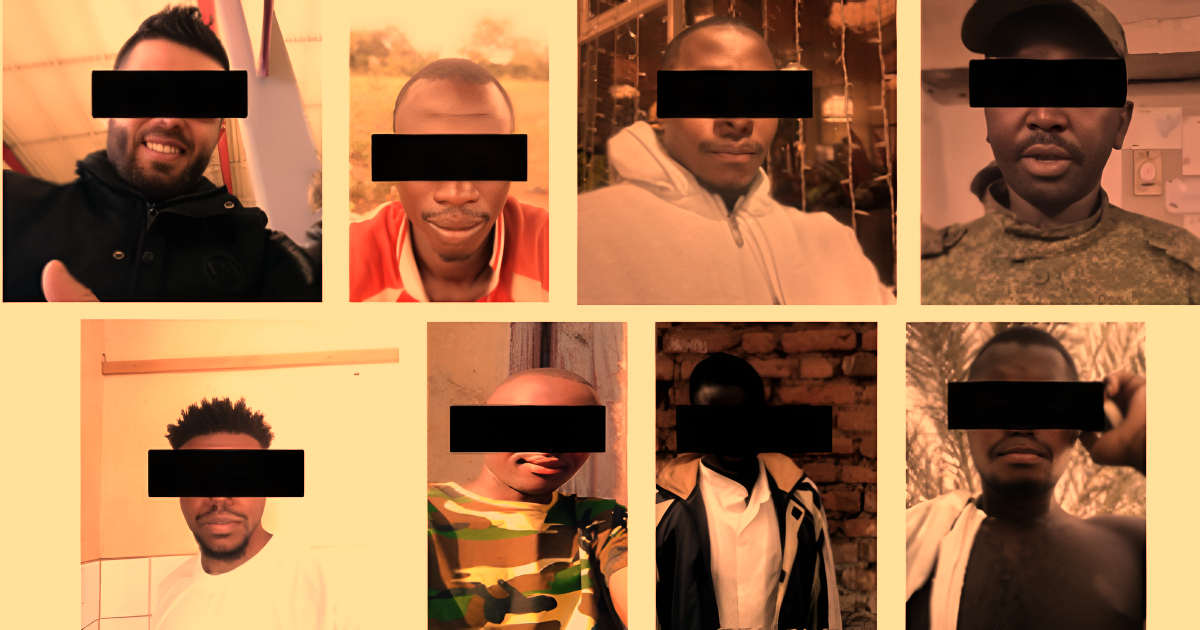
The project claims to have published data on over 14,000 recruited foreigners and asserts that public pressure “forces countries to react and oppose recruitment”.
According to Kiev, this pressure led the Russian General Staff to halt recruitment operations in dozens of countries. The logic is simple: the greater the political cost for governments whose citizens are found fighting in Ukraine, the more challenging it becomes for Moscow to sustain these schemes.
In African and Arab countries, concrete responses have already been observed. Kenya announced investigations, repatriations, and legal measures against recruitment agencies. Egypt tightened immigration controls following journalistic investigations into citizens sent to the Russian military.
In Cuba, however, the opposite happened.
After the scandal in September 2023, when the regime announced the arrest of 17 individuals linked to a recruitment network, the issue virtually disappeared from official discourse.
No trials, sentences, or the legal status of those involved are known. Investigations by media outlets such as América TeVe indicated that the regime had begun to release some of the 17 arrested as part of the recruitment network.
There are also no official figures on how many Cubans have been recruited, killed, or captured, except for the partial data published by Ukrainian intelligence.
Meanwhile, independent investigations and leaks have continued to reveal the presence of Cubans in Russian ranks.
The recent sanction imposed by the United Kingdom against the Cuban Dayana Echemendia Díaz adds another uncomfortable layer to the case.
London officially identified her as a participant in a network recruiting Cubans for the Russian army and imposed asset freezes, travel bans, and financial restrictions under a special regime targeting human trafficking related to the war in Ukraine.
The measure contrasts with the absolute opacity within Cuba: while a foreign government publishes names, accusations, and specific sanctions, Cuban authorities have yet to report on what happened to those arrested in 2023 or to provide transparency regarding the progress of their own investigations.
The situation places the regime in an increasingly difficult position to maintain. If Russia has truly scaled back operations in countries where governments reacted to public pressure, Cuban passivity takes on a new dimension.
It would no longer be merely a matter of lack of transparency, but rather of absence of political will to address the issue.
Havana insists on presenting the phenomenon as a case of human trafficking organized from abroad. However, it has never developed a sustained public campaign to alert potential recruits, assist families, or hold Moscow accountable.
The question remains open: while other governments are taking action to prevent their citizens from ending up in the war, why does the Cuban government seem more focused on controlling the narrative than on stopping the recruitment?
Filed under: