
Related videos:
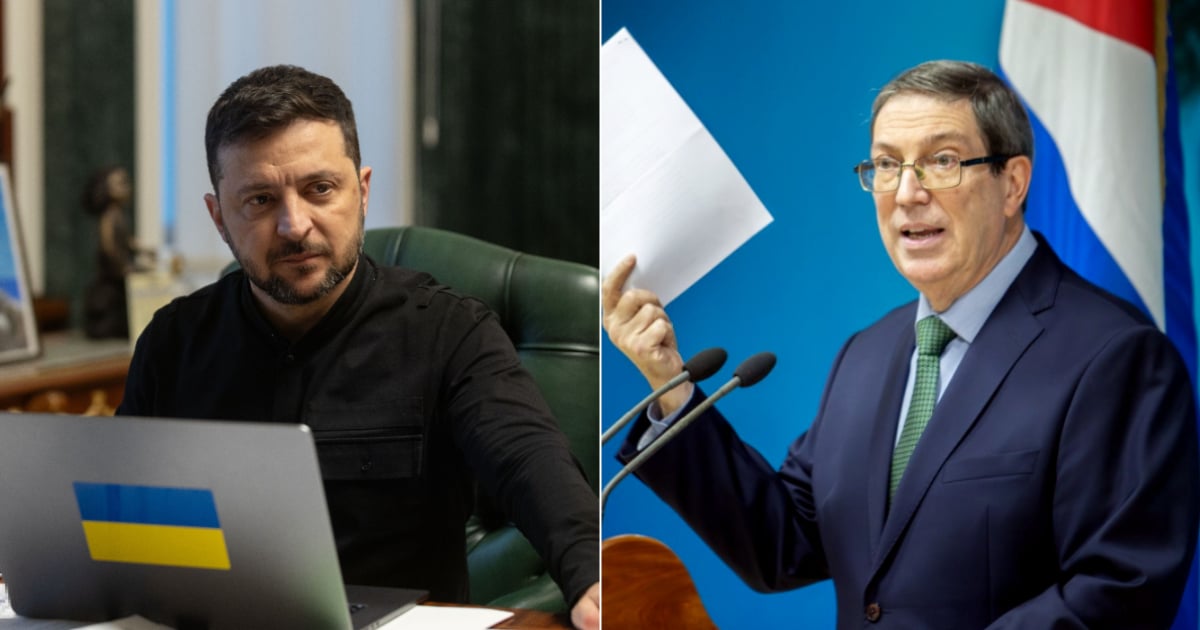
The Minister of Foreign Affairs of Cuba, Bruno Rodríguez Parrilla, dedicated his press conference this Wednesday to discrediting the accusations from Washington and denouncing what he described as “a slanderous and deceitful campaign” by the Department of State.
According to the chancellor of the Cuban regime, the United States is exerting pressure and deceiving several countries to influence their votes in the upcoming session of the UN General Assembly, where the annual resolution against the embargo will be debated.
Rodríguez Parrilla stated that the administration of Donald Trump "intimidates and blackmails" Latin American and European governments, and presented what he described as "threatening letters" sent by American diplomats.
"It is not diplomacy, it is extortion. They want to distract the world from the crime of the blockade and create excuses to justify their hostile policy against Cuba," he stated.
But the minister also took advantage of his statement to categorically deny the allegations regarding the sending of Cuban mercenaries to the war in Ukraine, labeling them as “absurd lies.”
"Up to 20,000 Cuban citizens have been recruited, they say. Everyone knows that's a lie," stated Rodríguez Parrilla, referring directly to a leaked U.S. diplomatic cable to Reuters and to statements from the government of Kiev.
Double front: Washington and Kyiv
The denial comes just a week after the Ukrainian Ministry of Defense, through the humanitarian project I Want to Live, claimed that thousands of Cubans are fighting alongside the Russian army.
Kiev stated that “there is no room for discussion regarding the participation of Cuban mercenaries in the war” and accused the regime in Havana of “not doing enough to stop the systematic recruitment” of its citizens by Moscow.
According to the project, more than 1,000 Cubans have signed formal contracts with the Russian Armed Forces, while Ukrainian intelligence raises the figure to over 5,000 fighters.
The data is supported by contracts, lists of names, and testimonies from Cuban prisoners captured on the eastern front, as well as complaints from relatives who have turned to the Quiero Encontrar program to locate their missing loved ones.
The statements made by the Cuban chancellor directly contradict the claims of the Ukrainian government and the documentation gathered by international media and independent organizations.
Investigations by Reuters, The Wall Street Journal, BBC, and CiberCuba have confirmed the existence of regular flights from Moscow to Varadero, as well as networks of Cuban and Russian intermediaries that have operated on the island since 2023.
Even the 2025 Trafficking in Persons Report (TIP Report) from the State Department classifies the recruitment of Cubans for war as a form of state-sponsored trafficking, similar to the medical missions system.
According to the document, the Cuban regime "actively facilitated the departure of its citizens for military exploitation purposes," expediting passports and omitting immigration stamps.
Denial and isolation
Despite the evidence, Rodríguez Parrilla insisted that the accusations are part of a "toxic campaign" to "undermine the historical support" that Cuba receives at the UN.
"They try to intimidate countries into changing their votes, but the international community will not be deceived," he asserted, anticipating that on October 29, "Cuba will triumph again in the General Assembly."
However, there is a growing sense of nervousness in diplomatic circles in Havana. For the first time since 1992, the vote on the embargo will take place amid documented accusations of military complicity with Russia, a situation that could fracture the nearly unanimous consensus that has traditionally supported the Cuban resolution.
Adverse geopolitical context
The confrontation with Kiev is taking place at a time of heightened regional tension. Washington has revived a policy of spheres of influence aimed at containing Moscow's allies in the hemisphere.
The U.S. Southern Command has deployed maneuvers against drug trafficking in the Caribbean alongside the Dominican Republic and Barbados, while strengthening pressure on Venezuela and Nicaragua, Cuba's closest political allies.
In that scenario, Cuba is positioned as a key piece of the Moscow–Caracas–Managua axis, dependent on Venezuelan oil and Russian financing. The reduction in crude oil shipments and the internal energy crisis—which the regime attributes to the embargo—intensify the perception of weakness and contradict its narrative of resistance.
The narrative of the "blockade" under scrutiny
While Rodríguez Parrilla insists that "the blockade is the main cause of the problems in the Cuban economy," official data reveals a different reality.
In 2024 alone, Cuba imported more than 370 million dollars in food and agricultural products from the United States, as well as consumer goods and medical equipment from Europe and Canada.
Far from a total blockade, Cuban foreign trade is limited more by state inefficiency and internal restrictions than by external sanctions.
A few days before the vote, Havana's diplomatic offensive seeks to regain control of the narrative. However, the echoes from Kiev and the evidence from Washington confront it with an unprecedented dilemma: it is no longer just about defending the resolution against the embargo, but about justifying its own international discredit.
Filed under: