
Related videos:
The exit of Sherritt International from Cuba has radically changed the risk perception among foreign companies still operating on the Island.
The Canadian mining company, considered for more than three decades one of the strongest international partners of the Cuban regime, suspended its direct participation in Cuban joint ventures this week following the new wave of sanctions driven by President Donald Trump.
The movement not only strikes hard at Havana. It also sends an unequivocal signal to the Spanish hotel companies that continue to bet on Cuban tourism: Washington seems prepared to significantly raise the financial cost of doing business with entities controlled by the regime.
The centerpiece of this new strategy is Executive Order 14404, signed on May 1, 2026.
The measure allows for sanctions against entities linked to strategic sectors of the Cuban state apparatus and, in particular, introduces secondary sanctions against foreign financial institutions that facilitate significant transactions with blocked actors.
The decisive step came on May 7, when the United States officially designated GAESA under that executive order and granted foreign companies and financial institutions a deadline until June 5, 2026, to close all their operations with the Cuban military conglomerate, under the threat of secondary sanctions.
The decision turns the Cuban military conglomerate into the primary economic target of the Trump administration. And that directly affects tourism.
GAESA controls a significant portion of Cuba's hotel infrastructure through Gaviota S.A. and its influence over other state-owned chains. In practice, a large part of the international tourism that enters the country ends up generating income for an economic structure managed by the Armed Forces.
For years, Spanish chains like Meliá, Iberostar, and Barceló managed to maintain operations in Cuba despite the U.S. embargo, the lawsuits under the Helms-Burton Act, and the gradual economic decline of the Island. However, the Sherritt case shows that the new scenario may be different.
The Canadian mining company had been surviving for decades amidst sanctions, non-payments, and operational difficulties. It operated the nickel and cobalt mine in Moa alongside the Cuban state and was also involved in Energas S.A., which is linked to nearly 10% of the national electricity generation capacity.
However, the new U.S. measures completely disrupted their risk assessment.
The company concluded that continuing operations in Cuba could jeopardize its access to the international financial system. Secondary sanctions against foreign banks and entities that maintain relations with blocked companies placed Sherritt in a position that is hardly sustainable for a corporation that relies on financing, insurance, and global banking operations.
This precedent should particularly concern Spanish hotel chains.
Unlike mining, tourism relies daily on international payments, digital bookings, travel platforms, banking correspondents, insurance, and international tour operators.
Any perception of risk by banks or financial partners can directly impact the operations of the chains.
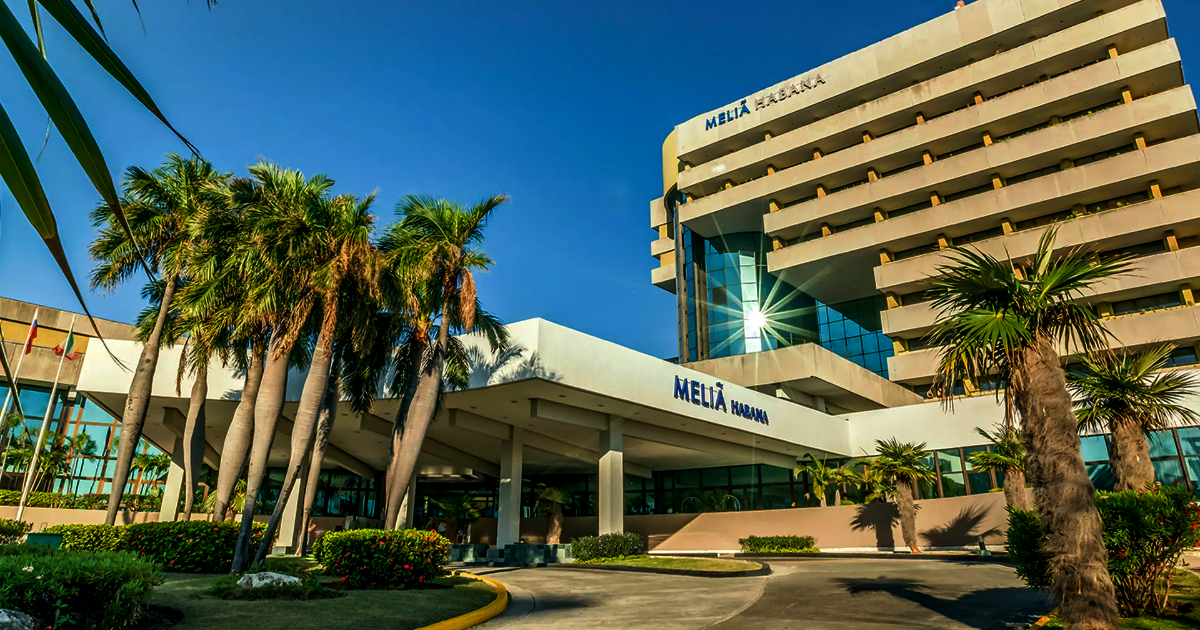
The problem for companies like Meliá or Iberostar is that their exposure in Cuba is not marginal. Meliá operates around thirty hotels on the Island and has maintained a strategic commitment to the Cuban market for decades.
Iberostar also has a significant presence in key tourist destinations. However, the business of both Spanish chains approaches this new phase of pressure weakened.
The energy crisis, power outages, fuel shortages, the decline in services, and the sustained drop in tourism had already drastically reduced the profitability of the sector. Several hotel chains closed facilities or consolidated operations over the past year due to low occupancy levels.
At the same time, reputational pressure is increasing on foreign companies operating in Cuba. Human rights organizations and activists have been denouncing for years that the labor model imposed by the regime forces chains to hire workers through state agencies that withhold a significant portion of the salaries paid in foreign currency.
The designation of GAESA now amplifies that debate.
Spanish hoteliers thus face an increasingly tight scenario. Staying in Cuba means coexisting with an environment of rising regulatory, financial, and reputational risk. Leaving, on the other hand, would involve incurring losses, breaking contracts, and abandoning investments built over decades.
There would be the option of a hypothetical collaboration between Spanish hoteliers and the Trump administration to clarify the scope of their agreements with the regime and to bring transparency to an activity that the Cuban authorities have kept under wraps and out of reach even for official audits.
Currently, no major European chain has announced a withdrawal similar to that of Sherritt. However, the message left by the Canadian mining company is clear: even companies that have been accustomed to operating under pressure for years conclude that the new U.S. context may make it too costly to continue betting on Cuba.
The big question is whether Sherritt will be an isolated case or the first sign of a gradual withdrawal of foreign investment from the Island.
For the Cuban regime, the threat is serious. Tourism represents one of the main sources of foreign currency for the country, and GAESA is at the center of that structure.
If the sanctions succeed in increasing the financial isolation of foreign companies associated with the military conglomerate, the economic blow to Havana could be much deeper than that caused by the traditional restrictions of the embargo.
Filed under: