
Related videos:
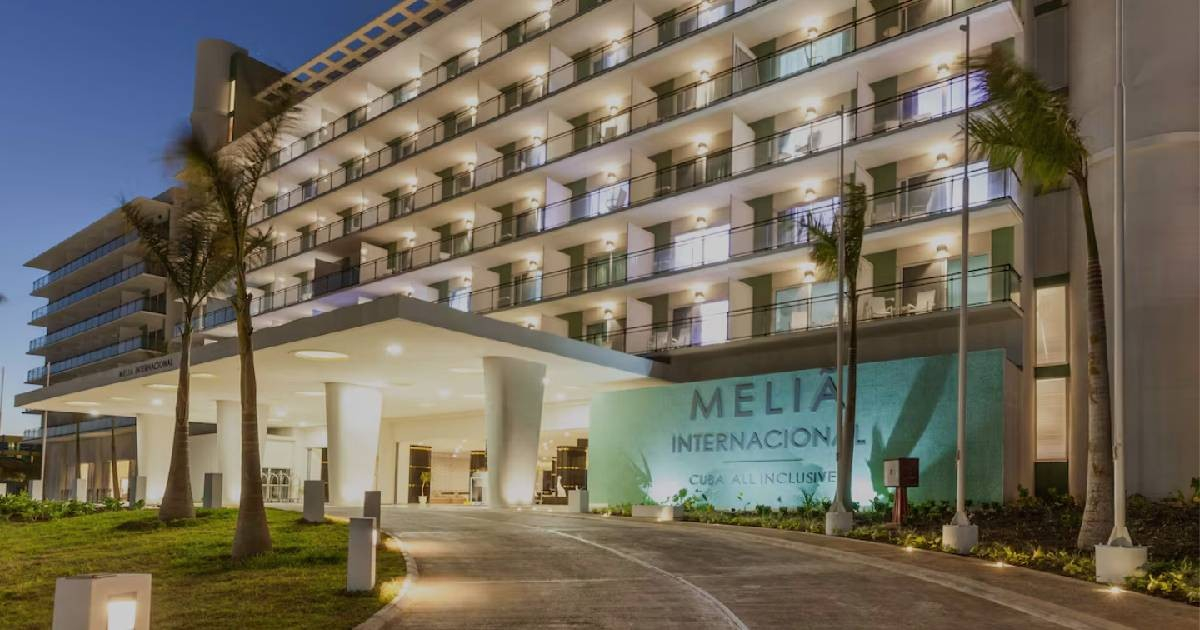
Meliá Hotels International concluded the first quarter of 2026 with only half of its hotel capacity operational in Cuba, according to the financial results released by the chain last Thursday.
The Spanish hotelier, which manages 34 establishments with over 5,000 rooms on the island, acknowledges in its report that the situation has led to an unprecedented collapse of its operations in the country.
The company attributes the collapse to the energy crisis triggered by Washington's sanctions.
In its report, Meliá notes that "this situation has created an unexpected difficulty in obtaining fuel which, along with the imposition of a strict trade blockade, has greatly affected the tourism market," and that "the lack of aviation fuel led to the cancellation of numerous direct flights to the country, including from its main source market, Canada."
The process was gradual. In February, Meliá temporarily closed three of its hotels in Cuba as a first response to the crisis, and by the end of March, the situation had escalated to affect 50% of its total capacity, equivalent to more than 5,000 rooms out of service.
The average occupancy of the hotels that remained open was just 34.1% between January and March, a figure that reflects the collapse of international demand.
The chain acknowledges that the Cuban tourist now accounts for "almost all of the reservations for the hotels still open," although it warns that "this market is not enough to offset the decline in international demand."
The impact on the accounts was severe. Meliá's consolidated net profit dropped by 68% in the first quarter, falling from 10.5 million euros in the same period of 2025 to just 3.3 million euros.
The report acknowledges that the performance "has been impacted, in part, by the reduction of third-party fees from the management model due to the development of the business in Cuba."
Despite the Cuban setback, the company's total revenue grew by 4.4% to 460.6 million euros, and the revenue per available room index increased by 8.3%, driven by strong performance in Spain, Europe, and the non-Cuban Caribbean.
Other chains like Iberostar and Valentín have followed in Meliá's footsteps and have also closed establishments on the island due to the same crisis.
The collapse of tourism in Cuba has had devastating consequences for workers in the sector. Approximately 300,000 Cuban tourism employees lost their jobs since May 2026, while in the first quarter of the year, the island welcomed 298,057 visitors, a 48% decrease compared to the same period in 2025.
The situation is further complicated by the increasing sanctions from Washington. Last Thursday, Secretary of State Marco Rubio formally designated GAESA under Executive Order 14404, the military conglomerate that controls Cuba's hotel infrastructure through its subsidiary Gaviota S.A.
Foreign companies have until June 5 to close operations with that entity under the threat of secondary sanctions, presenting an existential dilemma for Meliá and other Spanish hotel chains operating on the island.
Meliá acknowledges in its report that "the evolution of the region will largely depend on events and a potential recovery of energy supplies," without providing a clear outlook for recovery in its operations in Cuba.
Filed under: