
Related videos:
An analysis by CNN based on public aviation data reveals that the U.S. Navy and Air Force have conducted at least 25 military intelligence gathering flights near the coast of Cuba since February 4, 2026, in what the outlet describes as a significant and unprecedented increase in the area.
According to CNN, most of the flights have been concentrated near Havana and Santiago de Cuba, and some were conducted less than 64 kilometers from the coast, within the range for gathering intelligence.
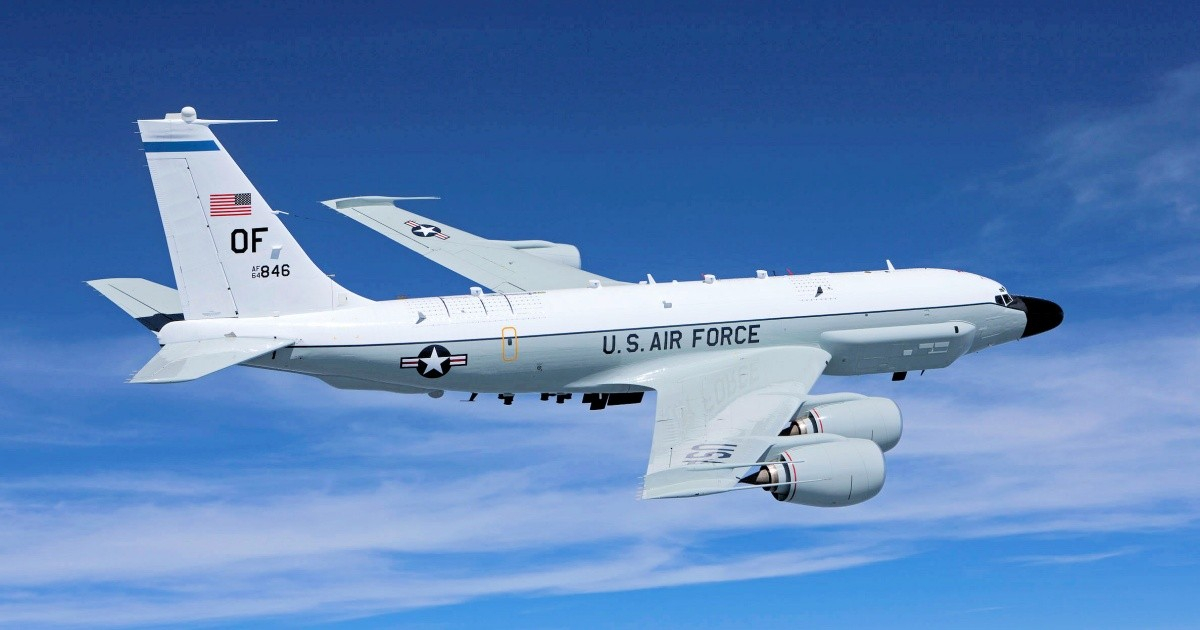
The aircraft used include the P-8A Poseidon maritime patrol plane, the RC-135V Rivet Joint specialized in signals intelligence, and the MQ-4C Triton high-altitude reconnaissance drone.
All flights were tracked using public platforms such as Flightradar24 and ADS-B Exchange.
The MQ-4C Triton drone identified as BLKCAT5 completed its fourth documented flight around Cuba last Wednesday in 2026.
Why are these flights so attention-grabbing?
CNN points out three reasons:
-The first is the proximity to the coast.
"The second is its unprecedented nature: ‘Before February, this kind of publicly visible flights were extremely rare in this area.’"
The third is the moment they occur.
“Trump's public statements about Cuba noticeably intensified his tone in the weeks leading up to the increase in flights,” the analysis notes.
Trump posted on Truth Social a comment stating that he would visit "a free Havana" before leaving office; days later, he ordered an oil embargo against the island.
The concerning pattern: Venezuela and Iran as precedents
"Similar patterns, in which the increase in the rhetoric of the Trump Administration coincided with an uptick in publicly visible surveillance flights, occurred prior to U.S. military operations in both Venezuela and Iran.", warns CNN.
In Venezuela, flights began a week after the first U.S. attack on a vessel linked to drug trafficking and continued until the days leading up to Maduro's capture.
In Iran, a extensive operation of intelligence aircraft monitored the southern Iranian coast before joint attacks with Israel.
CNN emphasizes that the same aircraft detected near Cuba - P-8A Poseidon, RC-135V Rivet Joint, and MQ-4C Triton - were active in that conflict.
Deliberate signal to the regime?
CNN poses a key question: since these aircraft can conceal their presence by turning off their location beacons, is the U.S. deliberately sending a signal to its adversaries?
"Regardless of whether that signal is intentional or not, the message is likely quite unsettling, to say the least, for Cuban officials," concludes the outlet.
The Pentagon declined to comment on the findings.
The context of maximum tension
These flights occur at a time of sustained escalation.
Trump threatened this week to send the aircraft carrier USS Abraham Lincoln to "a couple of hundred yards" off the coast of Cuba.
The Secretary of State Marco Rubio warned on April 27 that Cuba "has only two destinations: neither is good", accusing the regime of hosting Chinese and Russian intelligence.
The Trump administration has imposed more than 240 sanctions against Cuba since January 2026, and the U.S. military deployment in the Caribbean has an estimated cost of 3 billion dollars, the largest since the Cuban Missile Crisis of 1962.
Díaz-Canel responded on May 3 that "every Cuban man and woman has a rifle", while just the day before he had stated that "no aggressor, no matter how powerful, will find surrender in Cuba."
Although the U.S. government has not publicly explained the reason for these operations, the sustained increase in intelligence flights near Cuba occurs at a time of high political tension between Washington and Havana.
The combination of stricter sanctions, an increasingly aggressive rhetoric from Donald Trump, and the visible presence of specialized military surveillance aircraft raises questions about the true objectives of this strategy.
For the Cuban authorities, who have already warned about the risk of an escalation, the message can hardly be interpreted as routine.
Filed under: