
Related videos:
A resident of the Centro Habana municipality identified as Eric Eduardo Broche Vidal published a strong denunciation this Saturday, labeling the government's actions as "counter-revolution" following the demolition of an electrical register at the corner of Dragones and Zanja, two blocks from the Capitol.
Servicios Comunales demolished the registry without repairing it, leaving an entire block without electricity, without water, and leaving a building without an elevator, explained Broche in a post published on his Facebook profile.
The author claimed to have exhausted "days, months, and years" of all available institutional channels, from complaints to the government, proposals to the Ministry of Transportation, visits to the electrical company, to the Municipal Services company, and the Revolutionary National Police, without receiving any response.
"Today, the final point... a perfect demolition of that record by the community, without the slightest hesitation... an apartment block without electricity, without water, and without an elevator, not due to the difficulties of the country, not because of the American blockade, not because of external sanctions," he wrote.
Broche is clear in rejecting the usual justifications of the regime and points directly to "the complicity, irresponsibility, and lack of commitment of the Government," the electric company, and the Communist Party.
"Anyone who holds a position of responsibility to the people and instead of protecting what little we have destroys it, is committing counter-revolution... unfortunately, you have become the worst enemy of the people," he declared.
The use of the term "counter-revolution" carries significant political weight in Cuba: historically, the regime has employed it to criminalize dissent, so turning it against the state institutions themselves represents a symbolic inversion of the official discourse.
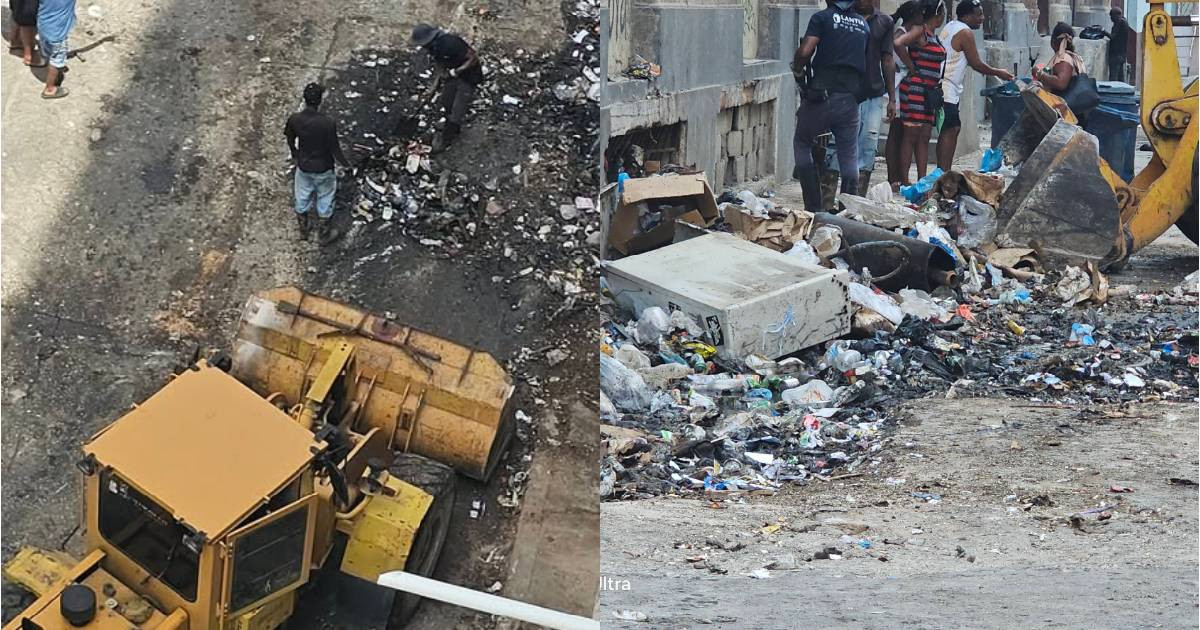
The report, accompanied by images, shows heavy machinery, workers among the rubble, and the extreme deterioration of the urban environment in the heart of the capital.
Comments from neighbors and acquaintances reinforce the tone of the post. Ada Rosalina Vidal Segura summarized the collective exhaustion: "Years of following the right paths, interviews and more interviews, countless damages and losses to the heritage and economy of the country and its residents. What options are we left with?" she lamented.
Mayda González pointed out that the situation "has surpassed the limits of indifference and disrespect towards the humble Cuban people," while Gipcia Guardiola stated that "in my 47 years, I have never seen anything like this" in Havana.
"That's right, there's no other name. You've been warning about it for a while, many have been told and nothing has changed; what was foreseen has happened and no one bothered to prevent it," concluded Elizabeth González Aznar in the comments of the post.
The incident is part of a widespread collapse of basic services in the capital. 87% of the water supply system depends on the national electric grid, making it vulnerable to the chronic blackouts affecting Cubans.
Servicios Comunales operates with minimal resources: in February 2026, only 44 of the 106 garbage collection trucks in Havana were operational due to a lack of fuel.
This operational deficit has led to a documented pattern of collateral damage. In La Lisa, a backhoe from the Comunales cut a main pipeline, leaving families without water for more than 10 days with no institutional response.
In El Cerro, residents recently reported that heavy machinery used for garbage collection was passing over the divider that covers the Albear canal, a hydraulic structure from the 19th century that provides 15% of the capital's water supply.
The Dragones area in Centro Habana had already been documented as a hotspot of extreme unsanitary conditions in April 2026, and the accumulation of garbage endangered the San Judas and San Nicolás Parish for the third time in less than two months.
Filed under: