
Related videos:
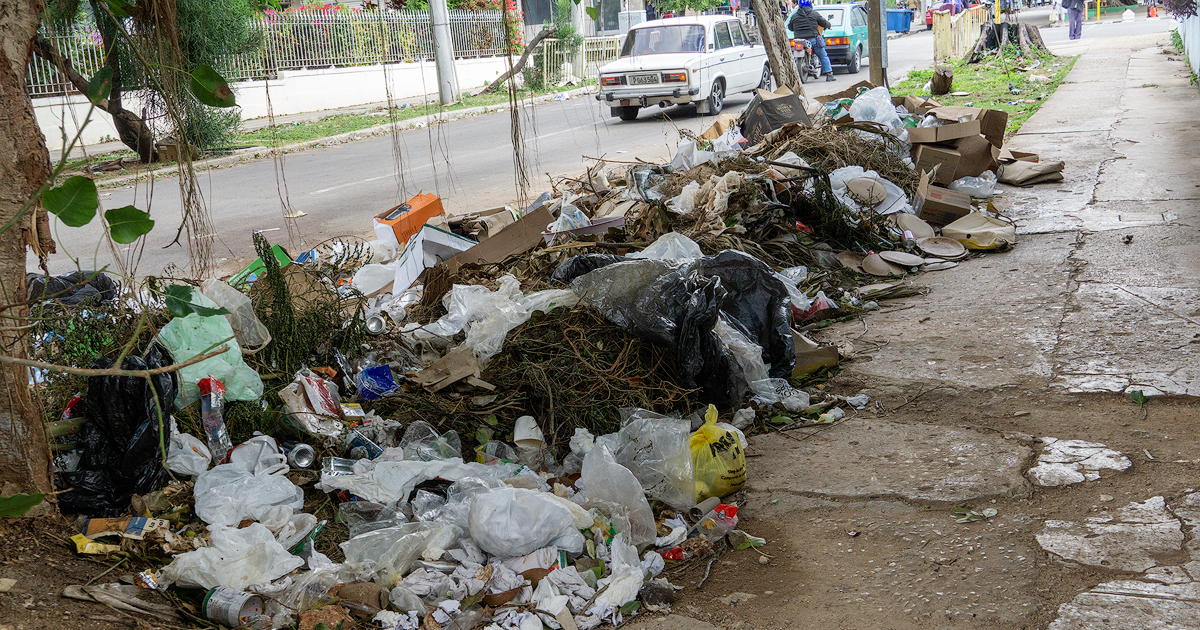
The growing accumulation of trash in Havana has caught the attention of the international press, following a report by Reuters on the health crisis affecting the Cuban capital.
Mountains of waste pile up in corners and avenues, with a strong smell of decay, swarms of flies, and an increasingly visible presence of rats.
Cited data indicates that only 44 of the 106 collection trucks in the city are operational due to a fuel shortage, which has drastically slowed down the service.
“It has been more than 10 days since a garbage truck has come by,” declared a resident of Havana, reflecting the citizens' discontent.
The Cuban regime attributes the garbage crisis to the tightening of U.S. sanctions and the drop in oil supplies—following the suspension of shipments from Venezuela and Mexico—but the reality is that the situation with solid waste in Cuba is not a recent phenomenon.
For at least two decades, structural inefficiency, lack of investment in infrastructure, and the obsolescence of the vehicle fleet have hindered a sustainable solution to the problem.
The accumulation of trash directly impacts the quality of life for Cubans, deteriorates the urban landscape, and exacerbates unsanitary conditions in densely populated neighborhoods.
Specialists have warned for years that the proliferation of vectors such as mosquitoes and rodents increases the risk of contagious diseases, including dengue and leptospirosis.
While the United Nations expresses concern over the humanitarian situation on the island, thousands of Cubans continue to navigate piles of waste in their daily lives, in a crisis that reveals long-standing structural deficiencies in the country.
Filed under: