
Related videos:
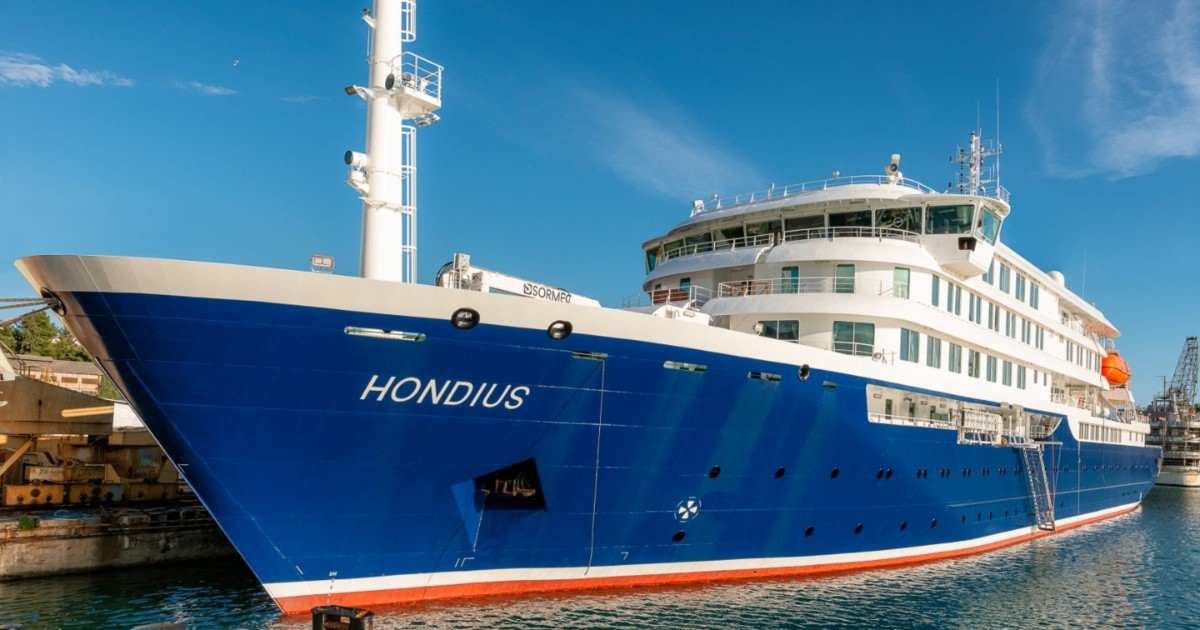
The U.S. Department of Health and Human Services (HHS) reported that it is supporting, along with ASPR and the CDC, the Department of State in the repatriation of 17 American citizens from the cruise ship MV Hondius, impacted by the Andes variant of the hantavirus.
According to the official information released by HHS, the 17 passengers were returning to the United States on a flight coordinated by the State Department after being evacuated from the ship in the Canary Islands.
Two of the passengers were transferred in containment units within the plane "as a precautionary measure." One showed mild symptoms and the other tested positive for the Andes virus at a low level by PCR, specified the HHS.
The flight was initially scheduled to transport passengers to the ASPR Regional Emerging Special Pathogen Treatment Center at the University of Nebraska Medical Center/Nebraska Medicine in Omaha, Nebraska.
Subsequently, the passenger with mild symptoms would be taken to a second center specialized in emerging pathogens at their final destination, the federal agency indicated.
Upon arriving at each medical facility, all passengers would undergo a clinical evaluation and receive appropriate care and support based on their condition.
The outbreak originated aboard the MV Hondius, a Dutch-flagged expedition cruise operated by Oceanwide Expeditions, which set sail from Ushuaia, Argentina, on April 1 with approximately 90 passengers and 60 crew members from 23 nationalities.
As of May 9, the World Health Organization reported six confirmed cases, two suspected cases, and two probable cases, with a total of three deaths: a Dutch couple and a German woman. The WHO recommended a 42-day quarantine for all passengers of the cruise ship.
Of the approximately 24 Americans aboard, seven had previously disembarked at different ports and 17 remained until the Canary Islands, where the evacuation was coordinated with Spanish authorities.
The Centers for Disease Control and Prevention (CDC) activated its Emergency Operations Center in Atlanta at level three, the lowest level, and deployed teams both in the Canary Islands and at Offutt Air Force Base in Nebraska. The agency classified the risk to the general public as "extremely low."
The Andes virus is endemic to Argentina and Chile, and is primarily transmitted through inhalation of aerosols from the droppings of infected rodents. It is the only strain of hantavirus with documented capacity for limited human-to-human transmission.
The authorities' hypothesis is that at least one passenger was exposed to the virus in Argentina or Chile before boarding and then transmitted it to others on board, constituting the first recorded Andes virus outbreak on a vessel of this type.
Hantavirus pulmonary syndrome can be severe, and there is no specific treatment or approved vaccine. The incubation period for the Andes virus ranges from one to eight weeks, so some passengers may still develop symptoms in the coming weeks.
Filed under: