
Related videos:
Military and intelligence agencies in the United States have significantly increased surveillance flights around Cuba in recent weeks, as revealed this Wednesday The New York Times in a comprehensive report signed by Frances Robles, Eric Schmitt, and Julian E. Barnes.
According to several U.S. officials who spoke on the condition of anonymity, the Navy and the Air Force have increased reconnaissance missions as part of what is expected to be a broader military buildup in the Caribbean in the coming weeks.
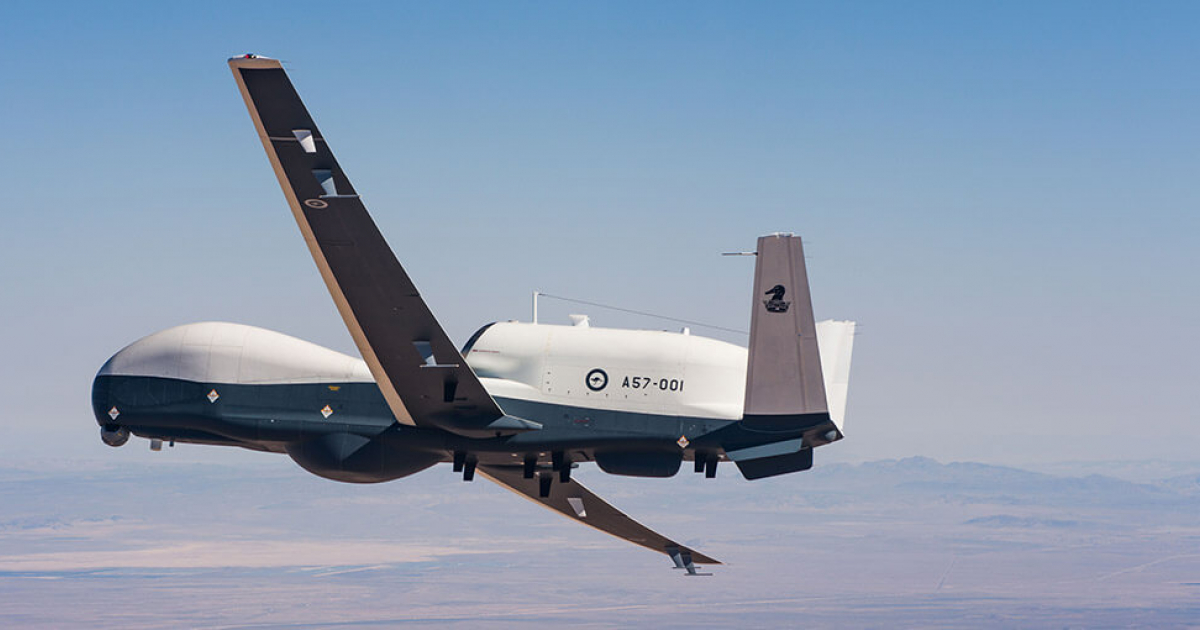
The flights include the maritime patrol aircraft P-8 Poseidon, the electronic surveillance aircraft RC-135 Rivet Joint, the high-altitude drone MQ-4, and other unmanned platforms, whose frequency has increased since February, often near Cuban shores.
According to public data from FlightRadar24 analyzed by CNN, the Navy and the Air Force have conducted at least 25 flights with manned aircraft and drones since early February, primarily concentrated near Havana and Santiago de Cuba.
Public tracking data does not capture the drones of intelligence agencies, so the actual number of missions is unknown and presumably higher.
What stands out to experts is that Washington makes no effort to conceal these missions; quite the opposite.
"We can operate completely in the dark," explained José Adán Gutiérrez, a former Navy commander specialized in intelligence. "When we prepare operations, we operate entirely in the dark; we don't turn on the radar to announce our arrival. The fact that these flights have been made public deliberately basically indicates that there is a message."
A U.S. military official clarified to the NYT that, unlike what happened before the commando operation in January in Venezuela —in which special forces captured President Nicolás Maduro—, these flights aim to reinforce political and economic pressure on the Cuban regime, not to signal a military operation.
However, the pattern is reminiscent of the one that preceded that operation: the Venezuelan government also reported similar intelligence flights in the weeks leading up to that action.
Renee Novakoff, former Deputy Director of Defense Intelligence and now a researcher at Florida International University, described the situation as unusual: "We don't usually do many of the things that are being done. That's why this is a big problem."
Chris Simmons, former counterintelligence officer of the Defense Intelligence Agency for Cuba, described it as "more of a show of strength than anything else," although he warned that Trump usually follows through on his threats.
Brian Latell, former CIA analyst for Cuba, stated that he does not recall such a reconnaissance deployment even during the Cold War, and noted that the government might be trying to identify potential landing zones.
This context is set against a sustained escalation of tensions. Trump has repeatedly stated his intention to overthrow the regime: on March 27 he said, "Cuba is next," and on May 2 he claimed that the U.S. "will take Cuba almost immediately."
The administration has also halted oil shipments to the island, deepening an energy crisis that is already experiencing generation deficits exceeding 1,500 MW and blackouts of up to 30 hours a day in some areas.
The Cuban Deputy Minister of Foreign Affairs, Carlos Fernández de Cossío, responded on X that "the visible effort to normalize the threat of military aggression from the U.S. against Cuba is part of a coldly calculated communication strategy" and that those participating in it would be "accomplices of the eventual bloodbath."
The two parties have engaged in private negotiations, but the Cuban government itself acknowledged that the discussions have made little progress.
Filed under: