
Related videos:
A former naval intelligence officer of the U.S. Navy warned this Monday that there is a clear increase in U.S. military intelligence operations in the waters and along the coasts of Cuba, with patterns resembling those observed prior to U.S. military offensives in Venezuela and Iran.
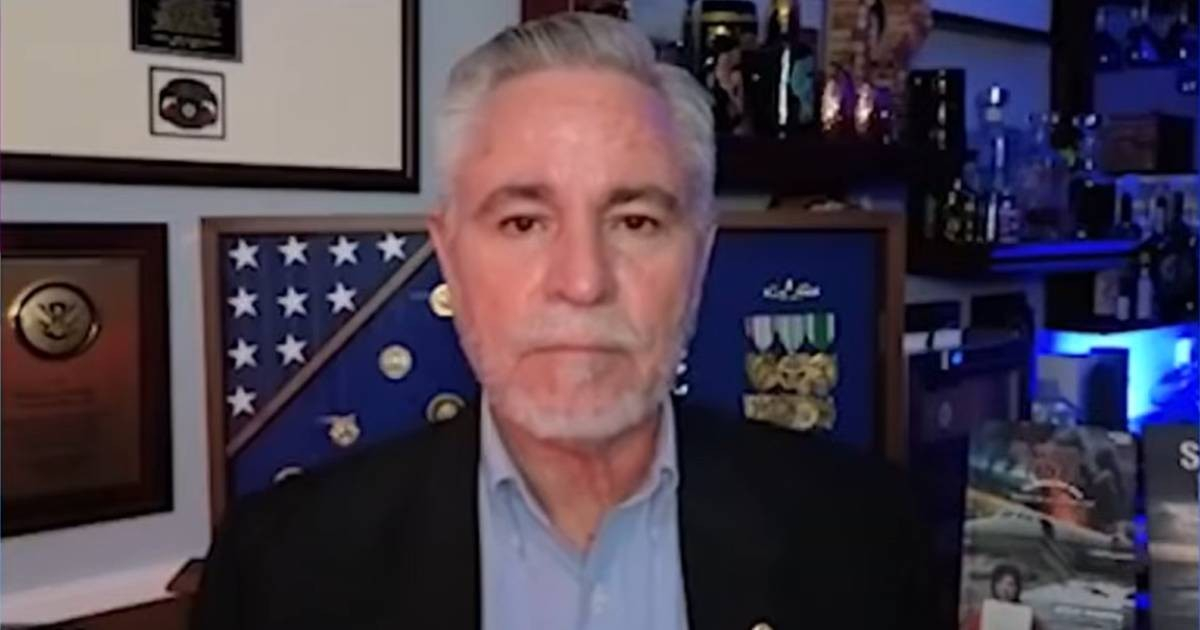
Commander Jesús Romero, with 37 years of service in the U.S. Army and former deputy director of intelligence for the naval forces of South Command, made the statements on the program "La Tarde" from NTN24, where he analyzed the accumulation of signals indicating a substantial shift in hemispheric security policy towards Cuba.
According to public aviation data, since February 4th, the U.S. Navy and Air Force have conducted at least 25 reconnaissance flights—using both manned aircraft and drones—near Havana and Santiago de Cuba.
"We are seeing a proportional increase in intelligence collection flights," said Romero, who added that "since last year, when we began to observe the conflict between the United States and Venezuela, the vast majority of U.S. military platforms were obviously focused on the Caribbean basin."
The immediate trigger for the analysis was a photograph released by the Southern Command during the Conference of Heads of Mission held from May 5 to 7 in Doral, Florida, which shows Secretary of State Marco Rubio alongside General Francis L. Donovan with a prominent map of Cuba in the background and the slogan "Peace through Strength!" projected on the screen.
Romero emphasized that the presence of the Secretary of State himself at such a meeting —which usually convenes ambassadors— "is not normal."
"When you see this kind of meeting where the Secretary of State is already participating, we are talking about something that is of utmost importance for the American government," stated the analyst.
On May 6, Rubio acknowledged from the White House press podium that the meeting "had something to do with Cuba," although he refused to disclose details.
Romero also established a historical contrast. An intelligence center in Norfolk, Virginia, that monitored Cuba and Haiti closed years ago, and "the approach to Cuba has more or less faded into almost nothing" over a long period.
The Trump administration has reversed that abandonment with a sustained escalation. On January 20, 2025, it reinserted Cuba into the list of state sponsors of terrorism; on January 29, 2026, it declared the island to be an "unusual and extraordinary threat" to national security, and since then, it has imposed more than 240 sanctions and intercepted at least seven tankers, which have reduced Cuban fuel imports by 80% to 90%.
The documented aircraft involved in the flights include the MQ-4C Triton drone, the RC-135V/W Rivet Joint signals intelligence aircraft, and the P-8A Poseidon maritime patrol plane, all visible on civilian aviation trackers such as Flightradar24 and ADS-B Exchange.
The spy drone circled Cuba again amidst rising tensions last week, and on May 8, Rubio announced specific sanctions against GAESA, the military conglomerate that controls between 40% and 70% of Cuba's formal economy.
Regarding whether Cuba could face a scenario similar to Venezuela, Romero was straightforward: "I believe we will see some kind of operation, I believe we will see some kind of action from the United States."
Although the statements from the former official point to a scenario of increasing military pressure on Cuba, the State Department itself stated this Monday that Donald Trump “would prefer a diplomatic solution” to the crisis on the island. Nevertheless, Washington warned that it will not allow Cuba to “deteriorate to the point of becoming an even greater threat to the national security of the United States,” according to statements released by Axios.
Filed under: