
Related videos:
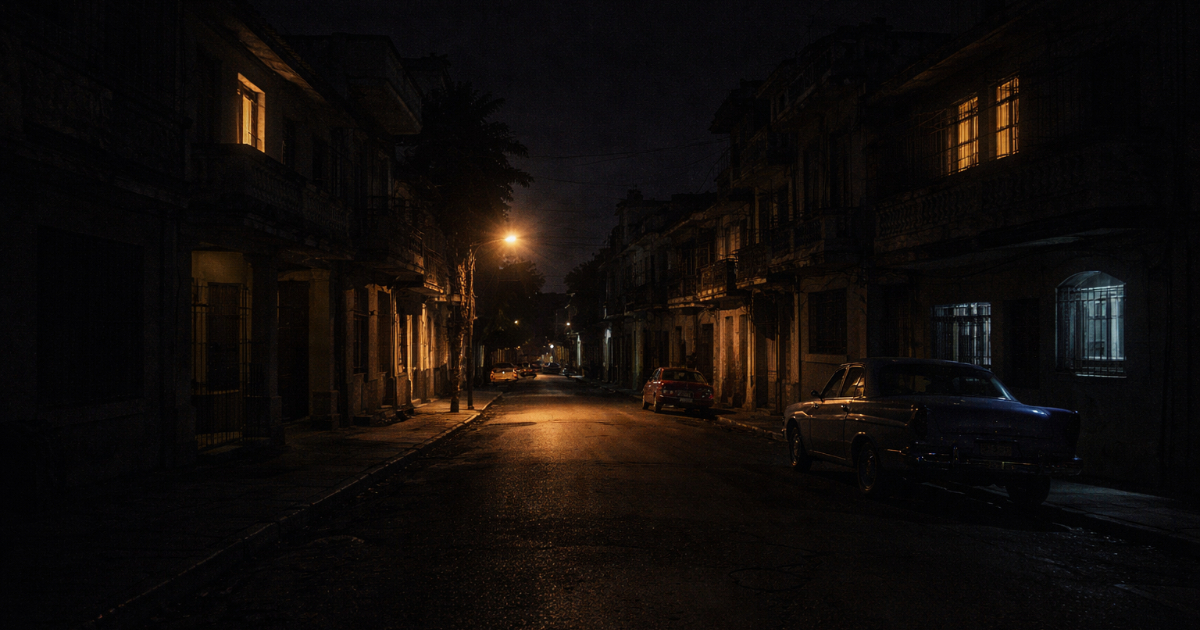
The brief energy relief brought to Cuba by the Russian tanker Anatoli Kolodkin is coming to an end, and the island once again faces the abyss of endless blackouts that paralyze life and the economy of the country, according to a report from the agency Efe.
The ship docked on March 31 at the port of Matanzas with 100,000 tons of crude oil —730,000 barrels— the first major supply in over three months, but the relief it offered to millions of Cubans worn out by the energy crisis lasted less than a month.
Data from the state-owned Unión Eléctrica shows a temporary change. While in the first quarter blackouts simultaneously affected 60% of the country, in the last two weeks of April, the maximum outages ranged between 35% and 45%.
In Havana, where daily interruptions exceeded 15 hours, the situation improved significantly. However, in the eastern provinces, there are still reports of 24-hour consecutive power outages or more.
This Thursday, with the Kolodkin crude nearly depleted, the generation deficit exceeded 1,500 MW again, with 990 MW affected by six in the morning.
The Minister of Energy and Mines, Vicente de la O, had warned on April 22 that the shipment would only last until "the end of the month," and that Cuba needs eight ships like the Kolodkin each month to meet its energy needs, a threshold that has never been reached.
The hope for a second Russian shipment remains in suspense. The tanker Universal — sanctioned by the United States and the European Union — has been moving erratically and at a very slow pace across the North Atlantic for a week, which would delay its arrival until at least the end of May.
Russian Energy Minister Serguei Tsiviliov announced the dispatch of the Universal on April 2 with the statement, "a second ship is being loaded at this moment," but its final destination has not yet been confirmed.
The Cuban energy crisis has structural roots that go far beyond recent sanctions. The situation was already critical by mid-2024, and the power outages in November and December 2025—before the oil embargo—were similar to those in January and February of this year.
The seven thermoelectric power plants in the country, responsible for 40% of electricity production, have accumulated decades of breakdowns due to chronic underinvestment that are not directly related to measures from Washington.
The chain of blows intensified with the capture of Venezuelan President Nicolás Maduro on January 3, which cut off the supplies that Caracas was sending to Havana, and with the suspension of Pemex shipments by Mexico days later, eliminating 44% of Cuba's imports.
Cuba produces internally about 40,000 barrels of oil daily, but it needs between 90,000 and 110,000 to operate normally.
The economic outlook further exacerbates the situation. The country holds the last place in the regional economic ranking, with a per capita GDP of only 1,082.8 dollars in 2025, the lowest in Latin America compared to a regional average of 10,212 dollars.
The CEPAL projects a contraction of 6.5% in Cuba's GDP in 2026, the worst among 27 economies in the region, while the Economist Intelligence Unit estimates a decline of 7.2%, building on a contraction of over 15% recorded between 2020 and 2025.
Filed under: