
Related videos:
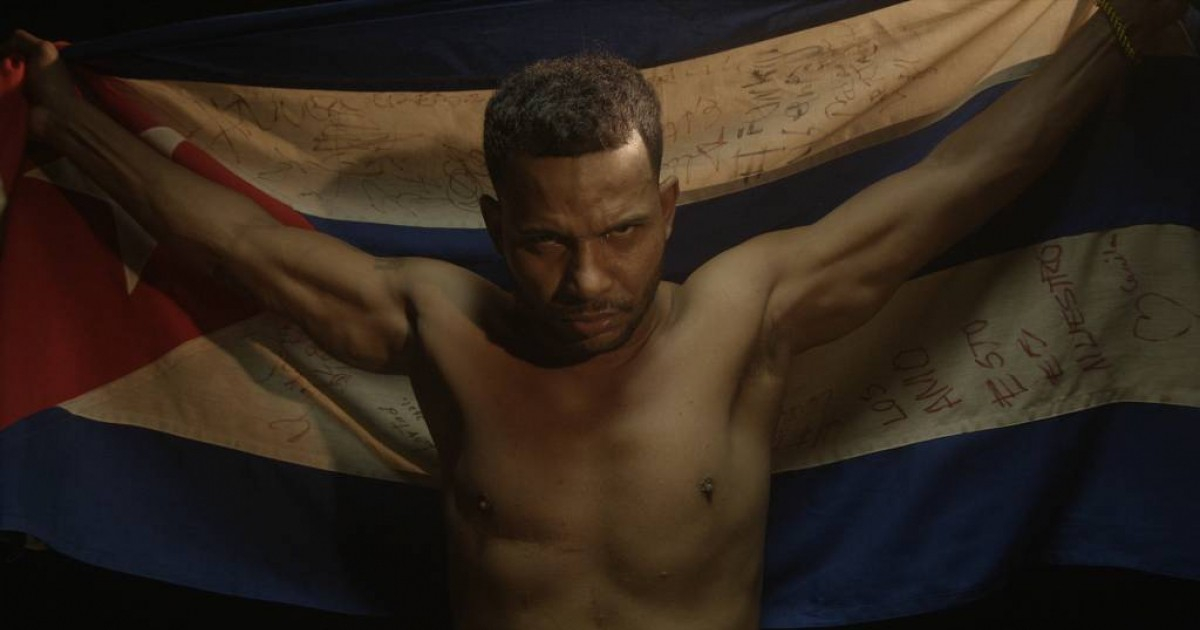
The Cuban rapper and political prisoner Maykel Osorbo revealed in an interview with USA Today that State Security agents showed up in his cell and presented him with a direct ultimatum: emigrate or remain imprisoned until 2030.
Osorbo, identified alongside another imprisoned artist as the two detained during the secret negotiations between the United States and Cuba, described the proposal in his own words: "Let’s see, the security agents came here, asked exactly the right questions, 'Do you want to emigrate?' Tell me if you want to emigrate or if you want to remain in this same current situation where you are imprisoned until 2030."
The rapper acknowledged the human reasons that make any escape tempting: “Naturally, I need to take care of my medical needs, naturally, no one wants to be imprisoned, naturally, I have a career, I need to make music, naturally, I have several projects in my life that, of course, cannot be achieved while being incarcerated.”
However, Osorbo was emphatic in stating his position: "The only thing that freedom cannot be paid for at any price. That is clear. I understand. I will always make that clear."
Maykel Castillo Pérez, artistically known as Maykel Osorbo, is the co-author of "Patria y Vida," the song released in February 2021 that became an anthem for the protests on July 11 of that year. He was arrested on May 18, 2021, and in June 2022 was sentenced to nine years in prison on charges of contempt for national symbols, disobedience, assault, public disorder, and defamation. Amnesty International recognizes him as a prisoner of conscience.
Since late January 2026, Osorbo has been held in the Kilo 8 maximum-security prison in Pinar del Río, under intensive surveillance after being accused by prison authorities of planning a riot.
The interview with USA Today is published at a time of heightened diplomatic tension. On April 10, 2026, a delegation from the State Department arrived secretly in Havana — the first official flight of a U.S. government plane to Cuba since 2016 — to hold talks with Cuban officials at the vice-ministerial level.
The Trump administration issued a two-week ultimatum, expiring on April 24, 2026, for Cuba to release high-profile political prisoners, specifically mentioning Osorbo and Luis Manuel Otero Alcántara, leader of the San Isidro Movement.
The regime publicly rejected the ultimatum. A spokesperson for the Ministry of Foreign Affairs stated that "neither party set deadlines or made threatening proposals," and Díaz-Canel warned that there is no negotiation if Washington insists on regime change as a condition.
However, today's interview confirms that, despite the official rejection, Cuban security agents did directly approach the prisoners to offer them the option of emigrating, which reveals that the negotiations have a direct operational component involving the detainees themselves.
The State Department reaffirmed its commitment to “the release of all political prisoners, including Alcántara and Osorbo” and cautioned that Cuba has “a small window to make a deal.”
Filed under: