
Related videos:
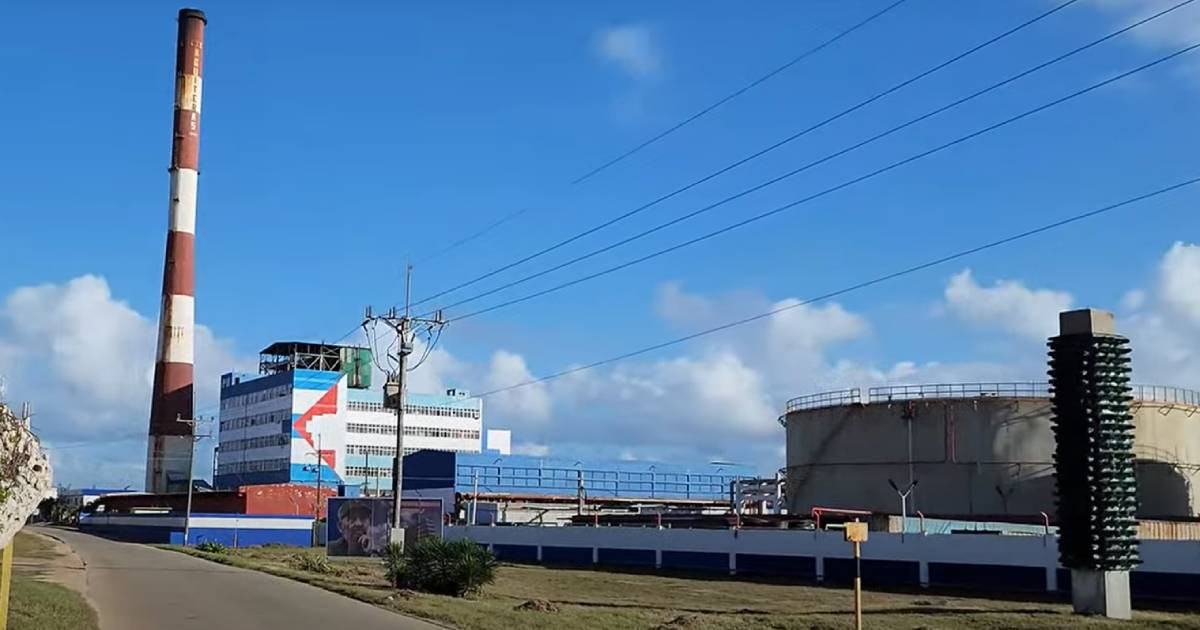
The Antonio Guiteras Thermoelectric Plant went offline from the National Electric System this Thursday at 4:58 AM due to a loss of water in the boiler, and its director warned that repair work could take between three and four days, depending on the extent of the damage.
The engineer Román Pérez Castañeda, general director of the yumurino block, explained that the established protocol requires cooling the boiler, entering the interior, conducting hydraulic tests to locate the leak, assessing the damage, and undertaking the necessary repairs.
"It is a matter of water loss in the boiler to an extent that prevented safe generation from continuing," specified Pérez Castañeda, according to official journalist José Miguel Solís.
When questioned about the timelines, the specialist emphasized that "generally, these operations take between 3 to 4 days, depending on the extent of the damage," although he clarified that it is still too early to make definitive forecasts.
The Electric Power Plant Maintenance Company in the Matanzas district is preparing to carry out the work, including in the so-called critical path other activities that do not exceed 72 hours.
Pérez Castañeda assured that "the necessary resources are available to address and resolve the issue," although he acknowledged that the boiler is "one of the components that undergoes the most mechanical stress and corrosion in a thermal unit."
This is the ninth breakdown that Guiteras has suffered so far in 2026, occurring just five days after the plant was re-synchronized to the SEN on May 9, following a repair shutdown of approximately 90 hours during which nearly 300 corrective actions were implemented.
The same type of failure —boiler blowout— had already taken the plant out of service on May 5, indicating that the previous repair did not resolve the underlying issue.
The departure of Guiteras triggered a partial collapse of the SEN at 06:09 in the morning, leaving the entire central and eastern regions of Cuba without electricity, from Ciego de Ávila to Guantánamo.
At 6:30 AM, the availability was just 636 MW against a demand of 2,420 MW, with 1,790 MW affected.
The forecast for the peak nighttime hours this Thursday is devastating: 976 MW available versus a demand of 3,150 MW, with a projected deficit of 2,174 MW, resulting in blackouts of between 20 and 22 hours daily in Havana.
The structural deterioration of Guiteras is severe: its last major maintenance was in 2010, it has accumulated more than 15 years without a comprehensive shutdown, and Pérez Castañeda himself has acknowledged that the plant needs at least 180 days of shutdown for that maintenance, but that "the situation in the country still does not allow it."
The breakdown occurs in the worst energy context that Cuba has experienced in decades: the Minister of Energy and Mines, Vicente de la O Levy, admitted this Wednesday that Cuba "is out of fuel" —neither diesel nor fuel oil— and described the situation as "severe, critical, and extremely tense."
The logic at play in Guiteras is circular and has no short-term solution: "We aim to avoid shutdowns unless absolutely necessary, to not impact power generation," stated Pérez Castañeda, a phrase that encapsulates the vicious cycle in which Cuba's energy infrastructure operates after 67 years of communist dictatorship.
Filed under: