
Related videos:
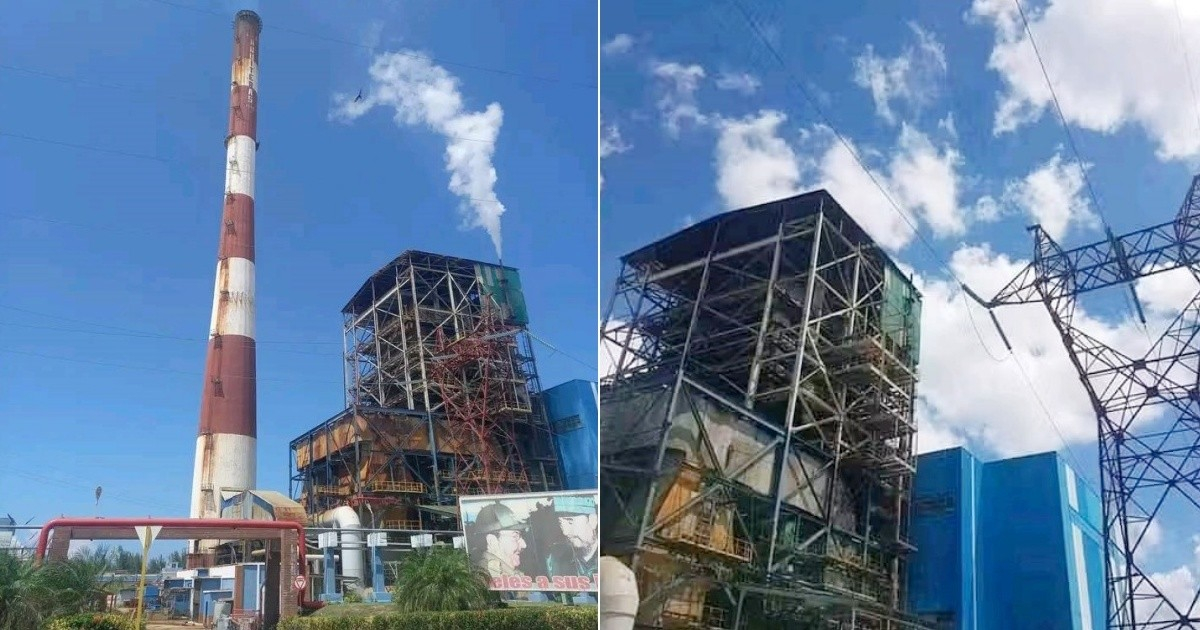
The Electric Union (UNE) reported that this Saturday at 8:38 a.m. (local time) the unit of the Antonio Guiteras CTE resynchronized to the National Electric System (SEN), four days after its most recent breakdown.
The plant had gone out of service last Tuesday at 9:12 AM due to a new breakdown in its boiler, marking its eighth outage from the system in 2026.
The plant director, Román Pérez Castañeda, confirmed this Saturday that approximately 300 corrective actions were completed without interruptions in order to achieve the startup.
El subdirector de producción, Jorge Gómez Sánchez, había adelantado el miércoles a Radio 26: "If everything goes as it has so far, the Guiteras will be synchronized before Mother's Day and will exceed 200 megawatts."
The promise was fulfilled one day before May 10, although the timing does not clear the bleak electrical outlook of the country.
According to the information note from the UNE for this Saturday, at 6:00 a.m. the availability of the SEN was only 1,390 MW compared to a demand of 2,790 MW, with 1,422 MW affected at that time.
By noon, an impact of 1,350 MW is expected.
The situation worsens for the nighttime peak, when the UNE projects a supply of 1,590 MW -including the 200 MW from Guiteras- against a demand of 3,300 MW, resulting in a deficit of 1,710 MW and an estimated impact of 1,740 MW.
This Friday was one of the worst days of the week.
The highest impact on May 8 reached 1,922 MW at 10:00 PM, following the unexpected outage of unit 3 at the Renté power plant.
Other units remain out of service this Saturday:
-They are out of order: Unit 2 of the CTE Lidio Ramón Pérez and Units 3 and 5 of the CTE Antonio Maceo.
-The 5th Unit of the Mariel CTE, the 6th Unit of the Renté CTE, and the 5th Unit of the Nuevitas CTE are currently under maintenance. The limitations in thermal generation amount to 358 MW out of service.
Matanzas, the province that houses the Guiteras, was paradoxically the hardest hit this week.
The blackout in Matanzas lasted over 40 continuous hours on Wednesday, as confirmed by Kenny Cruz González, technical deputy director of the provincial Electric Company, in statements to TV Yumurí.
The backdrop of the Cuban energy crisis is structural.
Cuba requires between 90,000 and 110,000 barrels of oil daily but only produces about 40,000 domestically.
The only significant shipment so far in 2026 was that of the Russian tanker Anatoli Kolodkin, which carried approximately 730,000 barrels donated by Russia, a reserve that has already been depleted.
A second Russian ship, the Universal, carrying approximately 270,000 barrels of diesel, remains adrift in the Atlantic and without a confirmed destination, due to the pressure of U.S. sanctions.
Miguel Díaz-Canel himself admitted on May 2nd before international solidarity delegates: "This oil is running out these days, and we do not know when more fuel will come to Cuba."
Filed under: