
Related videos:
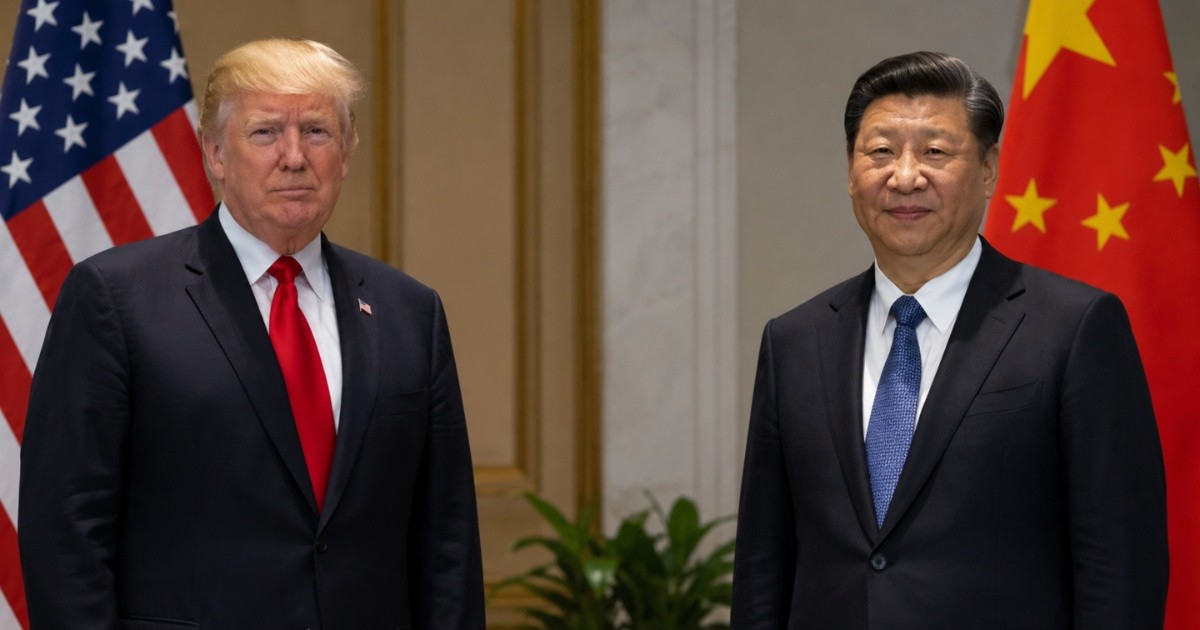
The U.S. President Donald Trump faces the central day of his state visit to China this Thursday in Beijing, with a bilateral meeting with his counterpart Xi Jinping as the main focus of an agenda that also includes a state dinner and ceremonial events.
Trump arrived yesterday at Beijing Capital International Airport, where he was greeted on the tarmac by Chinese Vice President Han Zheng, Chinese Ambassador to the United States Xie Feng, and Vice Minister of Foreign Affairs Ma Zhaoxu, before heading to the Four Seasons Hotel, located near the U.S. Embassy.
This is Trump's second visit to China and the first by a sitting U.S. president since his own trip in 2017, nearly nine years ago.
The summit comes after the trade truce agreed upon by both leaders in October 2025 in Busan, South Korea, which suspended retaliatory tariffs — which had escalated to 145% from Washington and 125% from Beijing — and eased some Chinese restrictions on exports of rare earths and critical minerals.
As a prelude to the bilateral meeting, the delegations led by U.S. Treasury Secretary Scott Bessent and Chinese Vice Premier He Lifeng concluded yesterday in Seoul economic and trade negotiations that the Chinese state agency Xinhua described as "constructive."
On Tuesday, Trump stated from Air Force One that he will ask Xi to "open" China to American companies.
The delegation accompanying the president includes high-ranking executives such as Elon Musk (Tesla), Tim Cook (Apple), and Jensen Huang (Nvidia, who joined at the last minute during the stop in Alaska), as well as representatives from Boeing, BlackRock, Visa, Mastercard, Meta, and Goldman Sachs.
Beyond trade, the agenda covers three major geopolitical fronts: Iran, Taiwan, and technological rivalry.
The Secretary of State Marco Rubio stated during the flight to China that Washington hopes to persuade Beijing to take a more active role regarding Tehran, considering that the blockade of the Strait of Hormuz directly affects China's energy interests.
Approximately 45% of China's gas and oil imports pass through that strait.
In April, Trump announced that China committed to not sending weapons to Iran in exchange for the United States keeping the Strait open, an understanding that paved the diplomatic way for this summit.
Regarding Taiwan, Beijing urged Washington to "exercise caution" on the matter and to "stop" the arms shipments to the island, just hours before Trump's arrival, after the president indicated that he would discuss with Xi the sale of arms to Taipei.
Among the pending issues is a package for the sale of weapons to Taiwan worth 11 billion dollars, approved in December 2025 and still not executed.
Analysts from the Center for Strategic and International Studies (CSIS) and the Council on Foreign Relations (CFR) describe the summit as a meeting of "limited but choreographed agreements," where both powers seek to stabilize their relationship without addressing the underlying structural tensions.
The agenda will extend until Friday, when a working lunch is scheduled before Trump's return to the United States.
Filed under: