
Related videos:
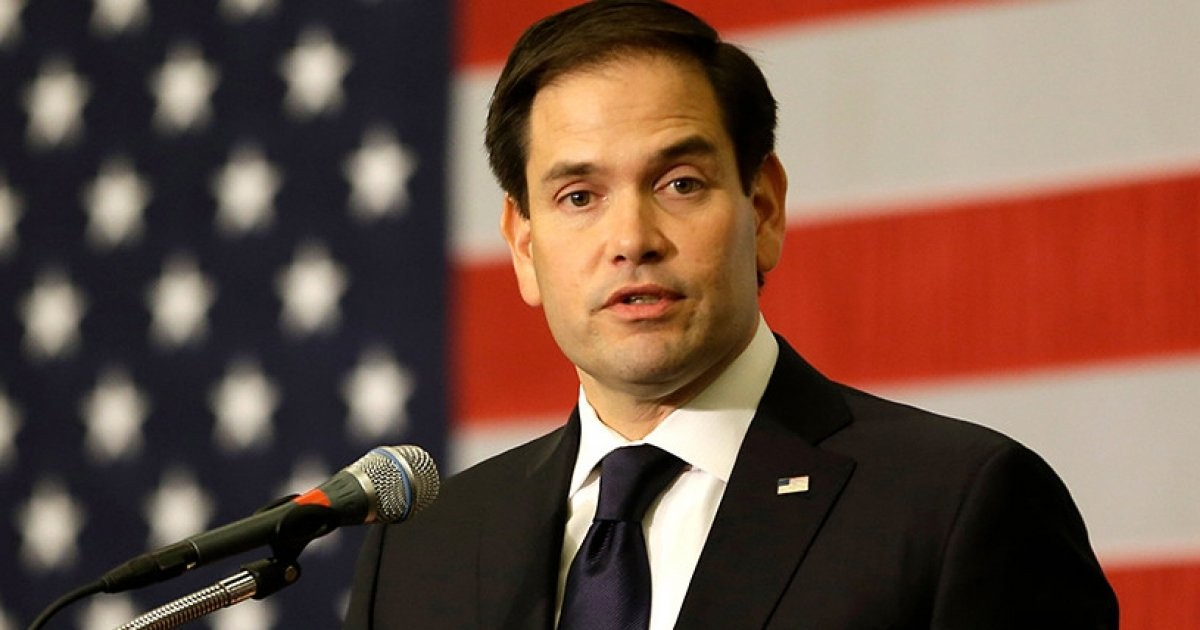
The U.S. Secretary of State, Marco Rubio, stated in an interview with Fox News that "there is no economy in Cuba" and that the island's economic trajectory cannot change as long as the current regime remains in power.
In the interview broadcasted by Fox News, Rubio described the Cuban economy as "broken and non-functional" and pointed out that all the wealth of the island is controlled by a business conglomerate owned by military generals —referring to GAESA, the Business Administration Group S.A. of the Armed Forces— which accumulates between 15 and 16 billion dollars.
"The wealth is controlled by a company owned by military generals. They keep all the money; they are sitting on billions of dollars. This is a country where people literally eat garbage from the streets," Rubio stated.
The Secretary of State emphasized that this is his personal opinion: "I don't believe we can change the economic trajectory of Cuba while the current leaders remain in charge. That is what needs to change, because these individuals have proven to be incapable."
Although he left the door open to a possibility, Rubio was categorical: "I hope I'm wrong. We'll give them a chance. But I don't believe it's going to happen."
The statements are part of a sanctions offensive by the Trump administration. On May 1, President Trump signed Executive Order 14404, which extends the national emergency regarding Cuba and enables new secondary sanctions against third parties.
Days later, on May 7, Rubio announced direct sanctions against GAESA, its executive president Ania Guillermina Lastres Morera, and the company Moa Nickel S.A., describing the conglomerate as "the heart of Cuba's kleptocratic communist system."
Foreign companies with ties to GAESA were given a deadline until June 5 to sever relations, under the threat of secondary sanctions.
Rubio's diagnosis aligns with the latest economic projections. CEPAL estimates a contraction of the Cuban GDP of 6.5% for 2026, the worst in Latin America, while The Economist Intelligence Unit projects a decline of 7.2%.
The economist Pedro Monreal warned last Saturday that the decline could reach 15%, which would equal or exceed the worst year of the Special Period, when the GDP fell by 14.9% in 1993.
The Cuban economy has experienced a decline of approximately 23% since 2019, with power outages lasting up to 25 hours a day, tourism plummeting from 4.7 million visitors in 2018 to 1.8 million in 2025, and more than 600,000 Cubans having left the island since 2022.
Rubio was emphatic in summarizing his position: "You cannot fix their economy without changing their system of government."
Filed under: