
Related videos:
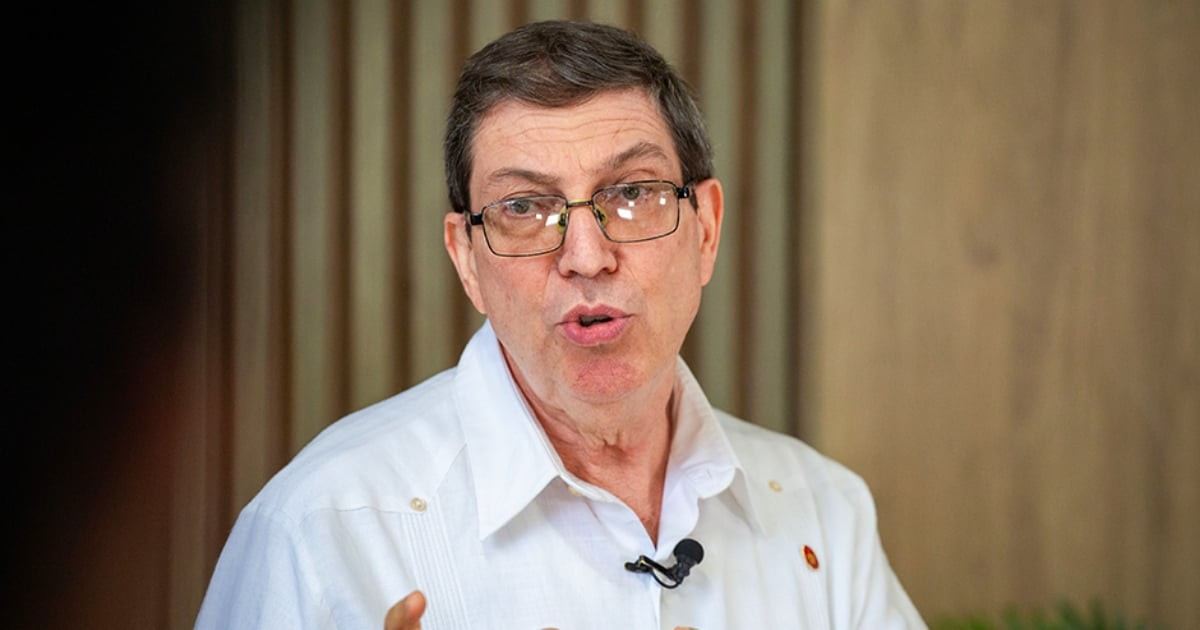
Cuban Chancellor Bruno Rodríguez Parrilla stated on Facebook this Thursday that the regime "has no objections to working with the Catholic Church" to distribute the 100 million dollars in humanitarian aid offered by the U.S., and that Havana is "willing to listen to the details of the offer and how it would be implemented."
The turn of events is striking: just two days earlier, Rodríguez himself had described that same offer as a "fable" and a "100 million dollar lie" on his X account, denying having received any formal proposal.
The change in stance comes a day after the State Department issued an official statement reiterating the offer and explicitly conditioning it on the premise that aid be distributed by the Catholic Church and independent humanitarian organizations, without the mediation of the Cuban government.
Washington was direct in his warning: "The decision lies with the Cuban regime to accept our offer of assistance or deny critical, life-saving help and, ultimately, to be held accountable to the Cuban people."
The U.S. has concrete reasons to insist on that channel: after Hurricane Melissa, which struck eastern Cuba on October 29, 2025, as a category three and affected more than 2.2 million people, Washington committed nine million dollars distributed entirely through Cáritas Cuba, without the regime touching a cent.
By May 8, 2026, 82% of the first donation of three million had already been distributed by Cáritas, benefiting around 8,800 families in Santiago de Cuba, Holguín, Las Tunas, Granma, and Guantánamo.
That model —Church as an exclusive channel, excluded regime— is precisely what the U.S. proposes to replicate on a massive scale with the 100 million, an offer that Marco Rubio publicly revealed on May 8 from Rome, after meeting with Pope Leo XIV at the Vatican.
In his publication this Thursday, Rodríguez did not hide the regime's reservations: he described the "apparent generosity" of someone who, according to him, subjects the Cuban people to an "economic war" as "incongruent," and demanded that the offer be "free of political maneuvers and attempts to exploit the hardships and suffering of a besieged people."
The chancellor also reiterated Havana's usual argument: "The best assistance that the U.S. government could give to the noble Cuban people, now and at any time, is to de-escalate the measures of the energy, economic, commercial, and financial blockade, which has intensified like never before in recent months."
The regime's position is politically awkward: accepting the offer implies acknowledging the legitimacy of an independent channel that excludes it; rejecting it means taking on the responsibility, before the world, of denying massive aid to its own population amid prolonged blackouts.
Other officials of the regime have been more hostile: Deputy Minister Carlos Fernández de Cossío called the offer a "dirty political deal," and the Cuban ambassador in Belgium labeled it as "handouts," while Díaz-Canel accused the U.S. of wanting to take the Cuban people "hostage."
Since January 2026, the Trump administration has imposed over 240 sanctions against the regime, intercepted at least seven tankers, and reduced the island's energy imports by between 80% and 90%, according to data from the dossier.
The congressman Carlos Giménez was more direct in his assessment of the situation: "The regime only wants to keep doing what it always does: stealing the aid and profiting by reselling it to the people."
Filed under: